
SAVING OCEAN GIANTS.
Reef manta ray
Mobula alfredi
VulnerableThe coastal manta: a long-lived, slow-breeding ray that returns to the same reefs for decades, which is exactly what lets us count, track, and protect it.
Key facts
- Reef manta rays were only recognized as a separate species in 2009, when MMF co-founder Dr. Andrea Marshall split them from the larger oceanic manta ray.
- Most adults span 3 to 4.9 meters (10 to 16 feet) across; the largest seen in Mozambique were a little over 5 meters.
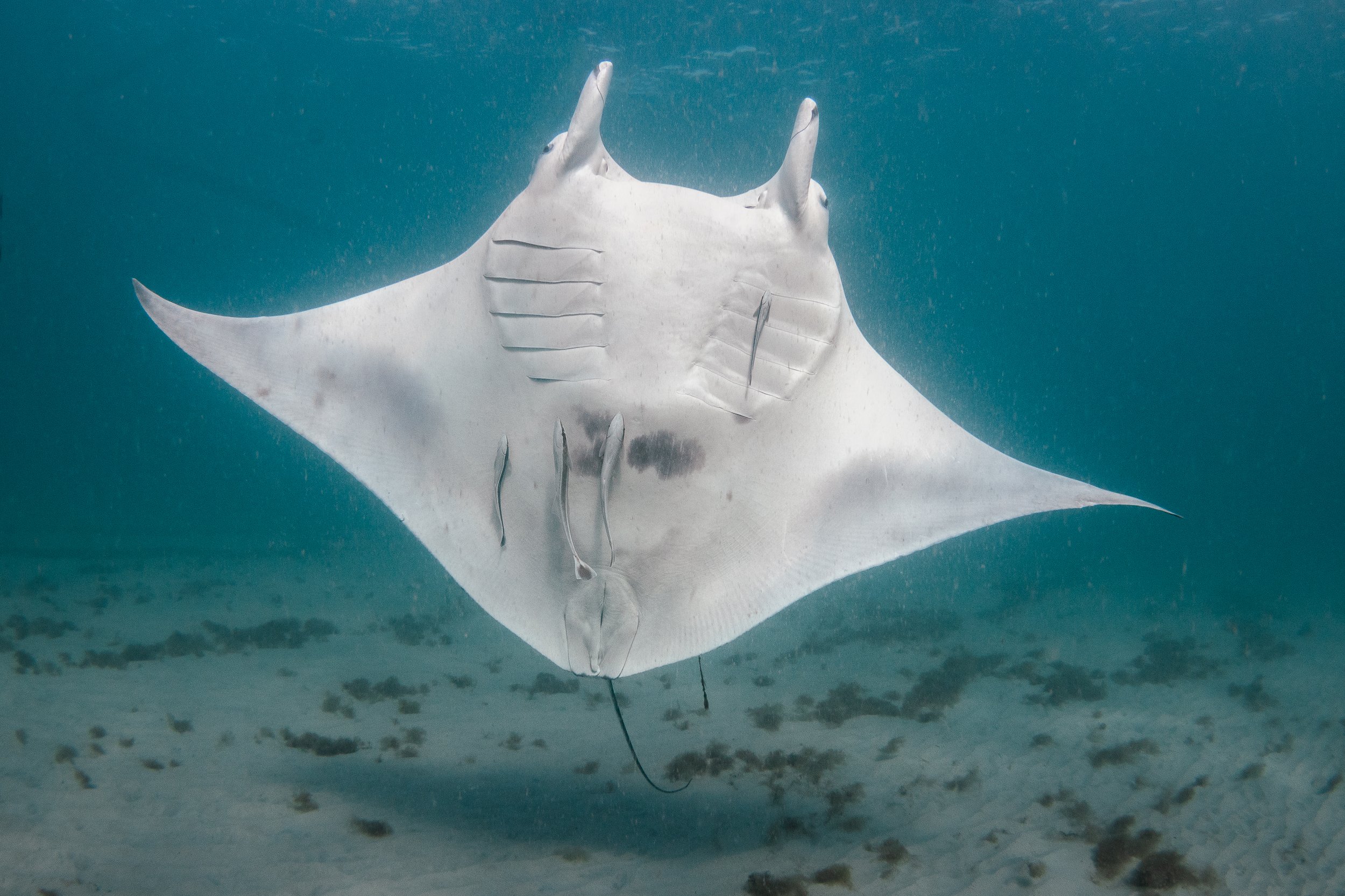
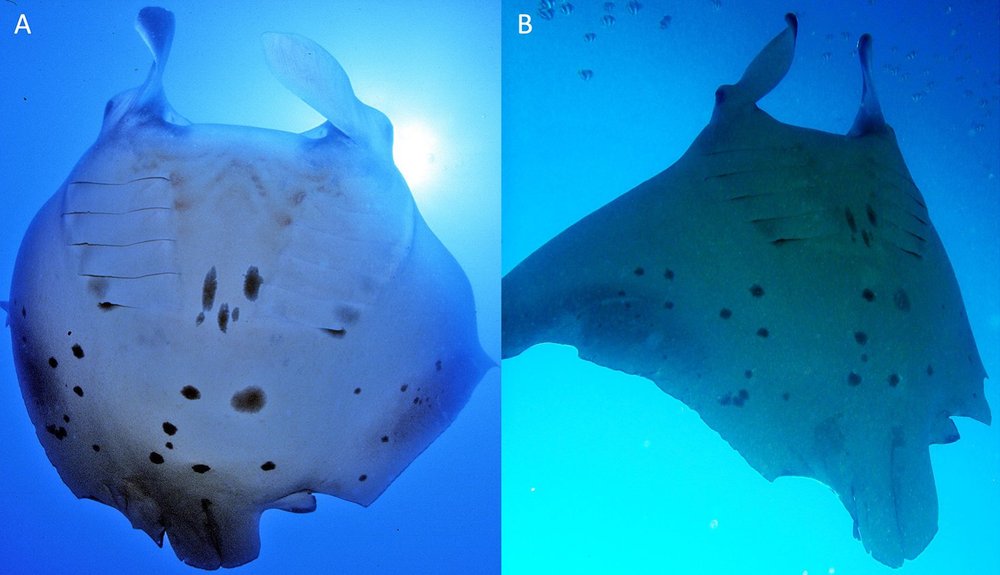
- Every reef manta has a unique pattern of spots on its belly. The pattern is already there before birth and stays recognizable for life.
- Reef mantas live in tropical and subtropical coastal waters across the Indian and Pacific Oceans, usually within a few kilometers of a reef.
- They can dive deep: tagged reef mantas in New Caledonia reached 672 meters (2,200 feet), mostly at night.
- A female gives birth to a single pup after a pregnancy of about a year, and usually rests a year or more before the next.
- Individual reef mantas have been photographed across more than 30 years, so they live at least that long, and probably longer.
- Reef mantas are among the slowest-reproducing sharks and rays known, which means a depleted population takes decades to recover.
- Off Praia do Tofo in Mozambique, our 20-year survey recorded a 99% decline in reef manta sightings.
- The IUCN Red List classifies the reef manta ray as Vulnerable. It is listed on CITES Appendix II and both CMS Appendices.
Meet the reef manta ray
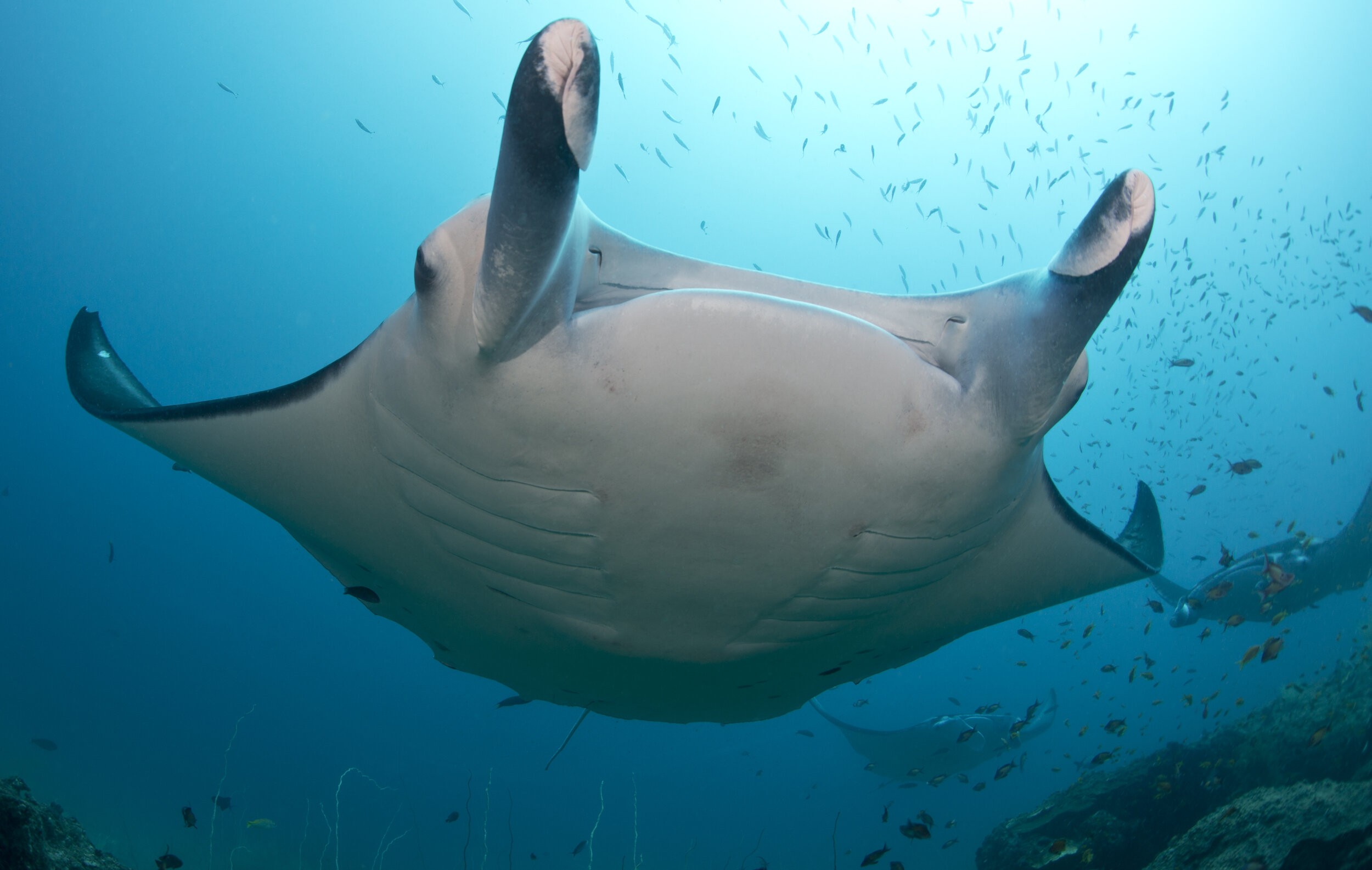
Until 2009, scientists thought there was one species of manta ray. Working from animals off southern Mozambique, MMF co-founder Dr. Andrea Marshall showed that there were two, and resurrected the name Manta alfredi for the smaller, coastal species. The differences are consistent once you know where to look: reef mantas have a pale mouth, shoulder patches that curve in from the spiracle rather than running in straight lines, spots that can sit between the gill slits, and no spine at the base of the tail. Oceanic mantas (Mobula birostris) have a dark mouth, straight shoulder markings, a bony knob with an embedded spine at the tail base, and grow to 7 meters or more. Genetic work later moved both species into the devil ray genus, so today the reef manta is Mobula alfredi. The same 2009 paper flagged a probable third manta in the Atlantic. In 2025 that animal was formally described as the Atlantic manta ray (Mobula yarae), with Dr. Marshall and MMF’s Jessica Pate among the authors.
Reef mantas are big, but not as big as their reputation. Most adults we measure in Mozambique are 3 to 4.9 meters across; males mature at around 3 meters and females at around 3.9 meters. The largest individuals seen off Mozambique were just over 5 meters. A near-term fetus measured 1.3 meters and 15 kilograms, and its belly spots were already fully formed. Those spots are the key to everything else on this page: each pattern is unique and does not change over the years, so a photograph is as good as a tag. Some populations also include all-black (melanistic) mantas. We found that melanism ranges from 0 to 41% between populations, and that black and normal mantas survive equally well, so color does not seem to matter to predators.
Where reef mantas live
Reef mantas live in tropical and subtropical waters across the Indian and Pacific Oceans, from the Red Sea and South Africa to Japan, Australia, Hawaii, and French Polynesia. They are coastal animals, usually seen within a few kilometers of land around coral and rocky reefs, upwelling coastlines, and island groups. Where the two manta species overlap, they use the same coastlines in a fine-grained patchwork rather than sharing the same sites.
Southern Mozambique is where MMF’s manta research began and remains one of the most important known habitats for the species. Our acoustic receivers along 350 kilometers of the Inhambane coast showed strong connections between Praia do Tofo and Závora, but no movements north to the Bazaruto Archipelago. At the time, marine protected areas covered only about a quarter of the area those mantas were using. At Závora Bay alone we have identified 583 individual mantas, more than half of them seen again in later years. In 2023 we extended the species’ known range 140 kilometers south into South Africa.
In Indonesia, our team works at three of the country’s largest aggregations. At Nusa Penida, off Bali, two shallow sites a few kilometers apart do different jobs: Manta Bay is a feeding ground used mainly by males and juveniles, while Manta Point is where mature females gather to be cleaned and to court. In Komodo National Park we have identified 1,085 mantas at four sites, with the remote southern site of Manta Alley holding the most faithful residents. And reef mantas are not confined to the shallows: tagged animals in New Caledonia dived to 672 meters, mostly at night.
Cleaning stations
If you have swum with a reef manta, you probably met it at a cleaning station: a patch of reef where small wrasses pick parasites and dead skin from the ray’s body, gills, and mouth. Cleaning takes up a surprising share of a manta’s day. In Mozambique, 89% of acoustic detections at cleaning reefs happened in daylight, with visits averaging 25 minutes and some mantas staying more than eight hours. On the Great Barrier Reef, the distribution of the bluestreak cleaner wrasse predicts where mantas spend their time better than any other feature of the reef.
Cleaning stations are also the social heart of manta life. In the Maldives, 90% of recorded courtship took place at cleaning sites. Mantas weigh cleaning against feeding: at a Philippine seamount they turned up to be cleaned when plankton was scarce and stayed away when it was thick, while in the Seychelles they shuttled between feeding and cleaning even when food was plentiful. Acoustic tracking in Raja Ampat, with MMF scientists among the authors, found that mantas form stable communities around particular stations that persist for weeks to months, and that they curl and uncurl their cephalic fins in ways that look a lot like gestures when other mantas, divers, or cleaner fish approach.
Movements and migrations
Reef mantas are homebodies compared with their oceanic cousins, but they do travel. Our photo-identification work in Indonesia matched individuals between Nusa Penida, the Gili Islands, and Komodo, movements of up to 450 kilometers through some of the most heavily fished and trafficked water in the country. In southern Africa we documented the first confirmed crossings of an international border for the species: one manta traveled 505 kilometers from Praia do Tofo to Sodwana Bay, and another made a return trip of roughly 870 kilometers between Závora and Sodwana.
The genetics tell the same story. Using more than 3,000 genetic markers from 114 Mozambican mantas, we found no population structure along the coast, so southern Mozambique should be managed as a single population, but strong differences from Western Australia, showing that the open Indian Ocean is a barrier they rarely cross. At the global scale, reef mantas are more genetically isolated than oceanic mantas, which makes each regional population more dependent on its own survival and recovery. Satellite tags elsewhere show what a long trip looks like: reef mantas off eastern Australia covered up to 2,441 kilometers in 118 days, and Red Sea mantas dived past 400 meters, spending their days near the surface and their nights deeper.
Feeding
Reef mantas eat zooplankton, sieving it from the water with the plates on their gills. The daytime feeding that divers see is only part of the story. Chemical tracers in muscle tissue, in a study co-authored by MMF, showed that the diet best matches zooplankton that lives near the seafloor, not just the surface swarms, and that manta muscle carries unusually high levels of certain fatty acids for a marine animal. That fits the deep night-time dives recorded by tags.
Mantas are choosy about when to feed. On the southern Great Barrier Reef they started feeding only once plankton reached a threshold density, and prey size made no difference. At Hanifaru Bay in the Maldives, the largest known reef manta feeding aggregation, the switch happened at more than double the density needed to cover their energy costs, on swarms dominated by copepods. Those swarms are built by wind and tide, so feeding events can be predicted from weather and the lunar cycle. At Nusa Penida, feeding at Manta Bay is especially important for juveniles, and sightings peak in May alongside the courtship season.
Reproduction and life history
Southern Mozambique is both a mating and a birthing ground for reef mantas, and it gave us some of the first detailed accounts of how they reproduce. Males hold onto a female’s pectoral fin with their teeth during mating, leaving scars, and 99% of those scars were on the left fin, the first record of a consistent left-right preference in any shark or ray. Females carry a single pup (very occasionally twins) for about a year and give birth in the austral summer. Most then skip a year or more before their next pregnancy, although a few conceive in consecutive years. Ultrasound scans of two mantas in an aquarium later confirmed the year-long gestation stage by stage. Courtship itself follows a seven-stage sequence, from the “manta train” of males chasing a female through to a brief copulation and separation.
Pups are born at around 1.3 to 1.5 meters across, and males mature at roughly 3 meters, females at 3.9. Individual reef mantas have been photographed across a 30-year span, so they live at least that long. Put those numbers together and you get one of the lowest population growth rates of any shark or ray: a population that is knocked down takes decades to climb back. Young mantas also need places to grow up. Manta Bay at Nusa Penida meets the criteria for a nursery, with immature males the most frequently sighted group there, and Raja Ampat has four confirmed nursery sites. Sharks are a fact of life: in Mozambique, more than three-quarters of mantas carried shark-bite scars, almost all healed and almost all on the rear of the body.
How many are there, and how are they doing?
Because each manta can be recognized from a photograph, we can count them. Our first study in Mozambique identified 449 individuals between 2003 and 2007 and estimated a population of about 800 using the aggregation sites near Tofo. At Nusa Penida, MMF’s Janis Argeswara identified 814 mantas between 2012 and 2023 and found the population grew from about 170 to about 450 over that decade, with 80% of individuals seen more than once, the highest resighting rate recorded for any manta aggregation in the Indo-Pacific. That is what a protected, well-managed site looks like.
Mozambique shows the opposite. Our dive-log surveys at Praia do Tofo recorded an 88% decline in reef manta sightings between 2003 and 2011. By 2023 the decline had reached 99%, and it persisted after accounting for weather and ocean conditions, which points to fishing rather than the environment. At Závora, 175 kilometers south, sightings fell 82% between 2009 and 2023 and the mantas shifted from year-round residents to a seasonal aggregation. Across the border, 41 years of shark-net records from South Africa show manta catches falling since the late 1990s, with half of the animals caught being juveniles.
Current research
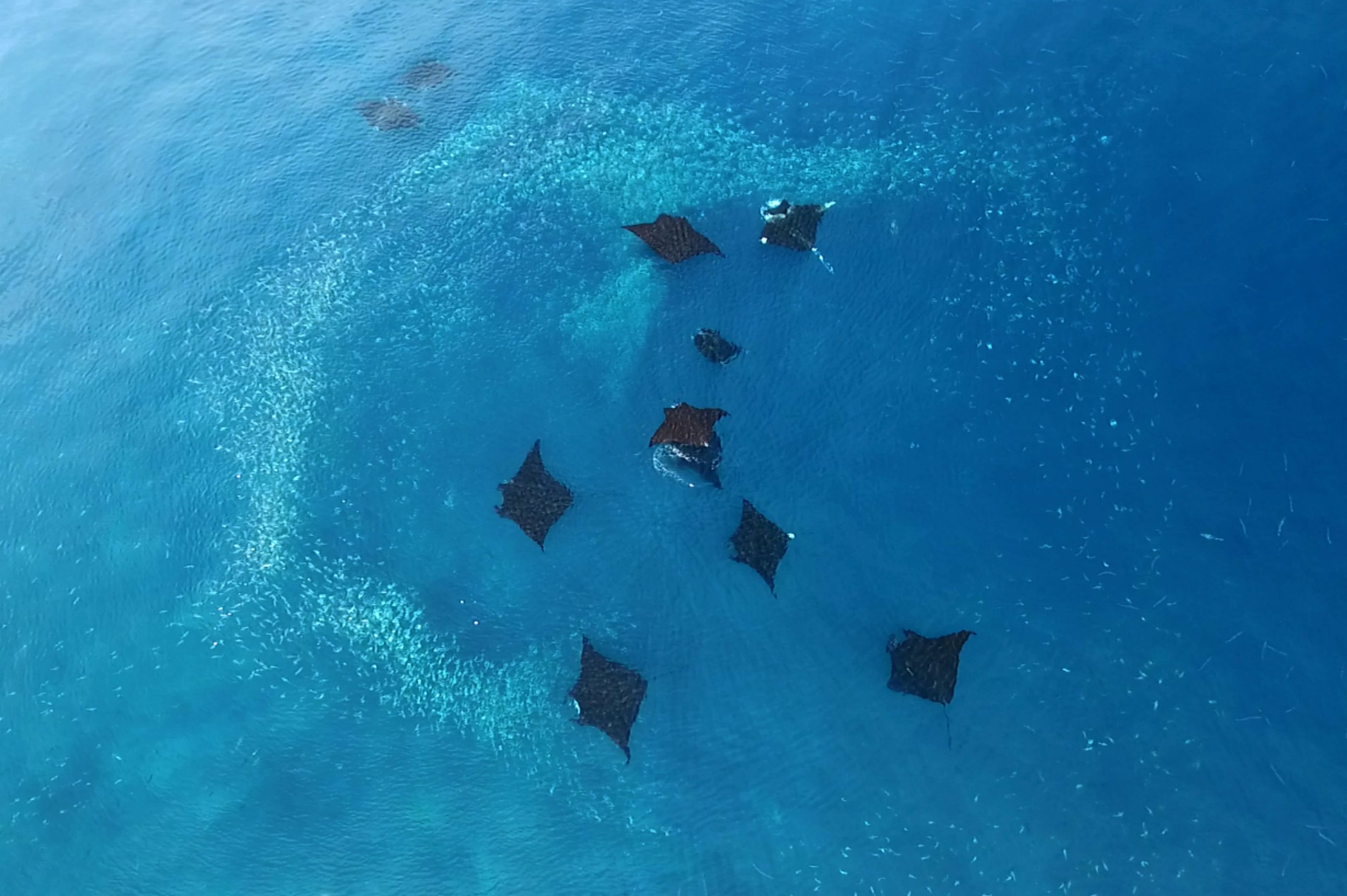
Our long-term photo-identification catalogs in Mozambique and Indonesia are the backbone of everything above, and they keep growing every season. In Mozambique the questions now are whether the Tofo population can recover under national protection, how far the remaining mantas range between Mozambique and South Africa, and which sites deserve protection first. In Indonesia we are tracking how the Nusa Penida and Komodo populations respond to rising tourism, extending surveys to new sites, and measuring how much plastic mantas swallow at their feeding grounds. Across both regions we are combining photo-identification with acoustic and satellite tags, genetics, and drone surveys to turn sighting records into population estimates that managers can act on.
Threats and protection
Reef mantas are killed deliberately for their gill plates, which are sold as a health tonic in Asia, and accidentally in nets and lines set for other species. A global review co-authored by MMF counted 13 fisheries that target mantas and devil rays and 30 that catch them as bycatch. The gill plate trade is large and increasingly online: a 2024 assessment found mobulid landings in 43 countries and dried gill plates selling for up to US$1,260 per kilogram. Add boat strikes, entanglement in fishing line, tourism that crowds mantas off their cleaning stations, and plastic. At Nusa Penida we estimated that a feeding manta could swallow around 63 pieces of plastic an hour in the wet season, and confirmed ingestion from what the mantas passed. Live mantas are worth far more than dead ones: manta tourism generates an estimated US$140 million a year worldwide, and US$34 million a year in Inhambane Province alone.
Protection has improved over the past decade, in part on the strength of this research. Reef mantas are Vulnerable on the IUCN Red List, an assessment led by Dr. Marshall. International trade has been regulated under CITES Appendix II since 2014 (agreed in 2013), and the species was added to both appendices of the Convention on Migratory Species in 2014. Indonesia protected all manta rays nationally in 2014. Mozambique banned the capture of manta and devil rays under its 2020 marine fisheries regulations, in force from January 2021. Laws on paper are the start; the Tofo numbers show how much depends on enforcement and on protecting the reefs where mantas feed, clean, and breed.
Where we study them
- African Manta Ray Project
Following manta rays across the Mozambique–South Africa border to understand and protect the last large population on the East African coast.
 Indonesia Manta Ray Project
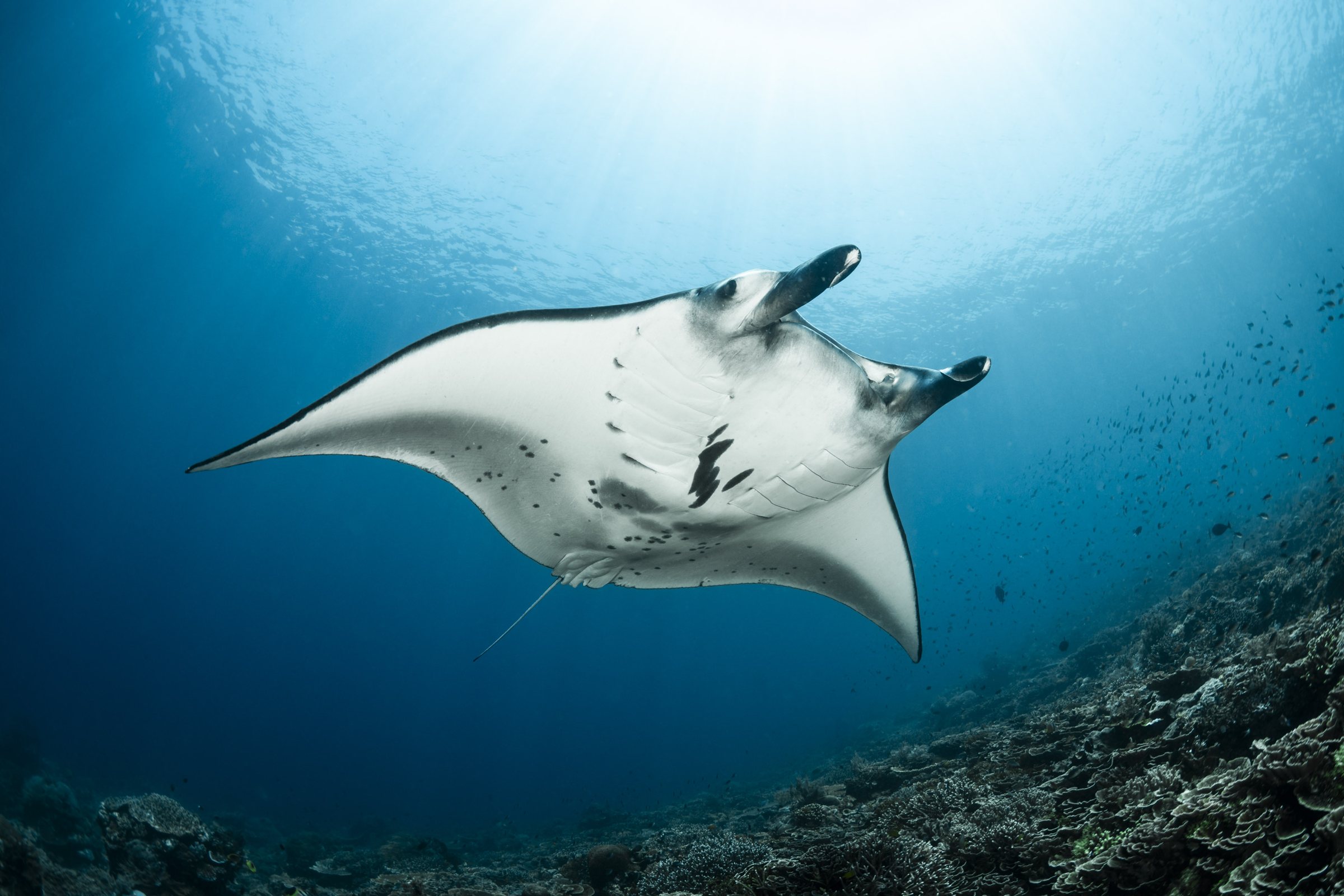
Since 2012 MMF has followed reef manta rays at Nusa Penida, Komodo, and Sangalaki, identifying more than 2,000 individuals and producing the data that helped protect the species across Indonesia.
 Madagascar Manta and Devil RaysCompleted
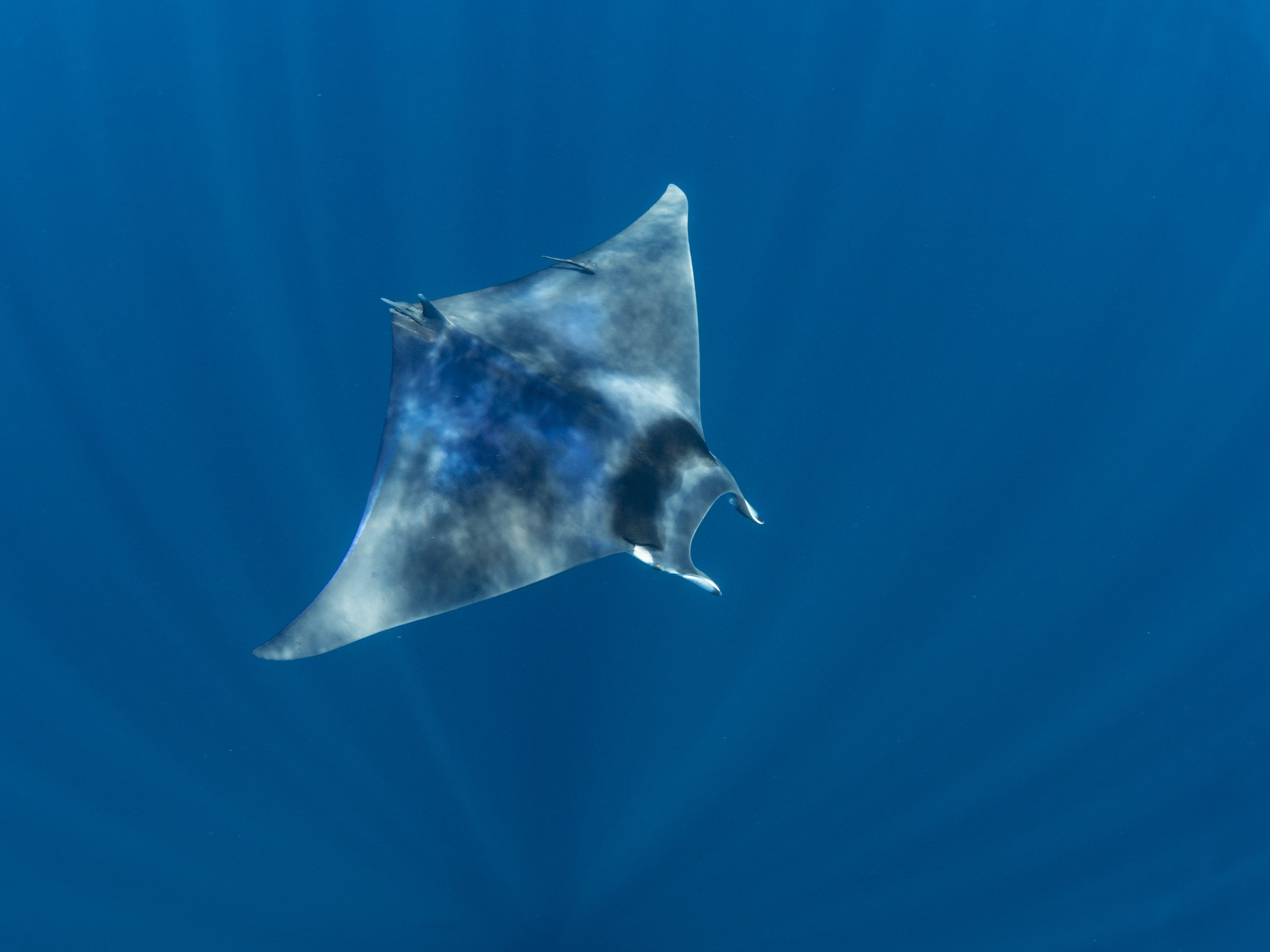
The first dedicated study of manta and devil rays in Madagascar, from seven years of surveys off Nosy Be.
 Mayotte Manta Ray ProjectCompleted
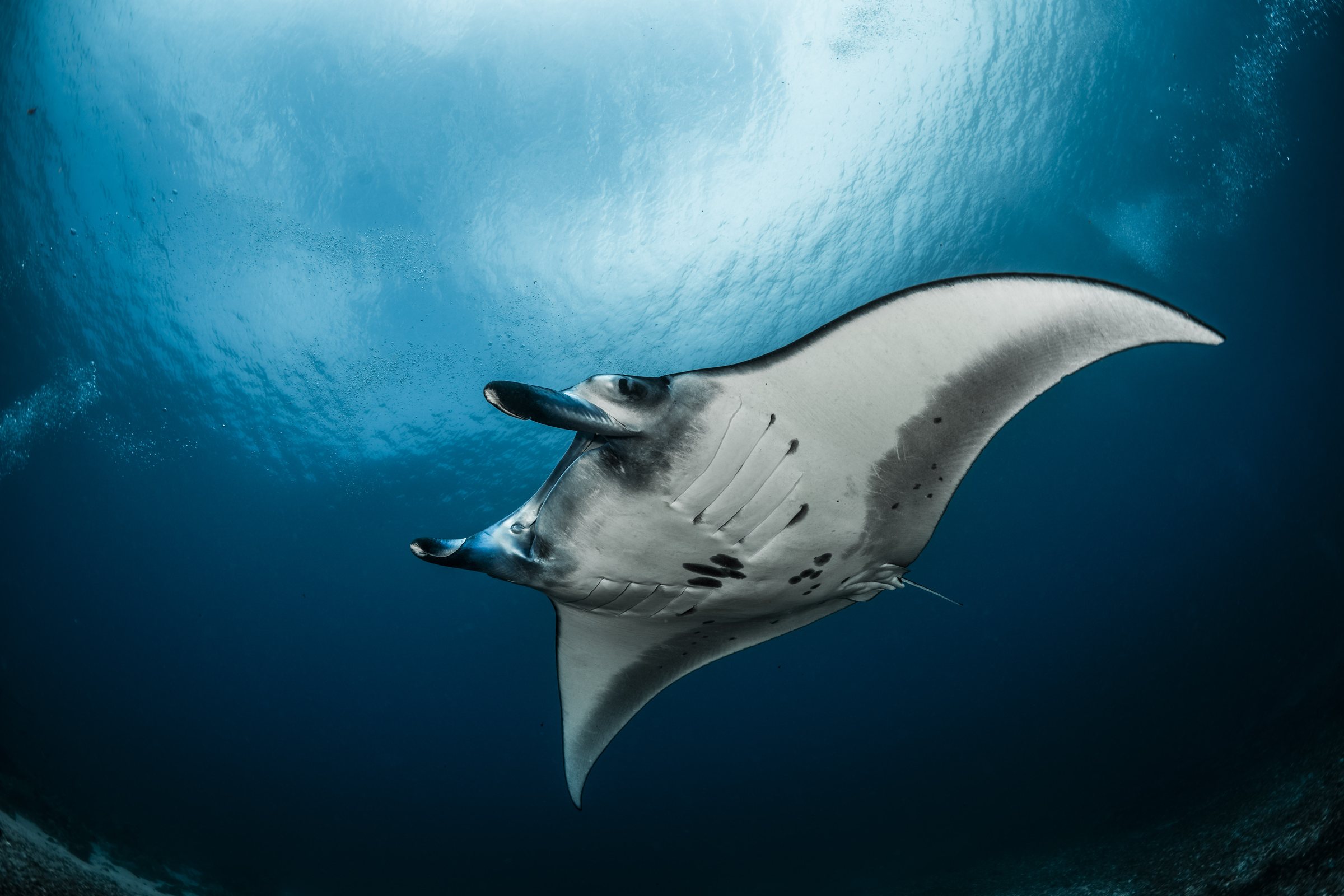
A completed study of the reef manta rays around Mayotte in the northern Mozambique Channel, covering their movements, their diving behavior, and the shallow bay where young mantas aggregate.
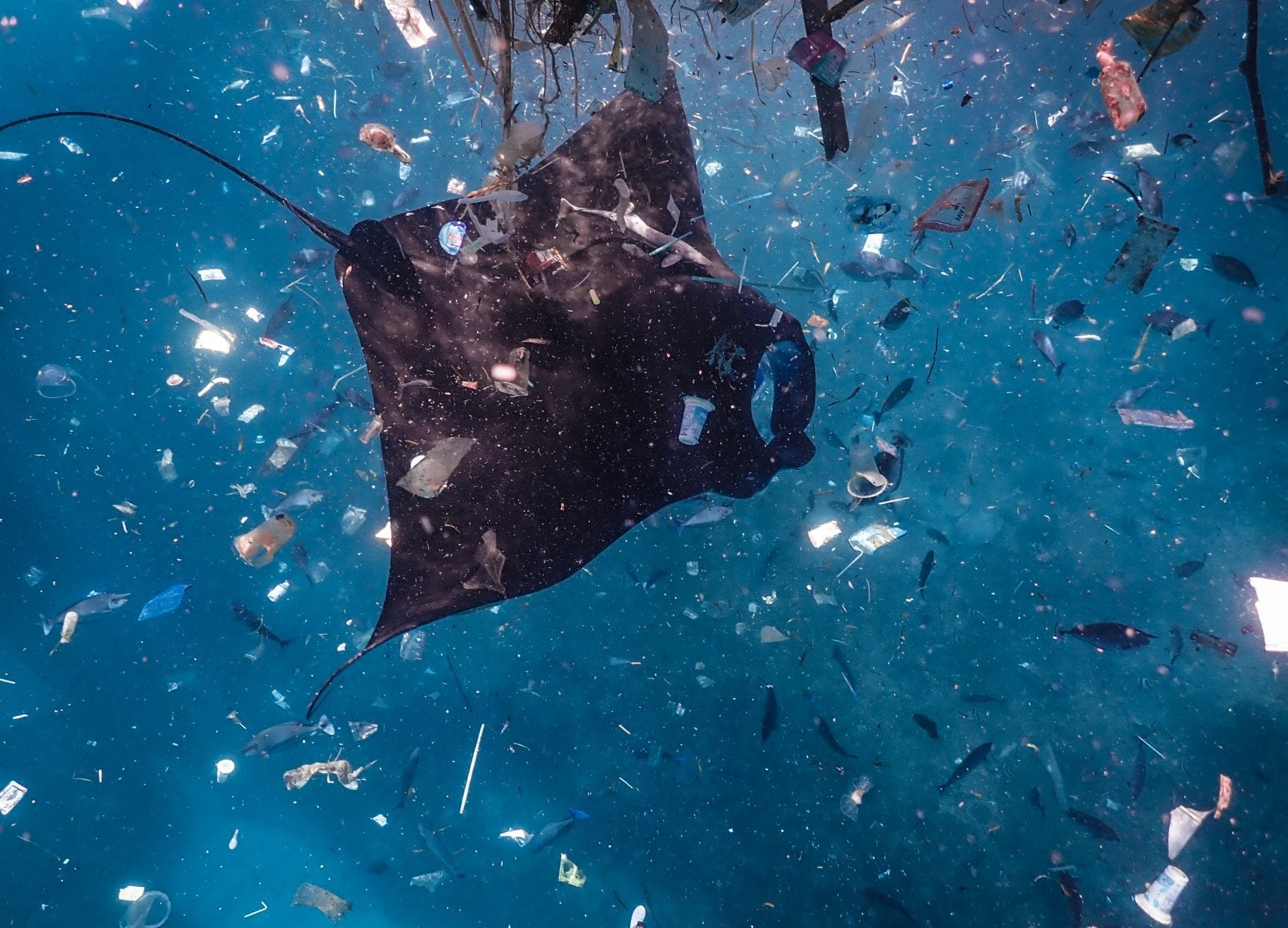 Microplastics & Megafauna
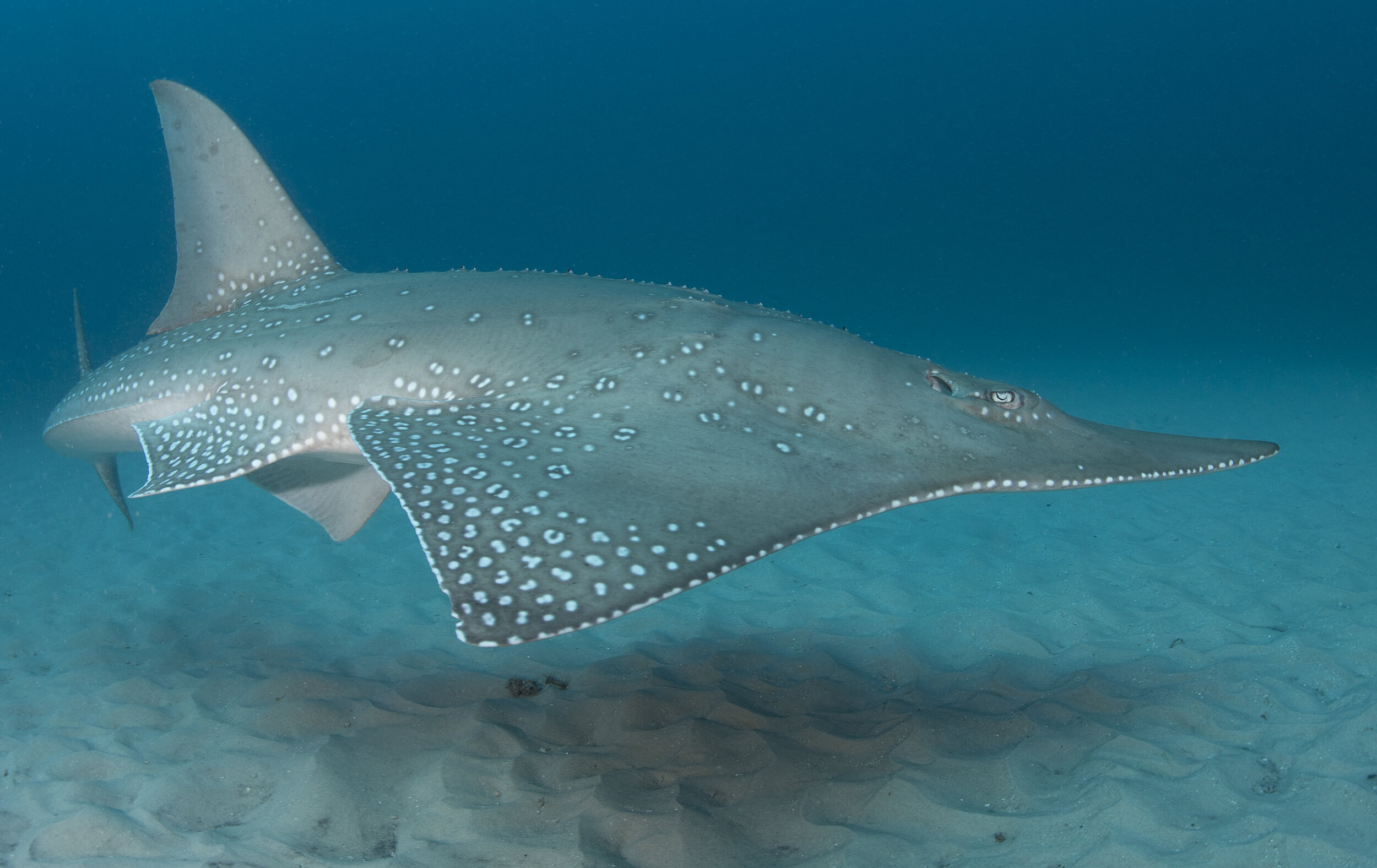 Mozambique Acoustic Telemetry Network
A shared network of underwater listening stations along Mozambique's Inhambane coast that follows tagged sharks and rays as they move.
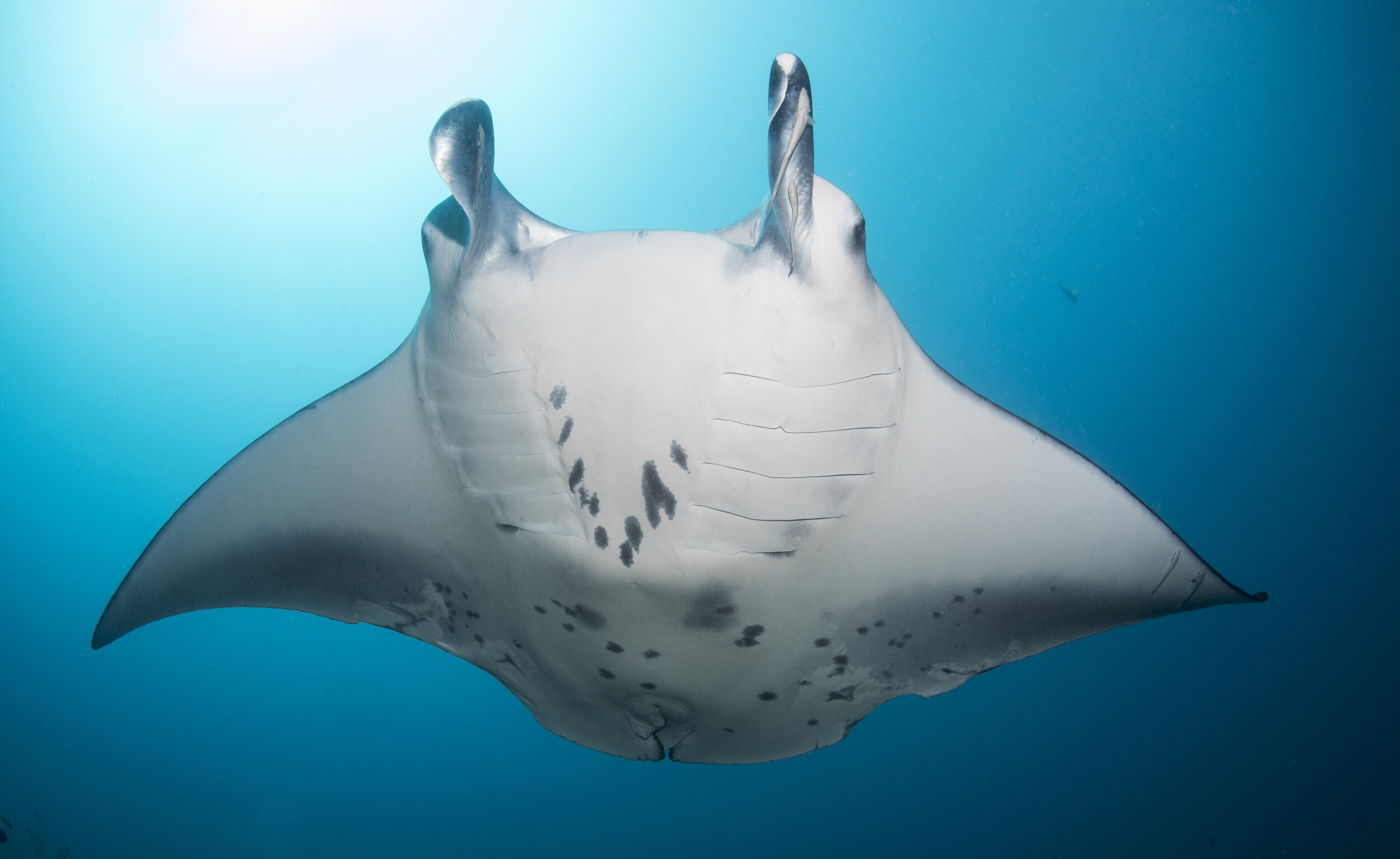 Mozambique Manta & Devil Ray Research Project
Two decades of research on manta and devil rays along southern Mozambique's Inhambane coast, home to Africa's largest known manta ray populations. Sightings have fallen steeply, and we work to find and protect the places these rays need.
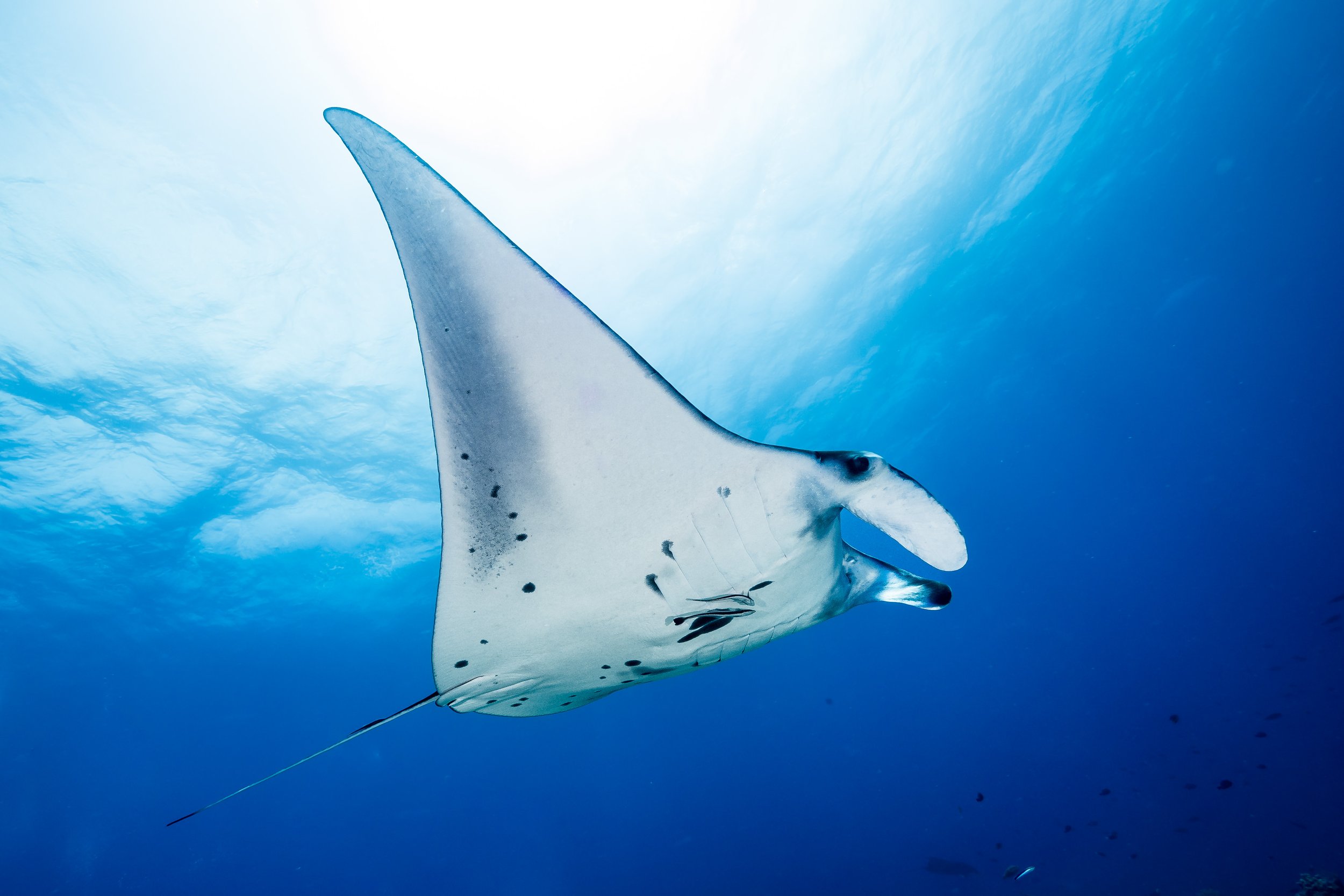 Philippines Manta and Devil RaysCompleted
Completed research with LAMAVE on the diet and slow reproduction of manta and devil rays in the Bohol Sea, Philippines, and on the distribution of manta rays across the country.
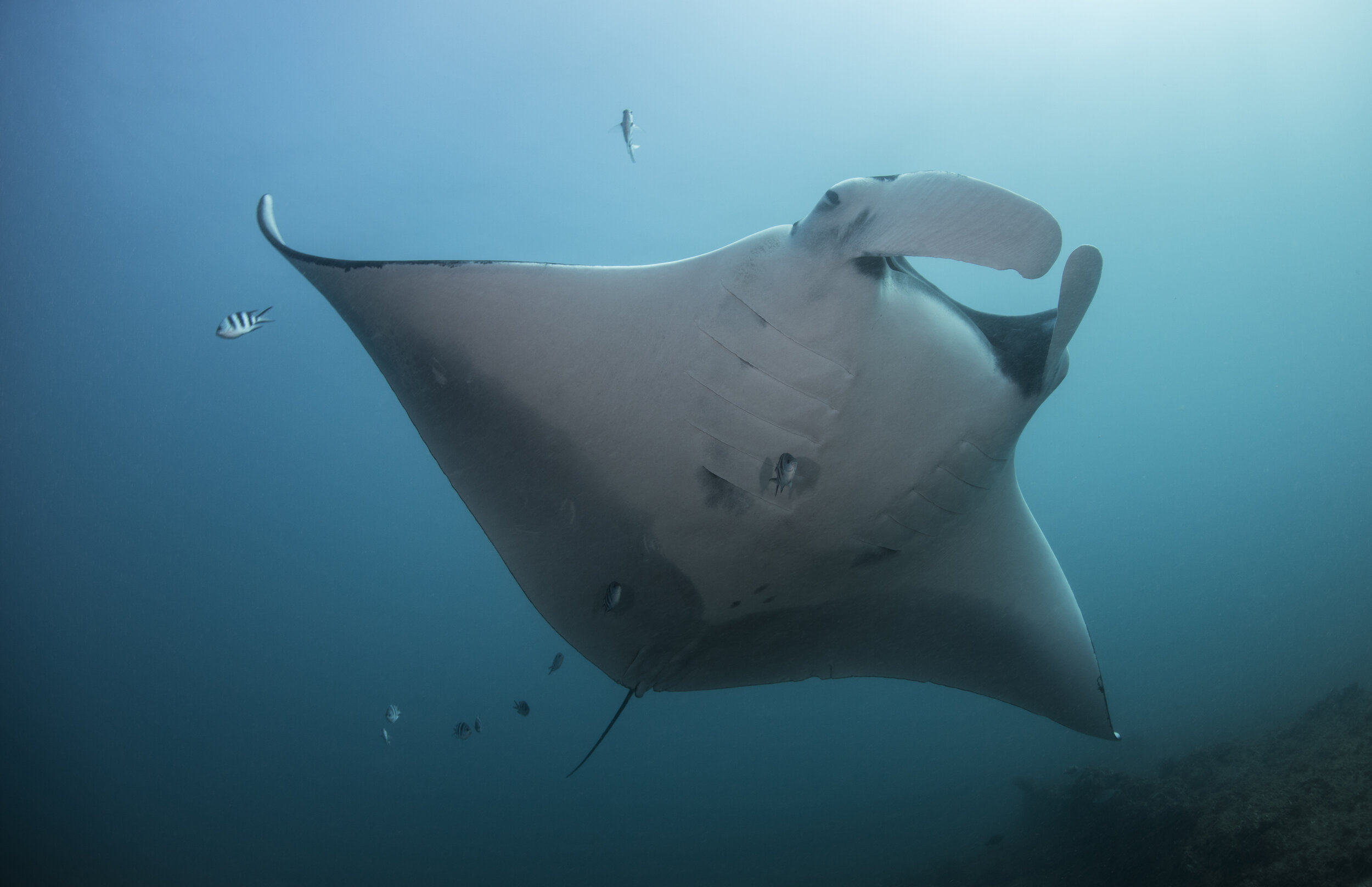 Závora Marine Conservation
Research, fisheries monitoring, and community-led protection at MMF's southernmost site in Mozambique, home to one of the last reef manta ray aggregations on the East African coast.
Publications
2026
- Acoustic telemetry reveals cross-border movements and conservation opportunities for reef manta rays Mobula alfredi in southern Africa
- Hiding in plain sight: evidence of Echeneidae cloacal and gill diving behavior in manta ray hosts
- Movement ecology of the reef manta ray (Mobula alfredi) in southern Africa: multi-scale habitat use and implications for regional and transboundary conservation
2025
- Declines in sightings and changing visitation patterns of reef manta rays at an important aggregation site in Mozambique
- Movements and habitat use of reef manta rays around the Mozambique Channel Island of Mayotte, Southwestern Indian Ocean
- Estimating the abundance and population trends of reef manta rays (Mobula alfredi) in Nusa Penida, Bali, Indonesia
- Preliminary insights into manta ray (Mobula alfredi and M. birostris) population demographics and distribution in South Africa
In the news
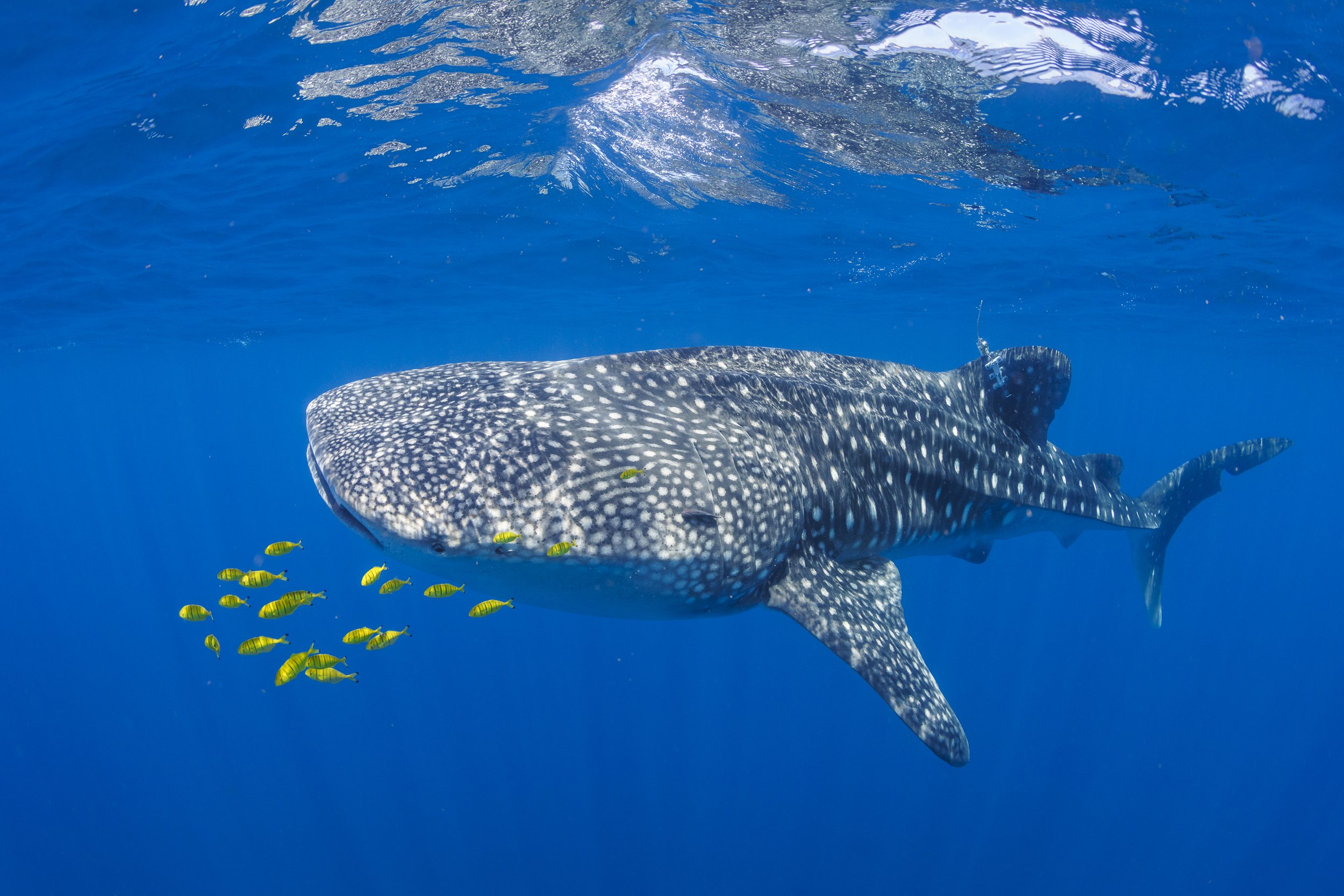
Mapping the Sharks That Cross Australia's Borders
September 8, 2026
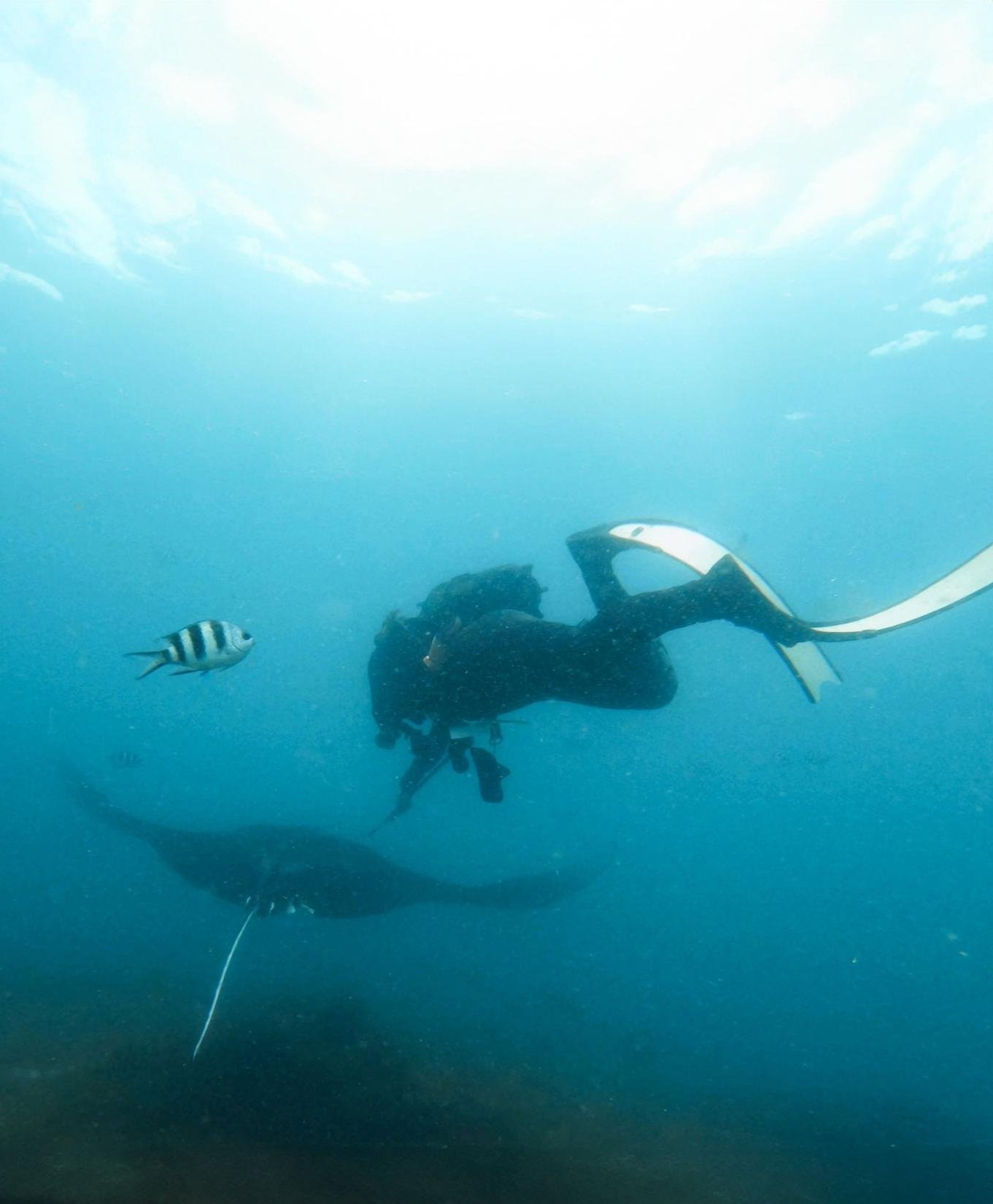
Reef Manta Rays Cross National Borders in Southern Africa
August 27, 2026
Remoras Caught Hiding Inside Manta Rays
May 11, 2026
How we study them
How you can help
With thanks to our supporters and partners
- Save Our Seas Foundation
- Mantahari Oceancare







- Pure Ocean FundFunder (2022–2024)