
Mayotte · Global Manta Ray Program · Since 2019
Mayotte Manta Ray Project
Satellite tags and photographs from local divers showed that Mayotte's reef manta rays remain close to the island and dive to nearly 400 m (1,300 ft), and that young mantas aggregate in one shallow bay.
Led by Florida International University, with MMF
Until this study, nothing had been published on the reef manta rays (Mobula alfredi) of Mayotte, a French island in the northern Mozambique Channel. The project was run by Dr. Jeremy Kiszka of Florida International University with the team of the Parc naturel marin de Mayotte; working with them, we tracked the mantas with satellite tags and identified individuals from photos taken by local divers and snorkelers.
Mayotte is the easternmost of the Comoros islands. A barrier reef encloses a lagoon of about 1,500 km² (580 square miles), averaging 20 m (66 ft) deep, with coral reefs, seagrass, sand, and mangroves, and passes through the reef connect it to the open ocean. The nearest sites where reef mantas are known to aggregate regularly, in Mozambique and Seychelles, are more than 1,000 km (620 miles) away. Dr. Chris Rohner led the analysis and writing, with Dr. Stephanie Venables and Dr. Simon Pierce.
What the project has done
- Fitted six pop-up satellite tags to reef manta rays at Mayotte in April 2019 and March–April 2023. Five tags reported, each tracking a manta for about four months.
- Analyzed manta sightings reported by divers, snorkelers, and boat crews through the marine park’s TsiÔno network between 2012 and 2023, and identified individual mantas from their photos.
- Published the first study of reef manta rays at Mayotte in Environmental Biology of Fishes in 2025.
Support our manta ray research
This study is complete. Your gift supports our current reef manta ray research in Mozambique, home to our longest-running manta work.
What the study found
Movements within the northern Mozambique Channel
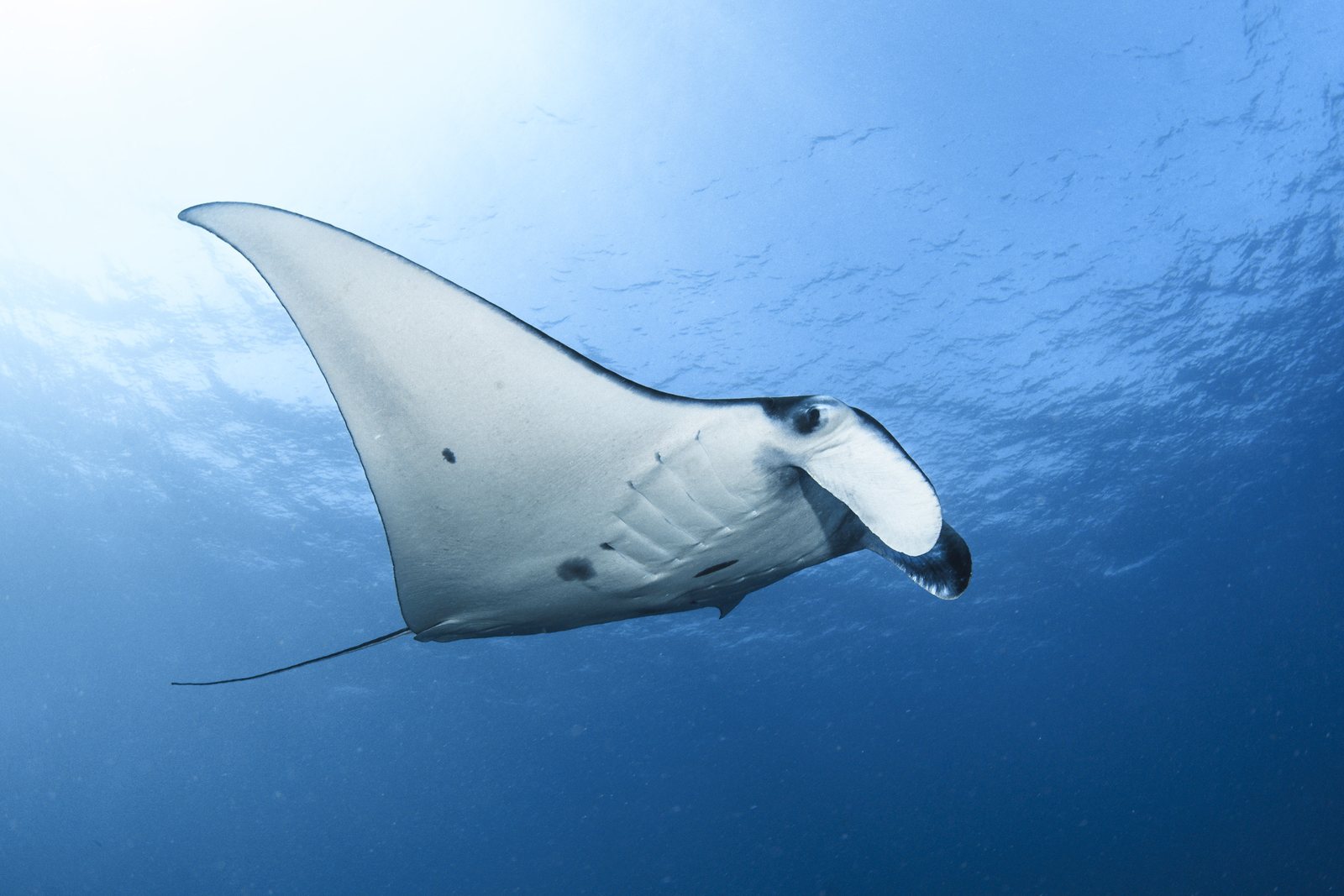
We tagged one small juvenile and four adults, a female and three males. Over about four months, each manta traveled between 649 and 1,579 km (403 and 981 miles), averaging 10.2 km (6.3 miles) a day. Yet all five remained in the northern Mozambique Channel, with their most likely positions all within about 285 km (177 miles) of Mayotte. None showed any sign of moving to other known manta areas in the region. The neighboring Comoros island of Mwali (Mohéli), about 150 km (93 miles) away, is within a manta’s reach, but no study has yet surveyed it for mantas.
Diving behavior
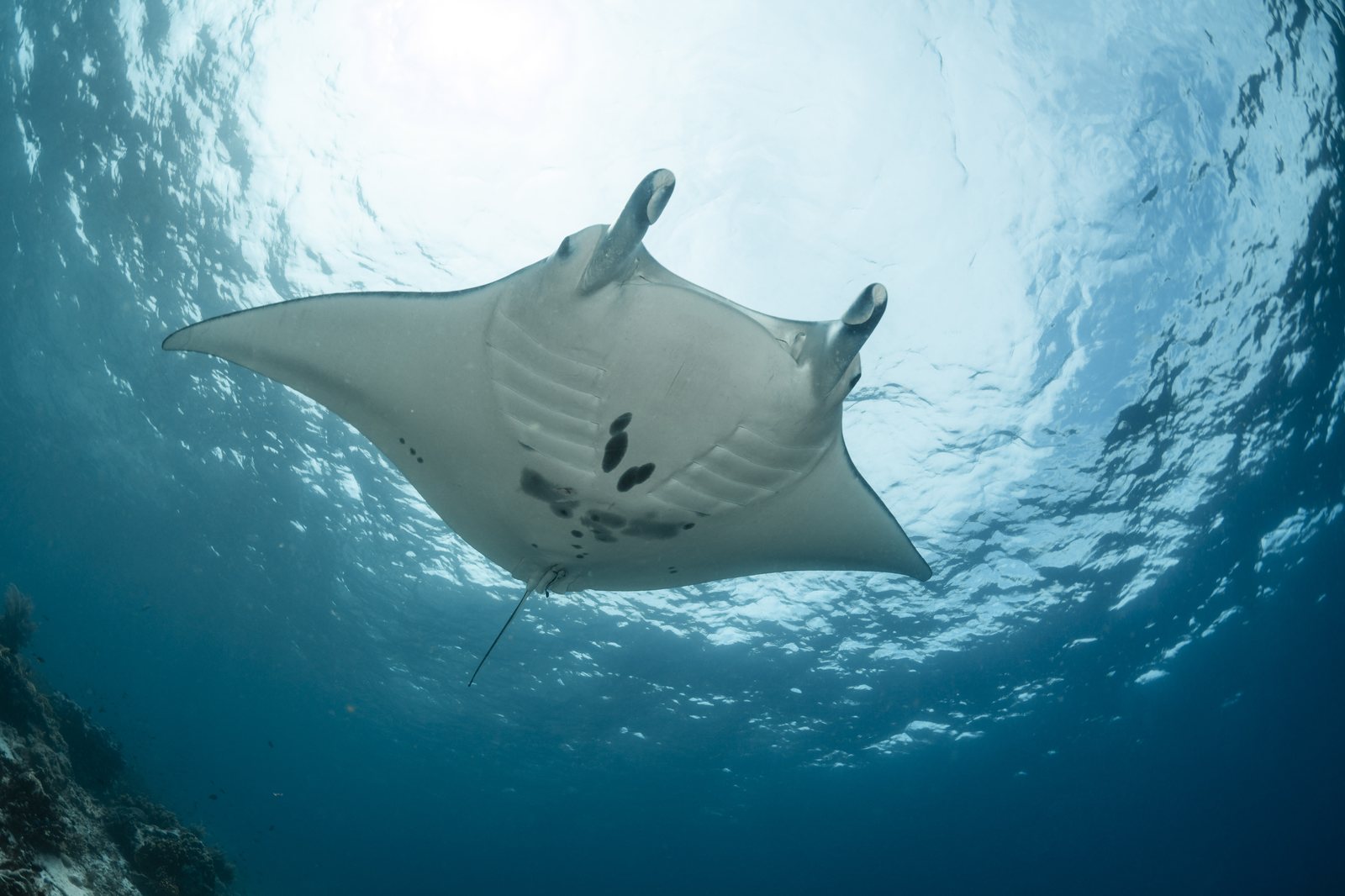
The lagoon is at most about 80 m (260 ft) deep, so a dive deeper than that means a manta has left it for the open ocean. The tagged mantas did so on at least half of their tracked days, and the adult female spent 36 consecutive days outside the lagoon. They spent nearly a third of their time in the top 10 m (33 ft) and less than 1% below 200 m (660 ft), yet some dives went much deeper, and a male reached 397 m (1,300 ft). The mantas were shallowest around sunrise, possibly feeding at the surface, were at 30–40 m (100–130 ft) through the night, and made all of their dives below 300 m (980 ft) in daylight. Their deep dives clustered in the channel between Mayotte and the Comoros island of Ndzuwani (Anjouan), which may be a travel corridor or a deep feeding area.
Population and behavior
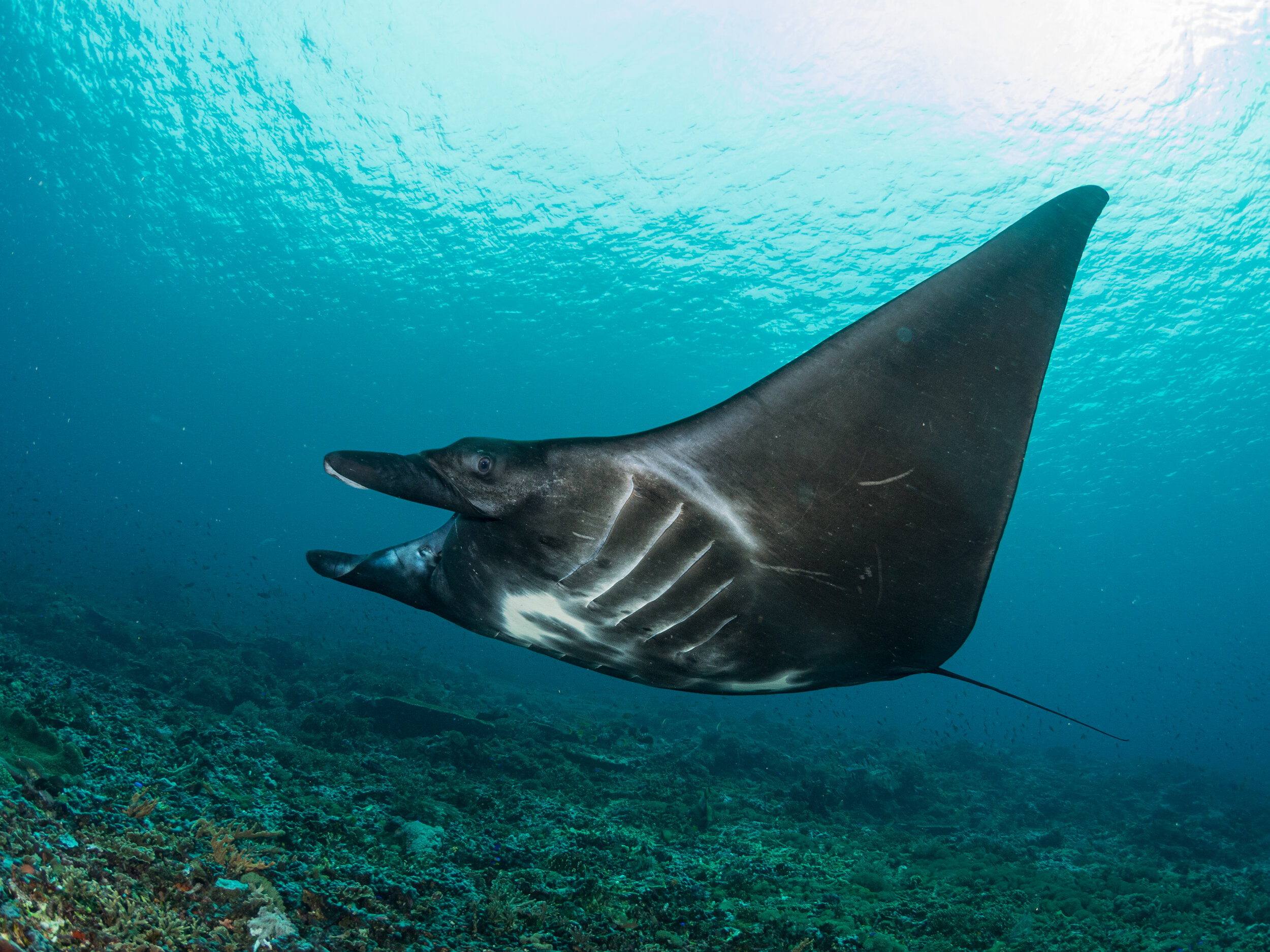
From 512 manta encounters reported through TsiÔno, photographs of sufficient quality for identification revealed 34 different mantas: 19 females, 12 males, and three of unknown sex. Two were black (melanistic) mantas, which are unusual in this region. Most of the 34, 71%, were seen more than once, and three males were photographed about 10 years apart; two of them were among the mantas we tagged in 2023. We identified 10 mantas during a two-week field trip in 2023 alone, so the population is probably larger than 34; even so, it appears small compared with other well-studied populations in the Indian Ocean. Feeding was by far the most commonly observed behavior, mostly near the passes and along the northeast coast. No cleaning station has yet been found, although there may be one deeper than 30–35 m (98–115 ft), or outside the barrier reef.
A likely nursery in Handrema Bay
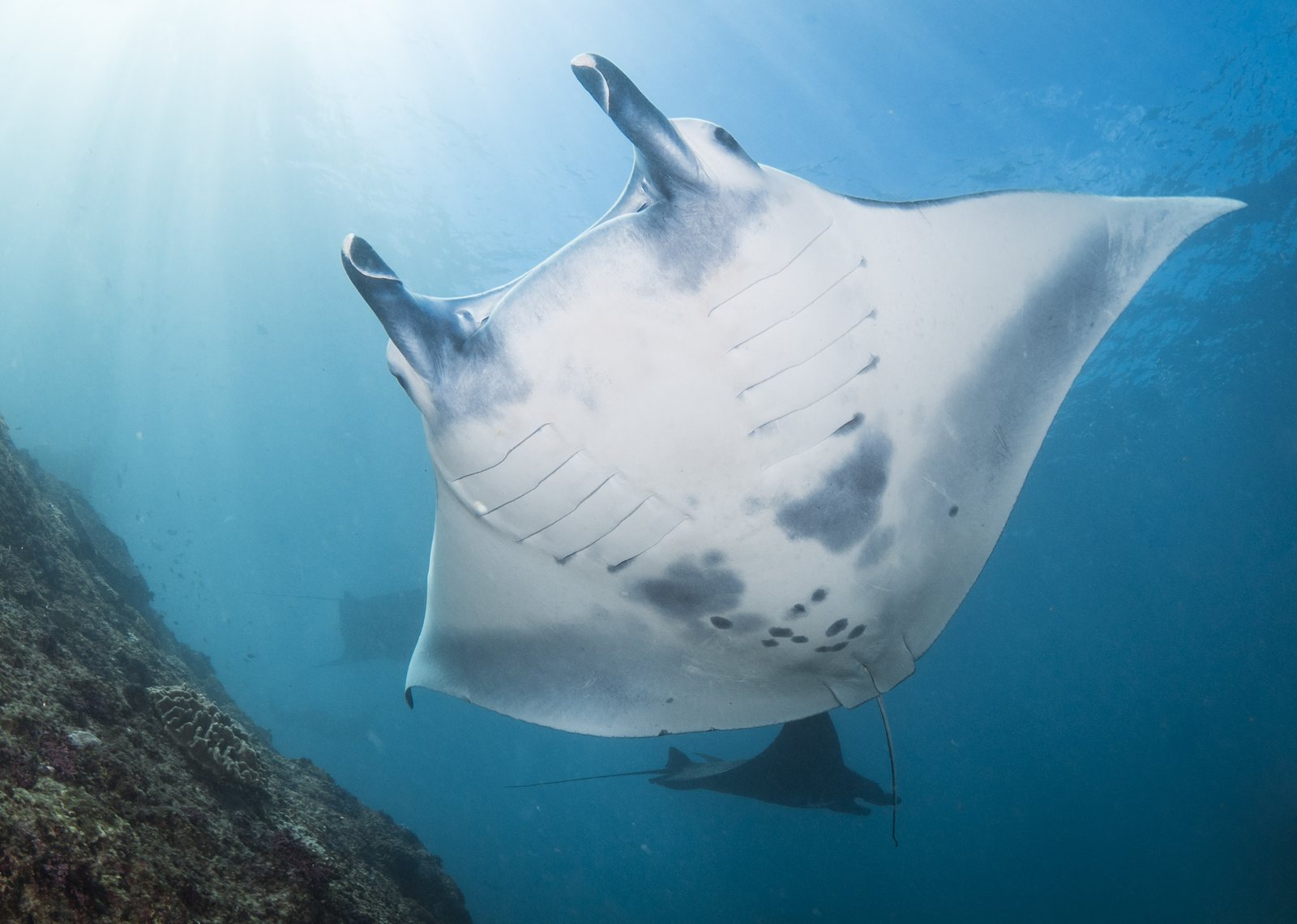
Of all the encounters, 41% were with newborns or young of the year, with a disc width of 2 m (6.6 ft) or less. Most were in Handrema Bay, in the northeast of the lagoon, often in water less than 2 m (6.6 ft) deep near the beach, and sightings peaked in April and May. Three newborns still carrying umbilical scars were photographed in 2023. On this preliminary evidence, Handrema Bay meets the criteria used to recognize a shark or ray nursery, making it a likely nursery area for reef mantas, though more work is needed to confirm it.
Conservation implications
Reef manta rays are protected in the Parc naturel marin de Mayotte, where a 2018 order bans fishing for them and transporting, processing, selling, or buying them. The study suggests additional measures where mantas occur regularly, such as Handrema Bay and the lagoon passes, for example limits on boat speed and tourist numbers. Because annual recruitment to this small population is low, threats to newborns in the bay need to be reduced to near zero. The tracked mantas often left the park’s boundaries for waters used by small-scale and industrial longline fisheries, so protecting them will require regional coordination. Comparing photo-identification catalogs with Seychelles and the Comoros, regional genetic studies, and further tagging, including smaller tags for newborns, would reveal how Mayotte’s mantas are connected to the rest of the region.
 Dr. Chris Rohner
 Dr. Stephanie Venables
 Dr. Simon Pierce
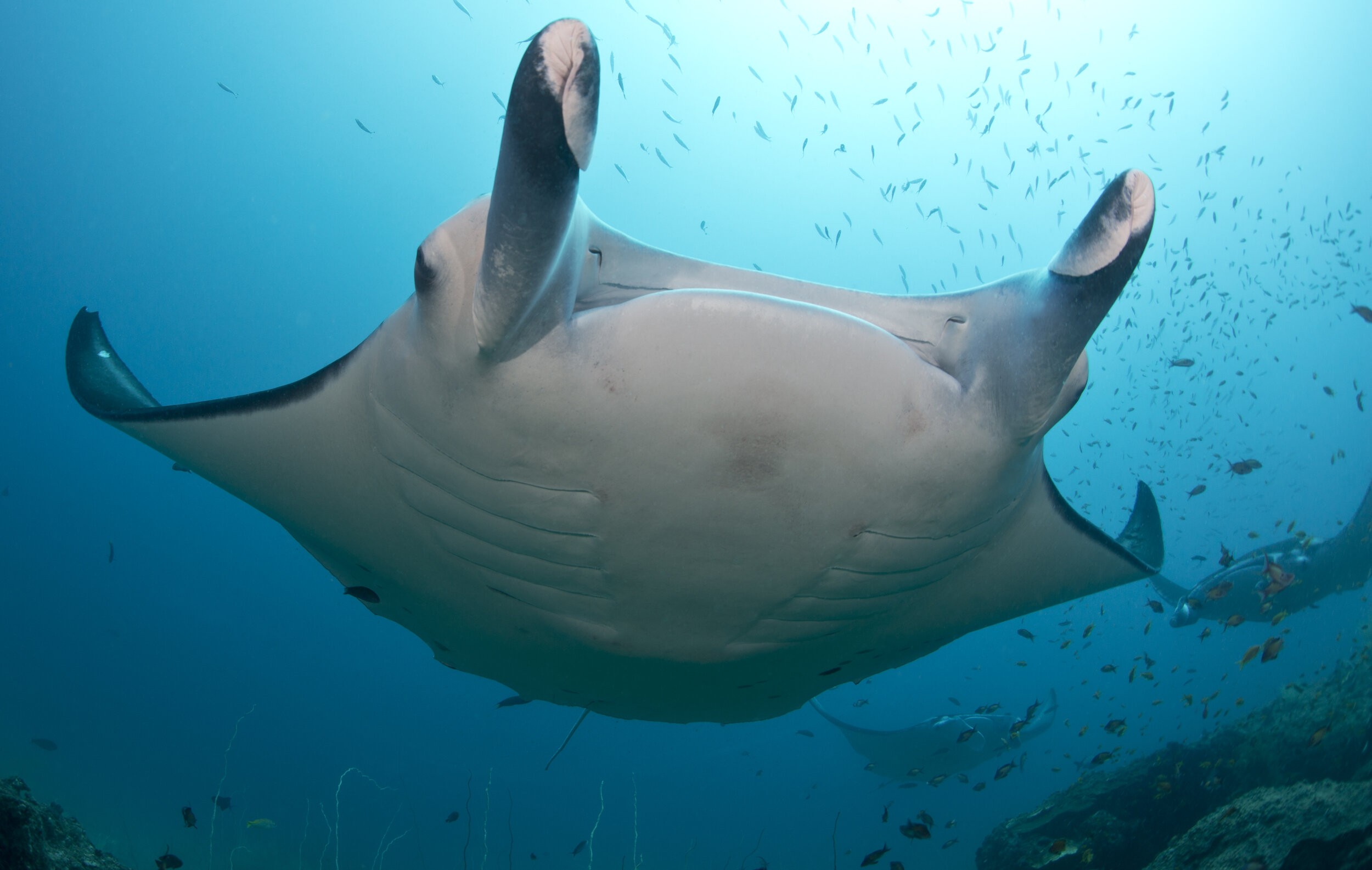 African Manta Ray Project
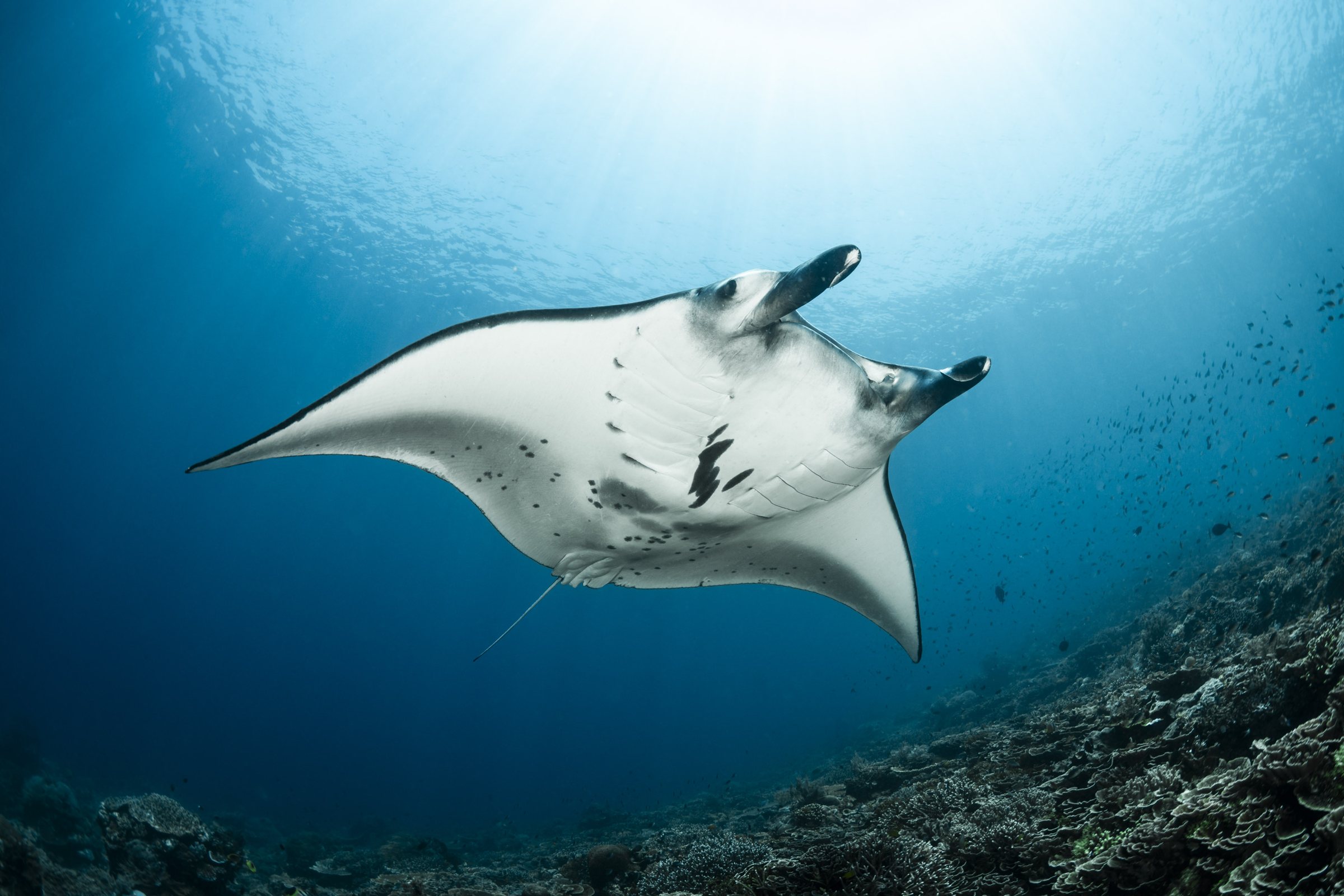 Indonesia Manta Ray Project
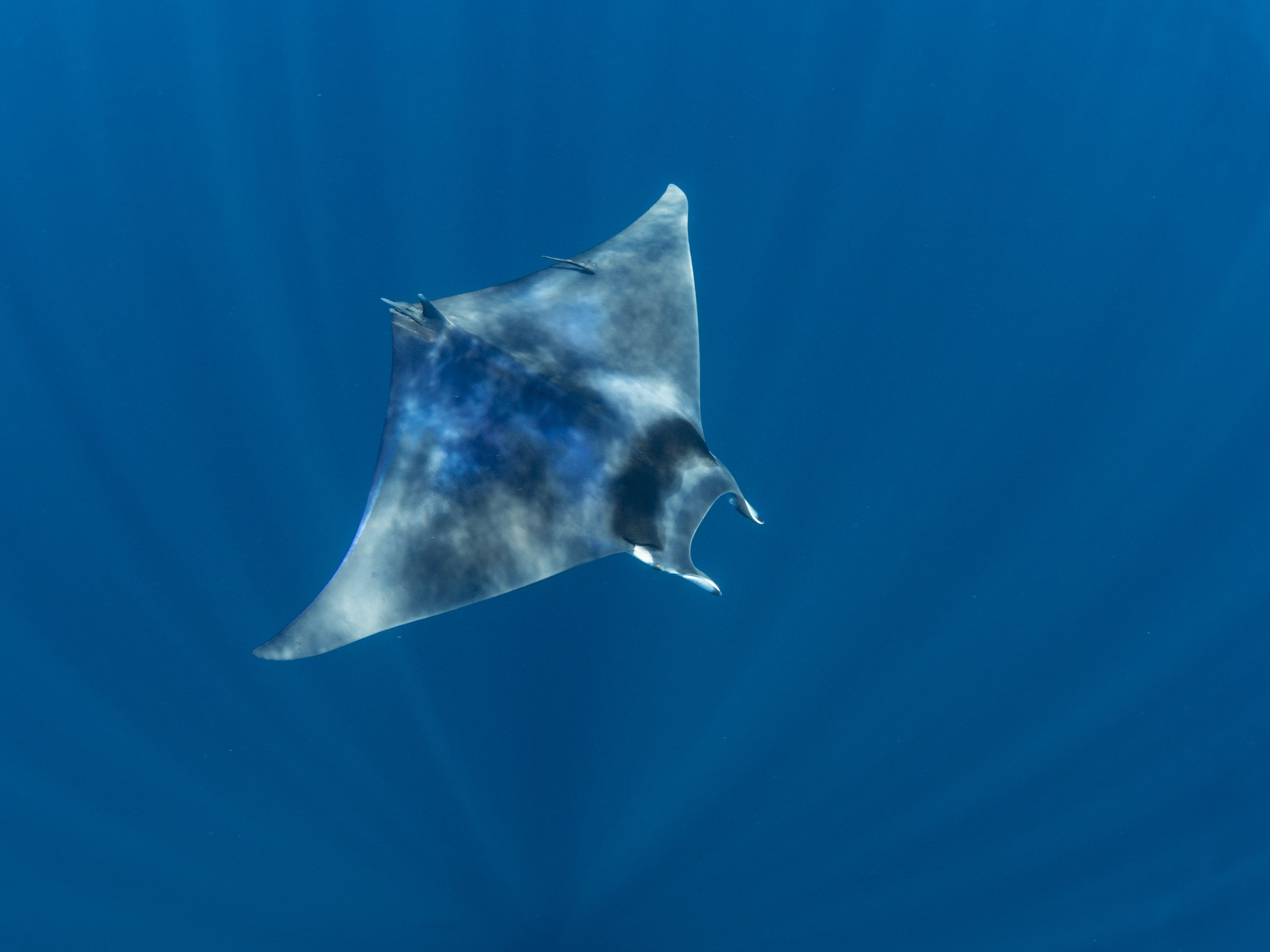 Madagascar Manta and Devil Rays
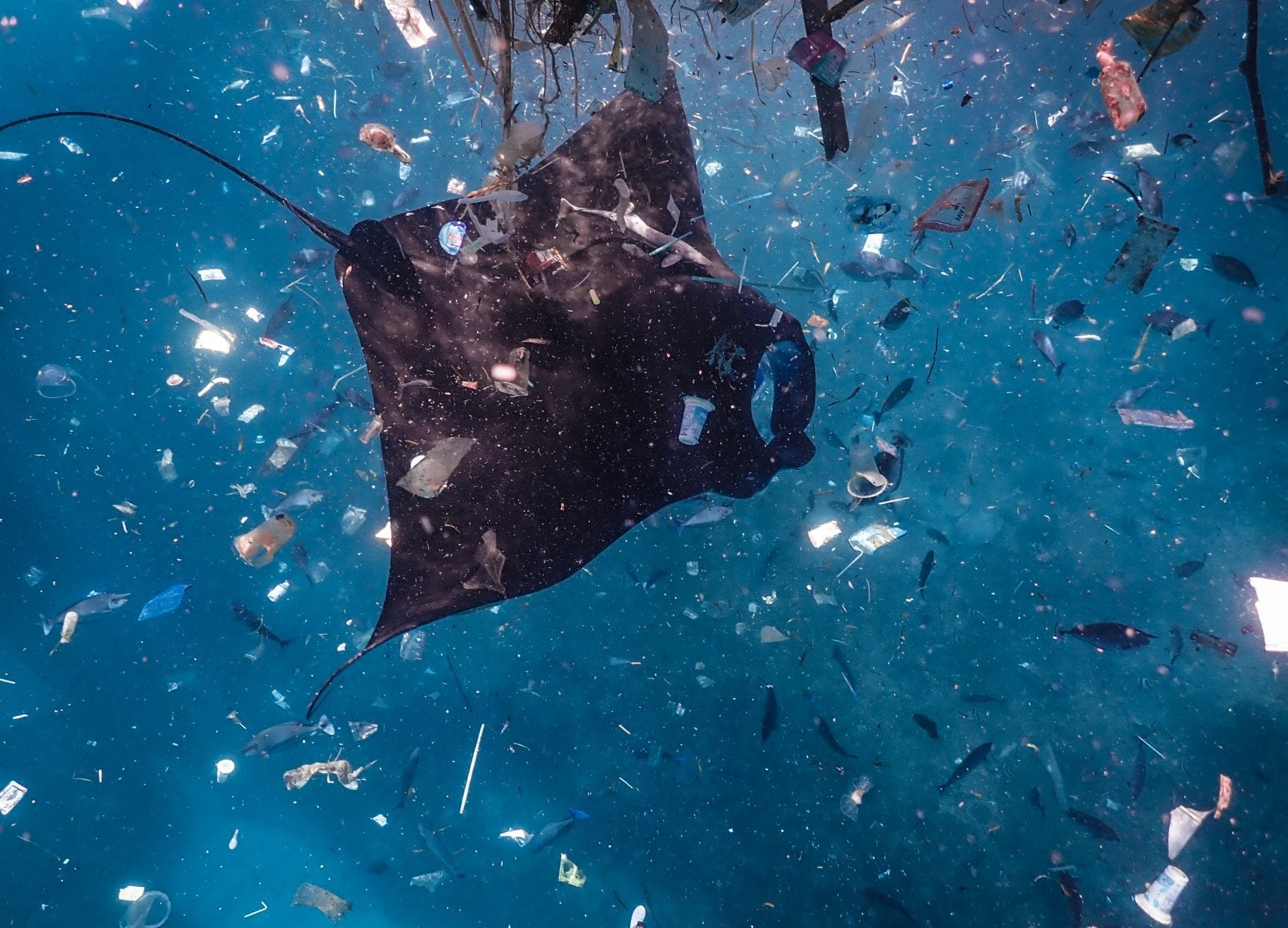 Microplastics & Megafauna