Where we work · Since 2011
Qatar
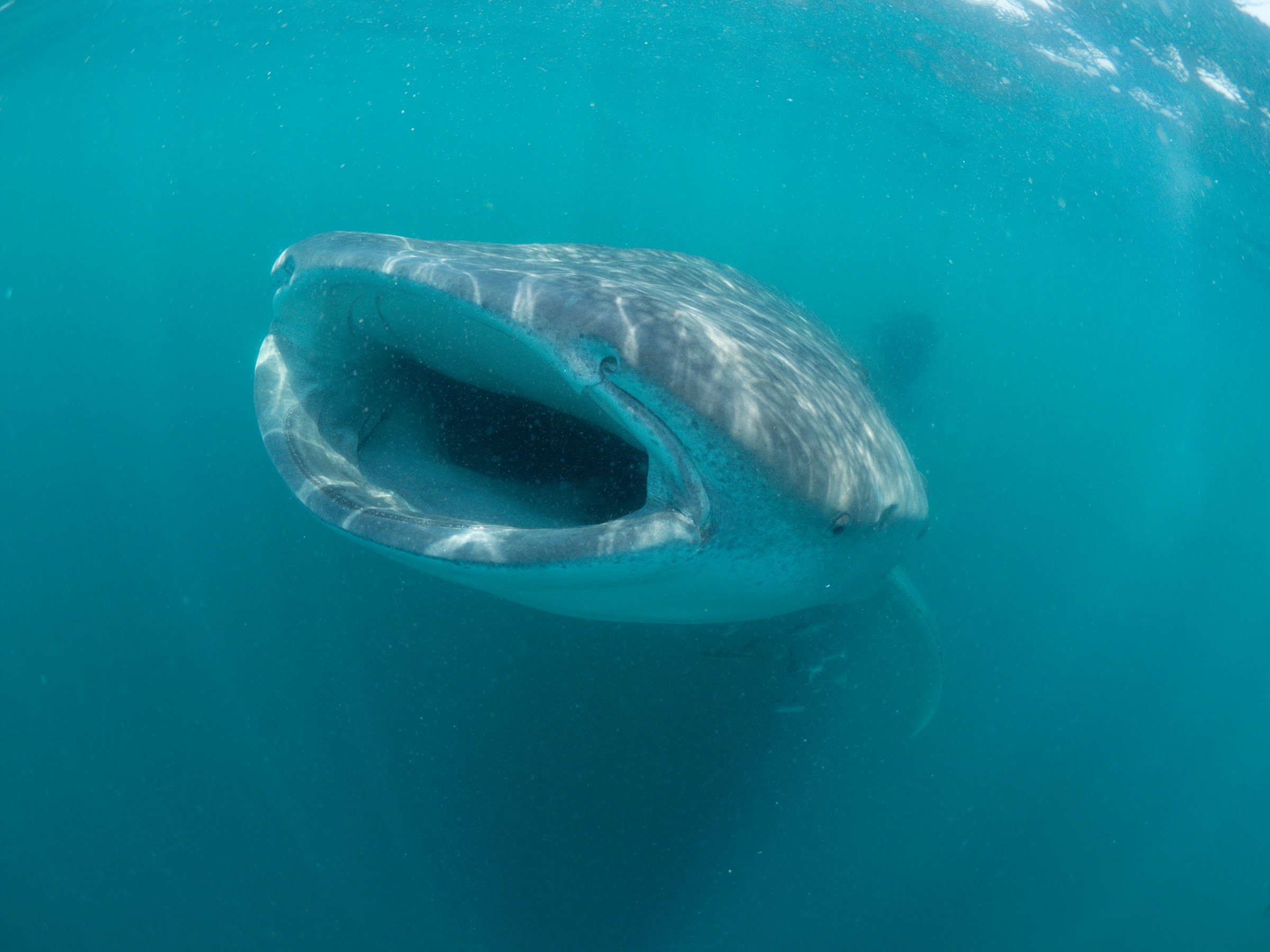
Every summer, more than a hundred whale sharks at a time aggregate off Qatar's northeast coast to feed on the eggs of spawning tuna.
Every summer, whale sharks (Rhincodon typus) aggregate in the Al Shaheen oil field, about 90 km (56 miles) off Qatar’s northeast coast, to feed on the eggs of spawning tuna. Since 2011, we have worked with Qatari partners to document the identity, residency, and movements of these sharks. Photo-identification, based on each shark’s unique spot pattern, has recorded 341 individuals there, most of them adult males, and up to 100 have been seen feeding together in a single square kilometer (0.4 square miles). Read more about our Qatar Whale Shark Project.
The research began as a partnership with Qatar’s Ministry of Municipality and Environment, led by Dr. David Robinson, with support from the Qatar Coast Guard. Fishing has been prohibited around the field’s platforms for decades; as a result, the field functions as an unintended sanctuary for the sharks, and Al Shaheen is now recognized as an Important Shark and Ray Area. Photo-identification also links these sharks with the whale sharks we study in Oman.
Our projects in Qatar
Qatar Whale Shark Project
Every summer, more than a hundred whale sharks at a time aggregate in an offshore oil field in Qatar to feed on the eggs of spawning tuna.
341 whale sharks photo-identified at Al Shaheen, 2011–2014Led by Dr. David RobinsonAbout the project →What we work on
Satellite tags and photo-identification show Qatar's whale sharks dispersing across the Gulf for the winter, into the waters of Saudi Arabia, Iran, the United Arab Emirates, and Oman, and some leave the Gulf altogether. As a result, protecting them will require countries across the region to work together.
Some of the sharks carry boat-strike scars, and a 2024 global study identified Al Shaheen among the places where measures to reduce collisions between ships and whale sharks would be most beneficial, an opportunity to make the sanctuary safer still.