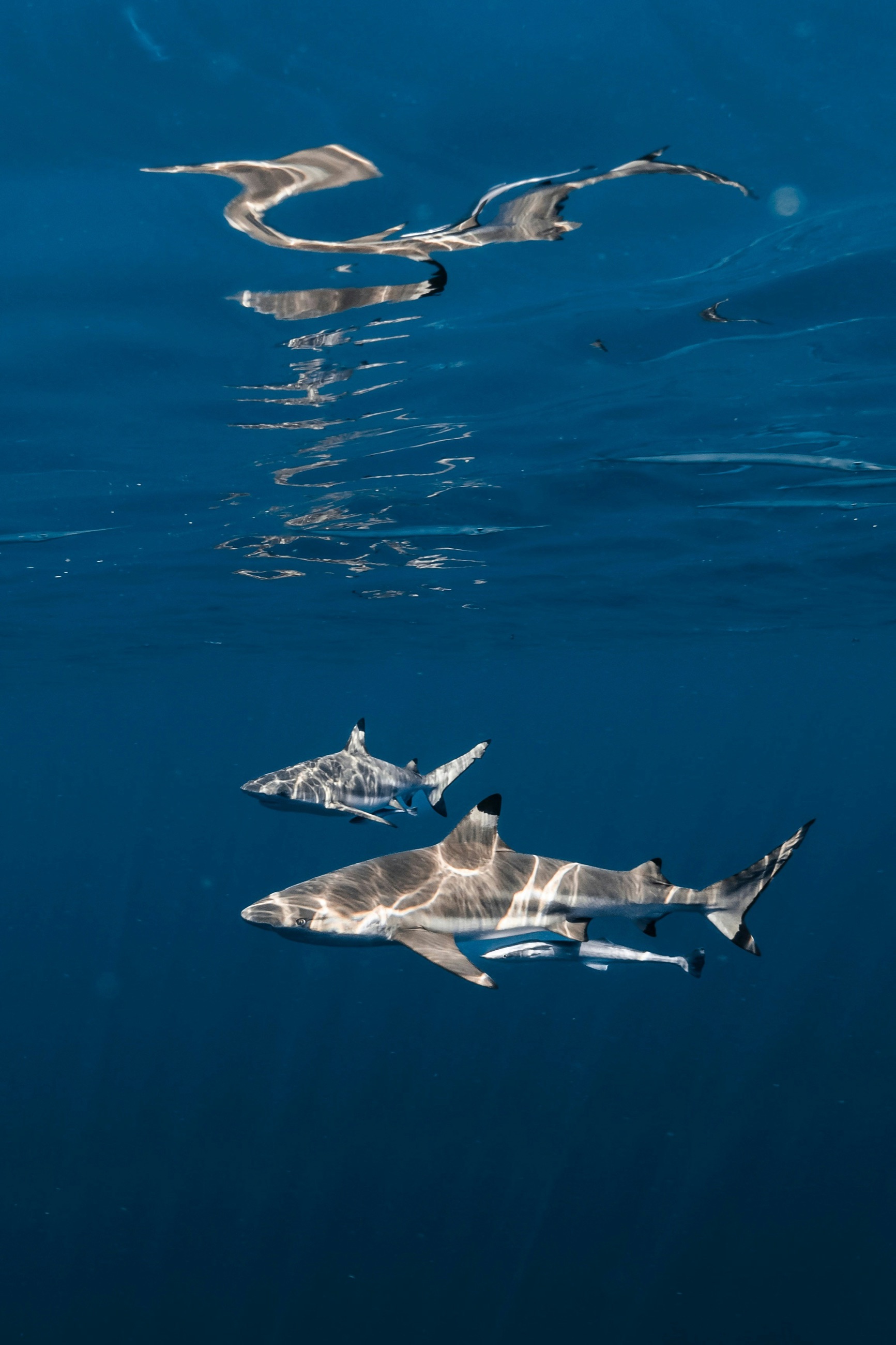




Why adopt a blacktip reef shark?
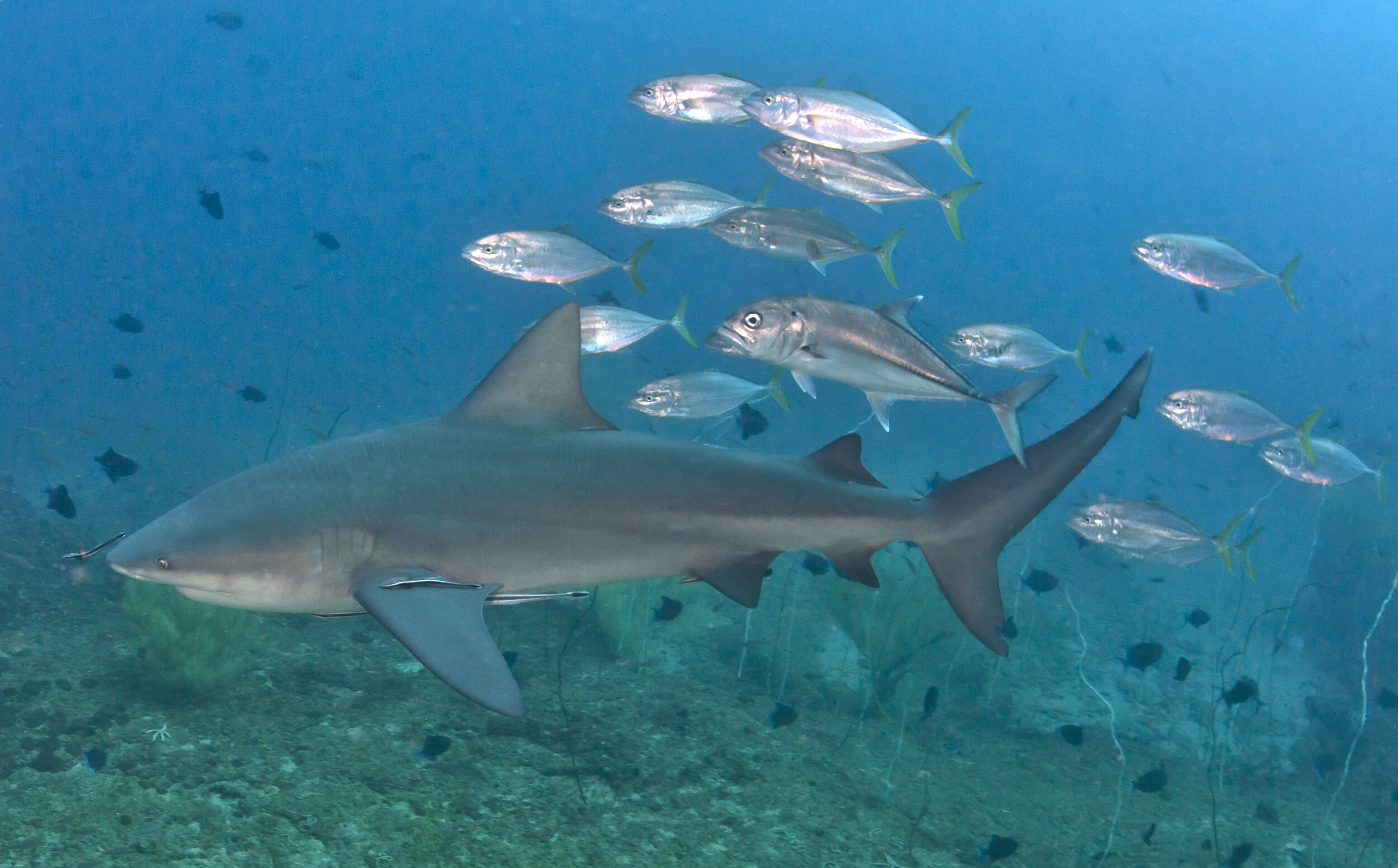
Blacktip reef sharks (Carcharhinus melanopterus) are listed as Vulnerable on the IUCN Red List, and their global population is decreasing.
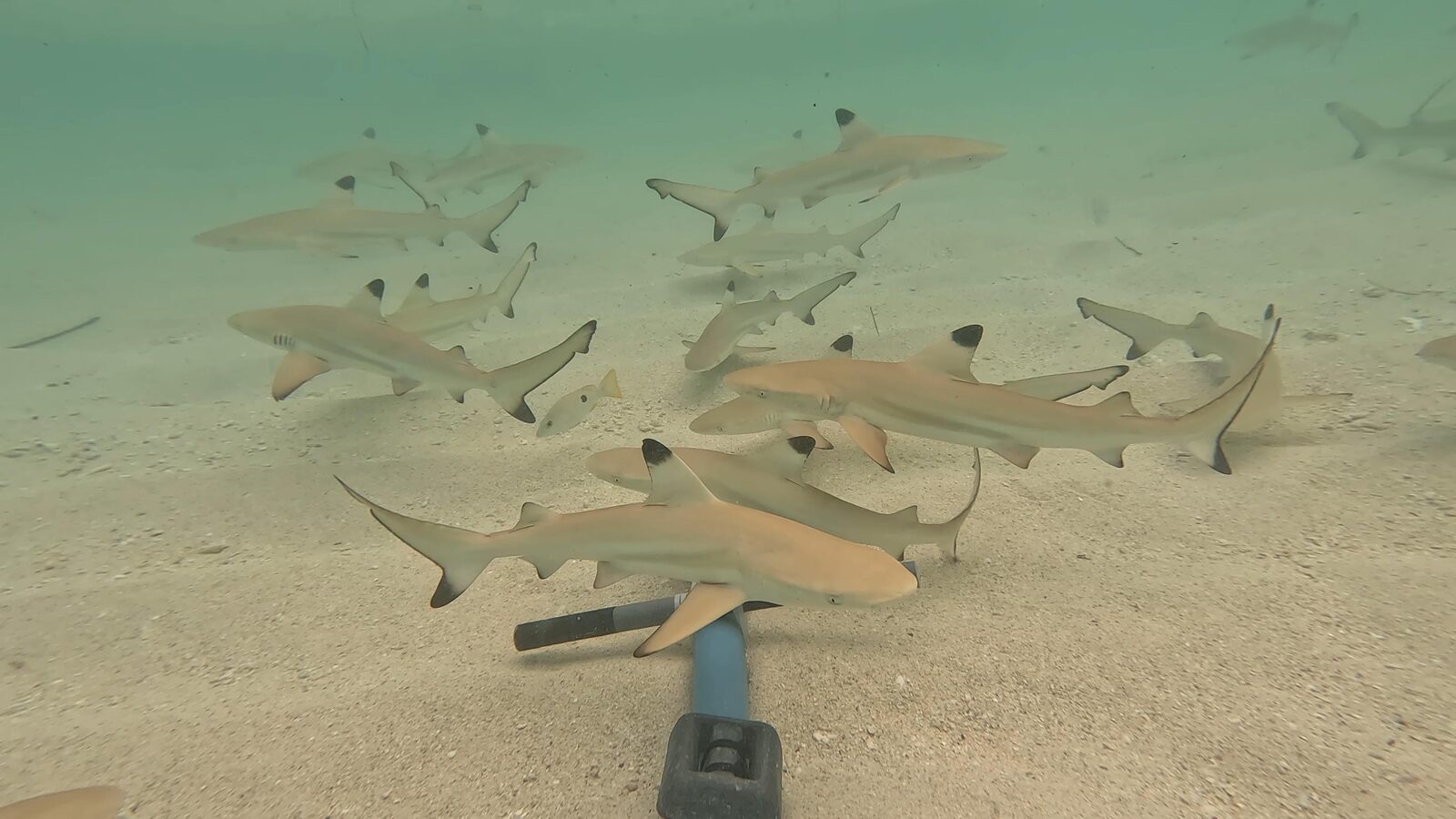
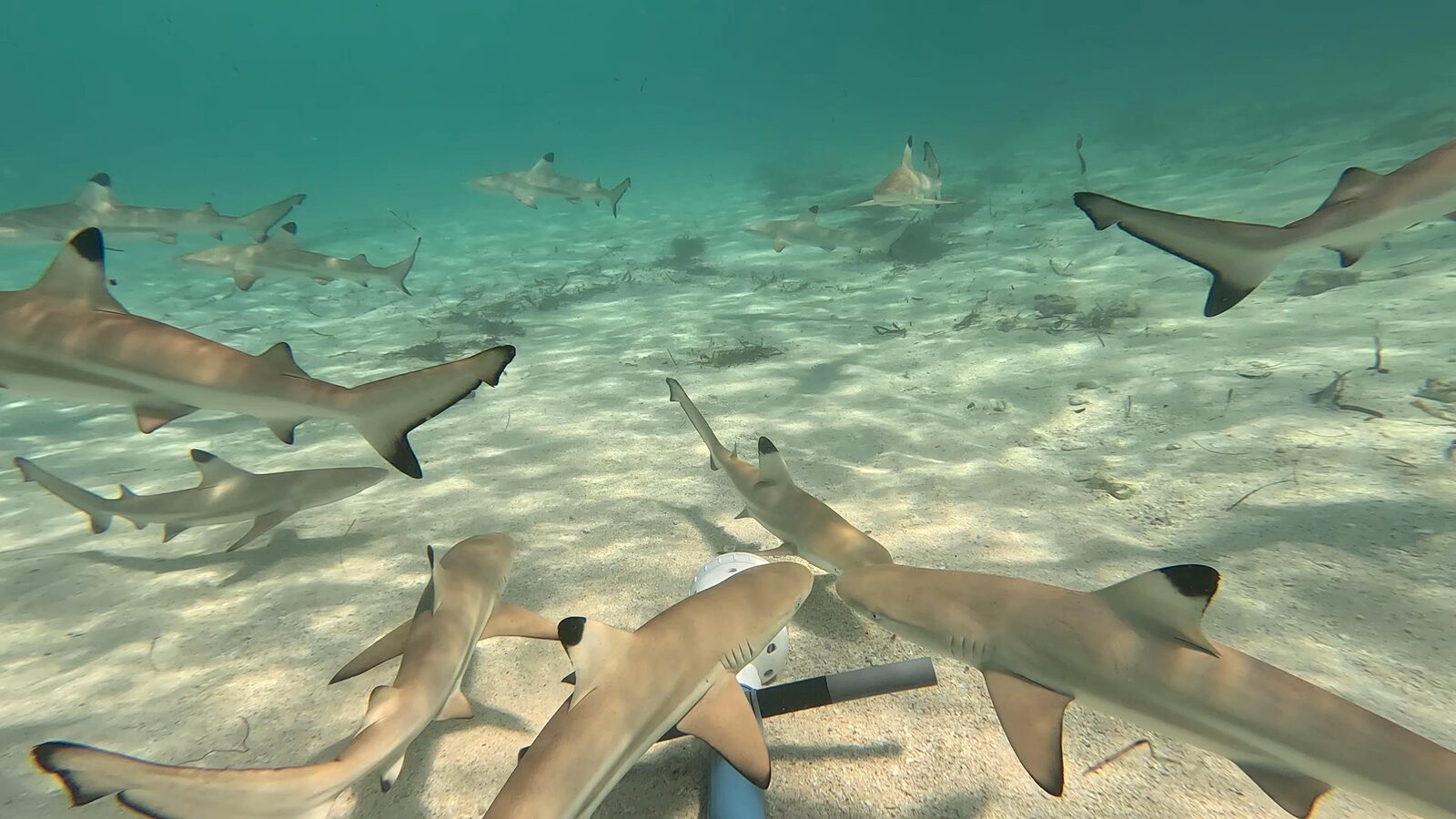
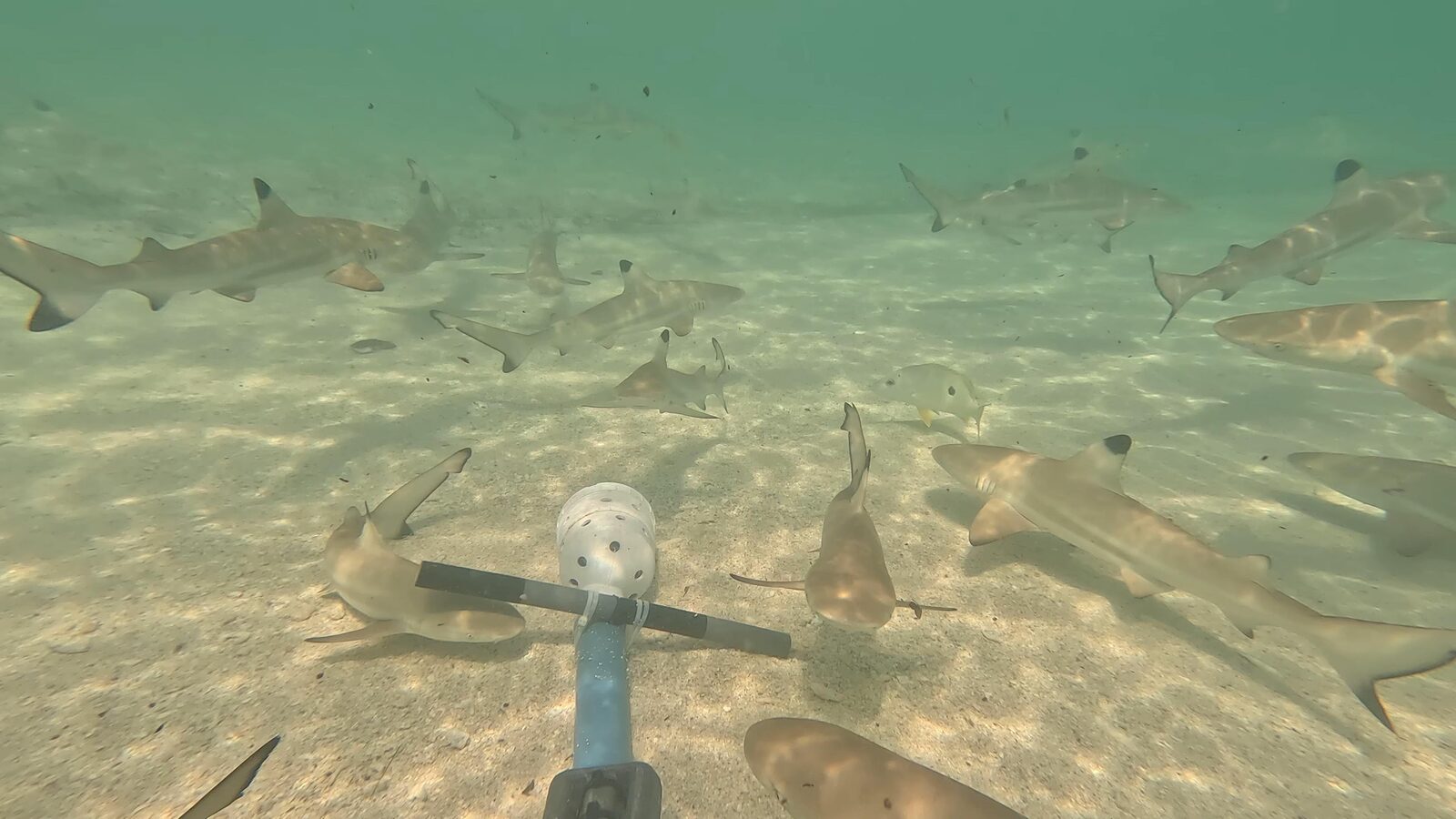
Off Mafia Island in Tanzania, blacktip reef sharks are seen regularly in the shallows around Thanda Island, inside the no-take Shungimbili Island Marine Reserve. In December 2024, MMF and Thanda Island began monitoring the young sharks that use the reserve, to test whether it is a nursery for the species and how many young sharks use it.
MMF Principal Scientist Dr. Chris Rohner leads the Tanzania Blacktip Reef Shark Project, as he does our long-running Mafia Island whale shark research, which began in 2012. The two projects share a field team and logistics.
Baited cameras and fin photo-identification
We use baited remote underwater video systems (BRUVs): a camera pointed at a bait box, left on the seabed for about 30 minutes. From the footage, the team counts the most sharks visible in a single frame, estimates each shark's length against a measuring stick attached to the frame, and extracts still images of its left dorsal fin.
Each shark's fin carries a unique pigment pattern, so the images let us recognize individuals. They are matched on Sharkbook.ai, the same platform that holds our Mafia Island whale shark identifications.
An area counts as a shark nursery when young sharks are more common there than elsewhere, stay there for long periods, and use it year after year. The study is designed to test all three, and the last needs several years of monitoring.
How your blacktip reef shark adoption helps
Your adoption supports MMF's work as a whole, including this project. Next, the team will match fin images from every survey trip to build the identification catalog, train an automated identification tool for blacktip reef sharks on Sharkbook.ai, and talk with local fishers to understand the risks the sharks face outside the reserve.
The project also plans stereo cameras for more precise size measurements, acoustic tracking to learn how the sharks move and use their habitat as they grow, and genetics to learn whether the same females return to give birth. Each of these will need dedicated funding.
Ready to help? A blacktip reef shark adoption is $39, with a personalized certificate to download straight after checkout.
Adopt a blacktip reef shark · $39