
Tanzania · Global Whale Shark Program · Since 2012
Tanzania Whale Shark Project
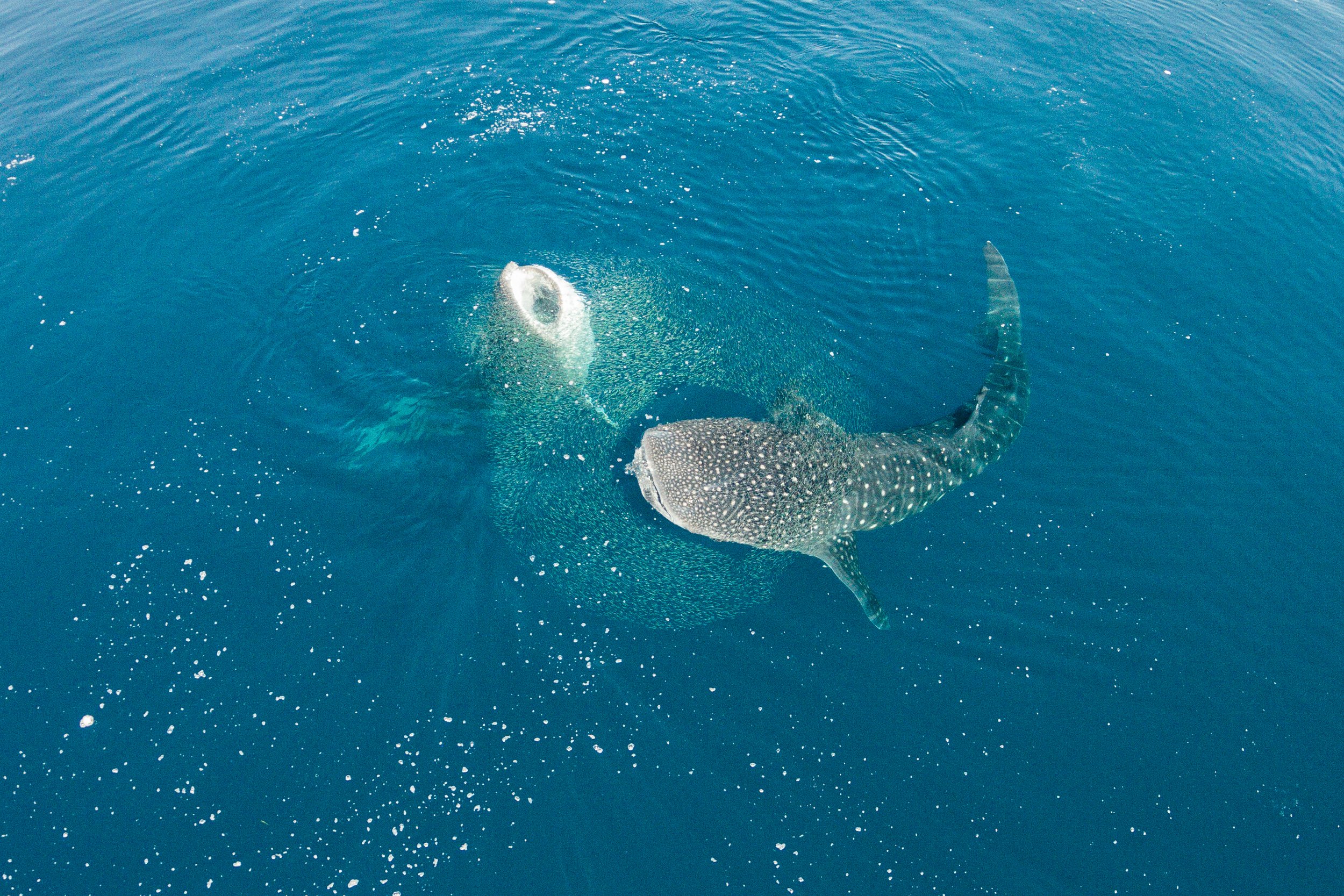
The whale sharks off Mafia Island return to the same small stretch of coast year after year, and we have monitored them since 2012 to understand and protect them.
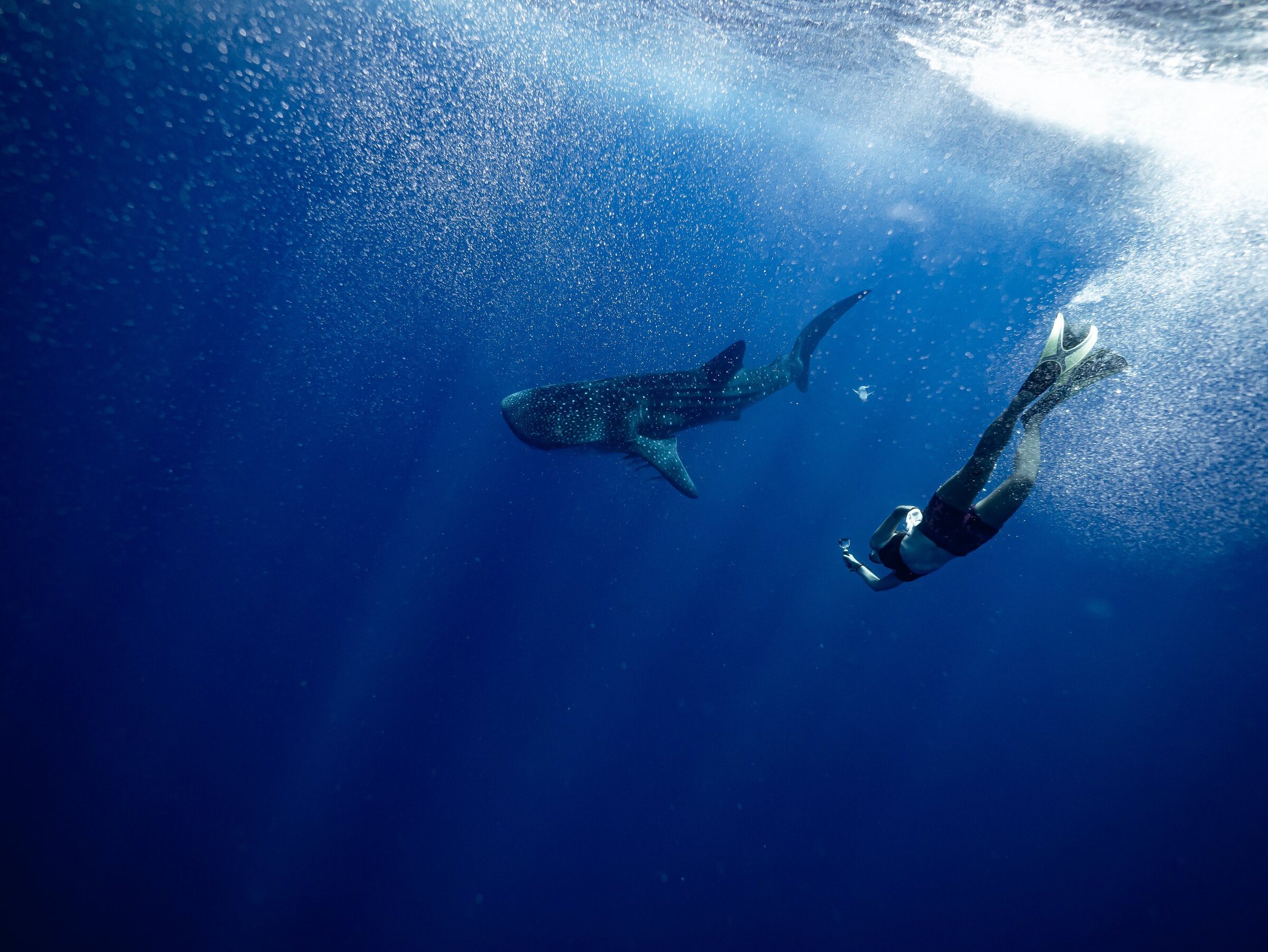
Our whale shark research in Tanzania centers on Mafia Island, off the Rufiji River Delta in the south of the country. Mafia functions as a natural laboratory for whale shark research: the sharks here show unusually high fidelity to a small stretch of coast, with individuals returning year after year, which allows us to monitor the same animals across more than a decade.
The high residency of these whale sharks (Rhincodon typus), however, also makes them uniquely susceptible to local human pressures. Whale shark tourism has grown significantly since we started the project in 2012, and a valuable fishing industry operates in the same area where we see the sharks. We therefore work with local stakeholders to minimize the impacts of fishing and tourist boats on whale sharks.
We began work at Mafia in 2012 in collaboration with WWF Tanzania, the Tanzania Fisheries Research Institute (TAFIRI), and King Abdullah University of Science and Technology (KAUST), while working closely with pioneering ecotourism operators and the Mafia District Council. Mafia Island is now a hub for ecological studies on whale sharks, and our research covers their movements, feeding ecology, genetics, population trends, behavior, social grouping, health, and the human threats they face.
Objectives
- Track the sharks’ fine-scale movements with passive acoustic telemetry, mapping their activity hotspots and seasonal changes, and use that evidence to lobby for protection measures such as a go-slow zone for boats.
- Study their short- and long-term feeding ecology, collecting plankton samples from feeding events and using stable isotope and fatty acid analyses to examine the sharks’ position in the food web, feeding locations, and prey sources.
- Examine genetic connectivity between the sharks at Mafia Island and those around the world from tissue samples, with kinship analysis to identify close relatives.
- Analyze population size trends across the full monitoring record, now more than a decade long, with robust models that show whether the population is recovering or stricter protection is needed.
- Improve estimates of demographic parameters such as survival and growth rates, using stereo-videography (filming with paired cameras) to measure the same sharks accurately over time.
- Identify the sharks’ behaviors even when they are not directly observed, such as at night, using behavioral tags that measure their 3D position and acceleration.
- Assess whether the same sharks are preferentially seen together, and use the acoustic telemetry dataset to study longer-term social groupings, so we can evaluate potential disturbance from human activities such as tourism.
- Assess the sharks’ health and bioenergetics by comparing growth rates from stereo-videography; in the future, blood samples may make it possible to monitor individual sharks’ health over time.
- Track scars and injuries in photographs to assess the main threats the sharks face, such as boat strikes or entanglement in nets, and monitor injury frequency over time to evaluate whether management strategies and regulations are working.
What we've done
- Legally protected whale sharks in Tanzania.
- Established Mafia Island as an IUCN Important Shark & Ray Area.
- Raised the standing of whale sharks in the local community, building appreciation and awareness of the species.
- Strengthened the ecotourism industry, with whale sharks drawing national and international visitors.
- Established Mafia Island as a global “model population” for ecological studies on whale sharks.
- Identified 268 individual whale sharks at Mafia Island, with our monitoring showing the population remaining stable, a rare finding for this Endangered species.
- Quantified the value of whale sharks to Mafia Island, with visitor surveys valuing the whale shark season at millions of dollars to the local economy each year.
Help us secure the future of Mafia Island's whale sharks
Each survey season puts our team on the water with the same sharks we have monitored for more than a decade, and lets us support the local operators who keep tours safe for them. Your gift funds that work.
Research findings
Population size and residency
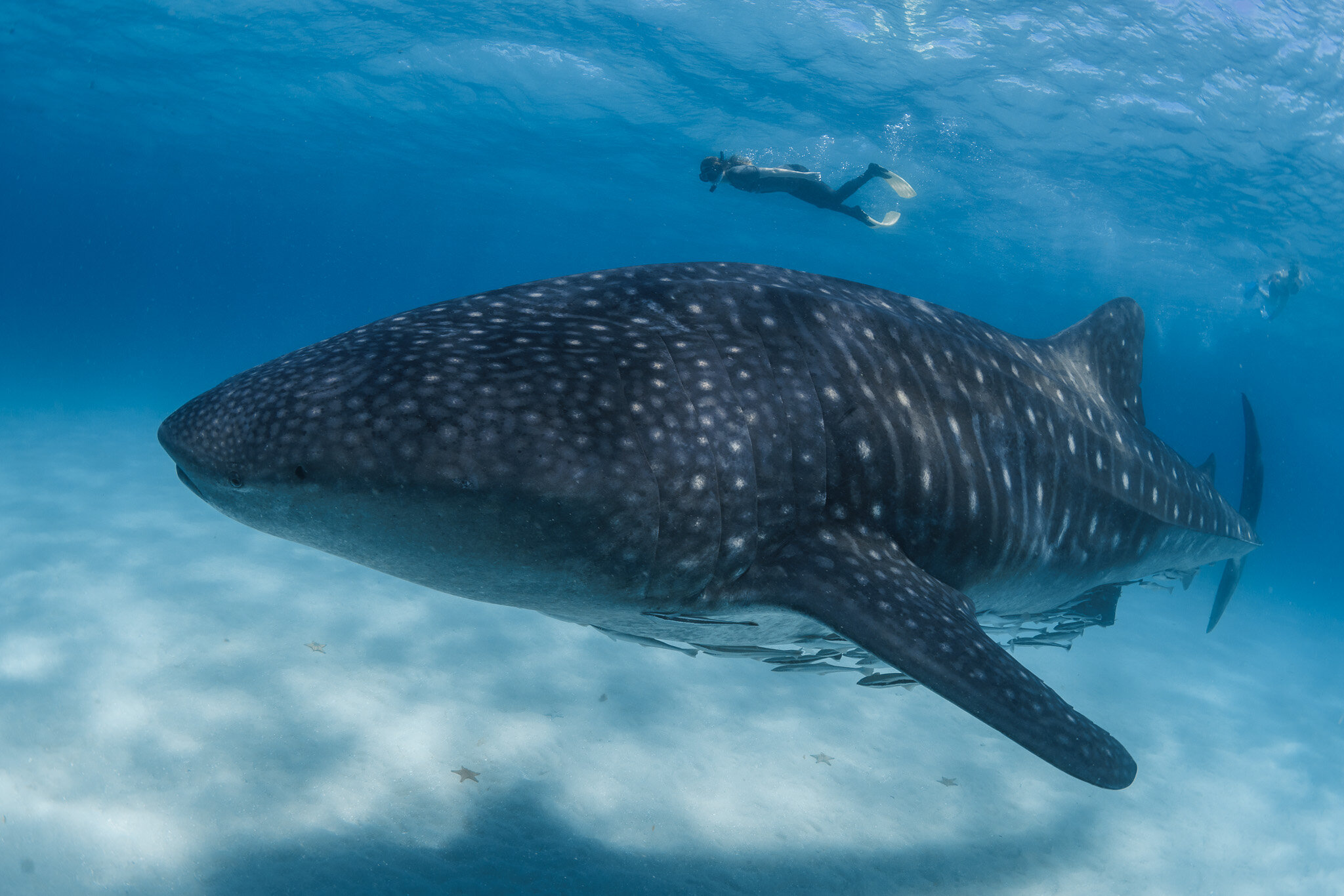
More than a decade of surveys off Mafia Island has produced one of the most complete pictures of any whale shark population in the world. We have now identified 268 individual whale sharks at Mafia Island, a small number by global standards that leaves the population vulnerable to even low levels of mortality. However, our capture-mark-recapture models, which estimate population size and survival from repeat identifications, show it holding stable, with high year-to-year survival. Seven sharks have been recorded in 11 of our 12 survey seasons. In the 2025 season we ran 26 boat-based surveys and recorded 171 encounters with 62 individual sharks, an average of 6.6 encounters per trip. That is well up on the shorter 2024 season (3.0 per trip) and above our long-term average of 5.6. Almost all the sharks we see are males (98% of those whose sex we could determine in 2025), and most are not yet adults, typically 4 to 8 m (13 to 26 feet) long.
Feeding ecology
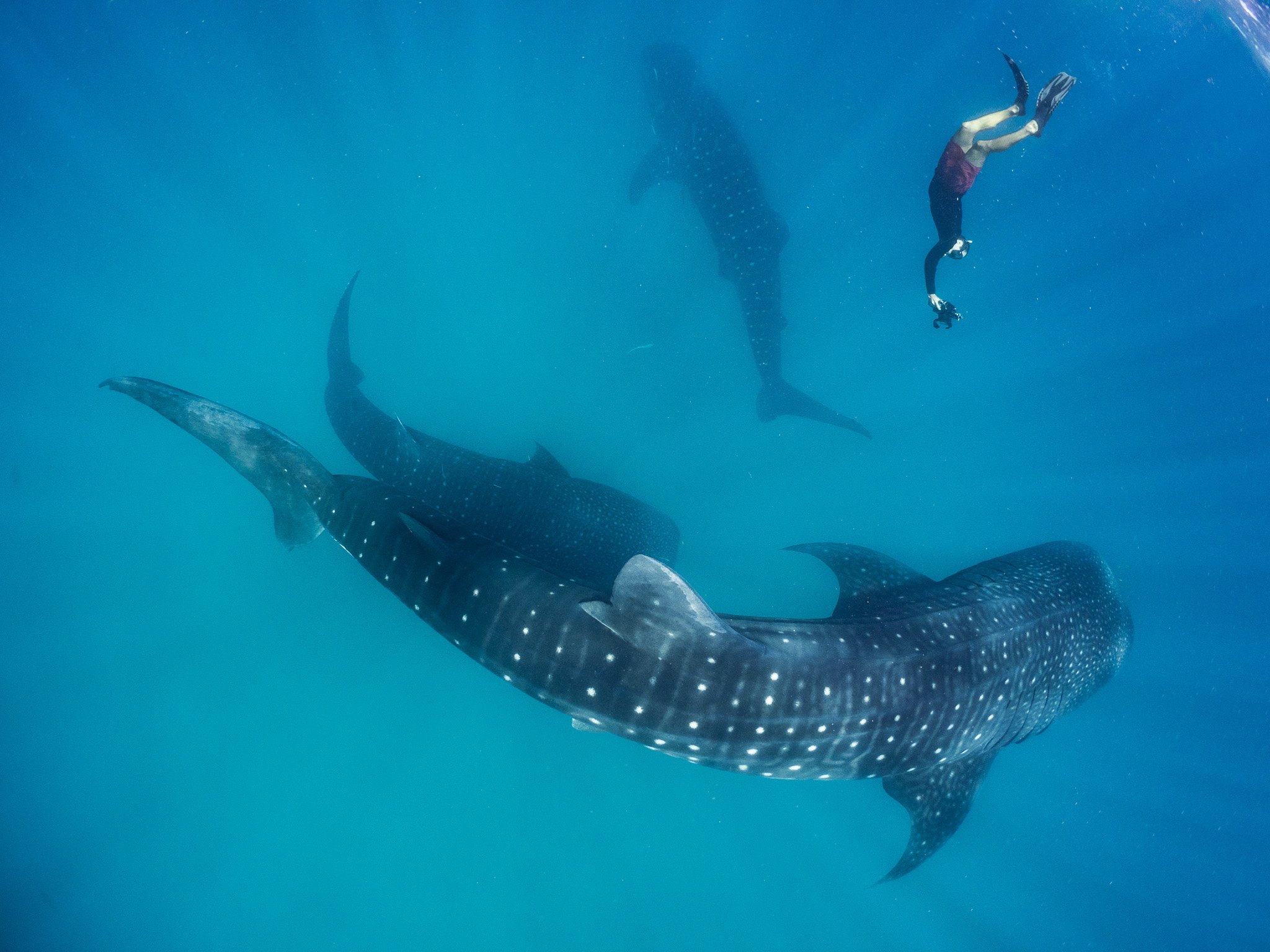
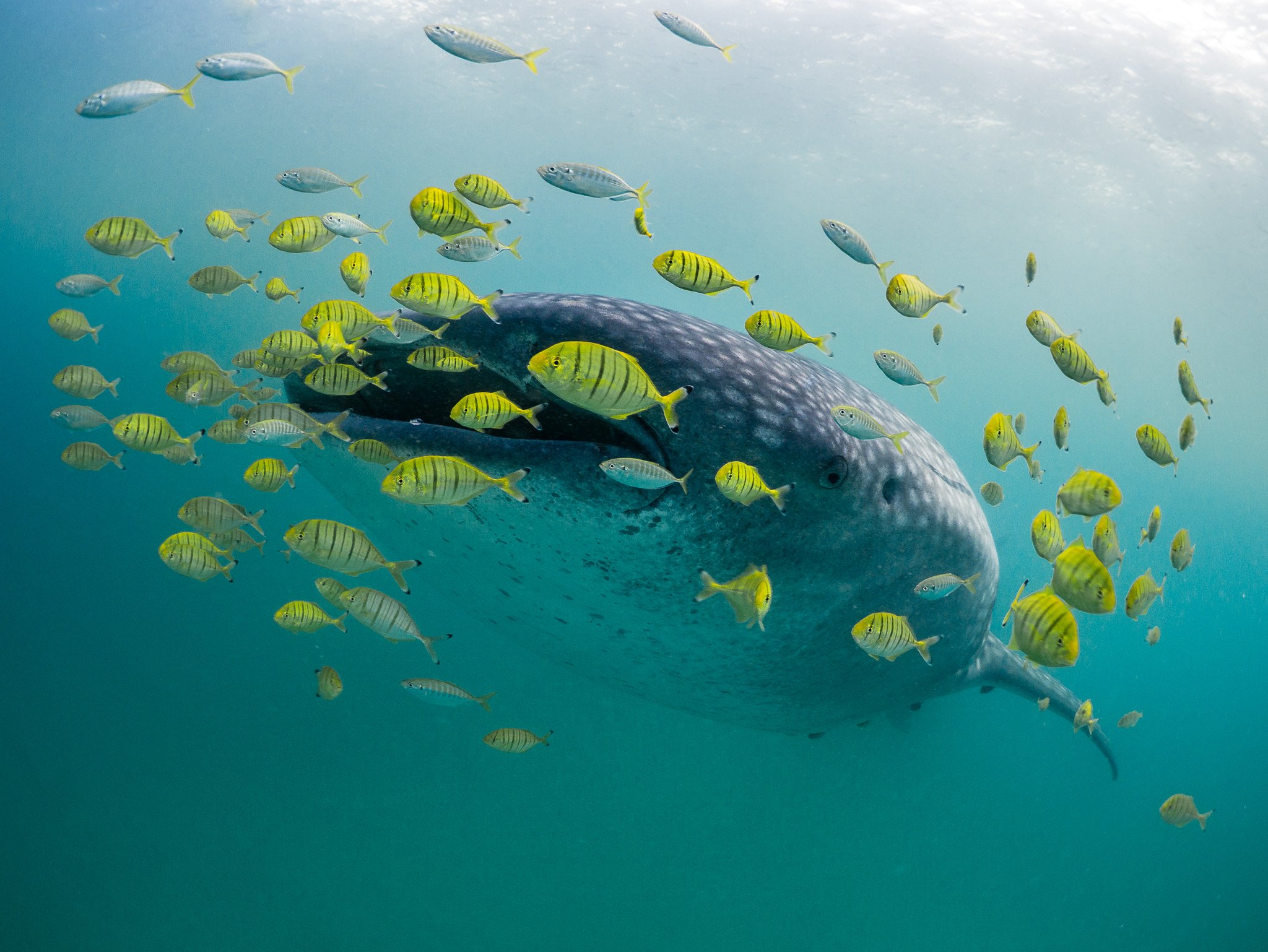
Mafia’s whale sharks aggregate to feed on a small shrimp, Belzebub hanseni, which concentrates in dense patches in the shallow bay. Shark numbers follow their prey: on trips where sharks were feeding, we saw more than twice as many animals as on trips where they were not. Prey abundance also varies sharply between years, and the same shrimp is eaten by the small fish targeted by the local ring-net fishery; as a result, whale shark feeding habitat and fishing effort overlap in the same water.
Cryptic residency
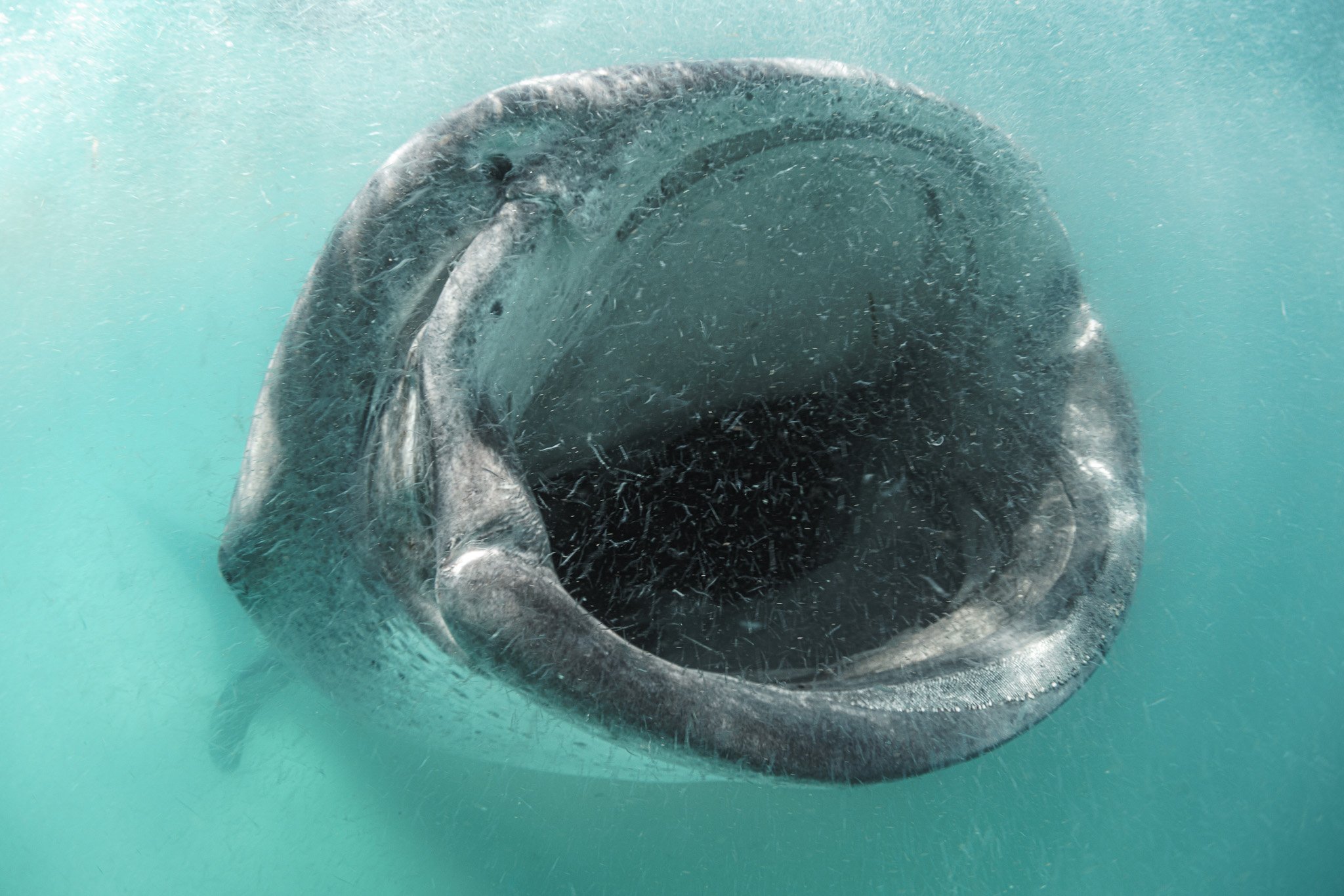
Acoustic tags on 51 sharks showed that, although whale sharks stop appearing at the surface between March and September, they do not leave. Instead, they move deeper and slightly offshore, remaining within a core area of roughly 13 km² (5 square miles). A predictable core habitat that small is encouraging for management, because speed limits for boats and restrictions on net use in a small, well-defined area could deliver real protection.
Long-distance movements
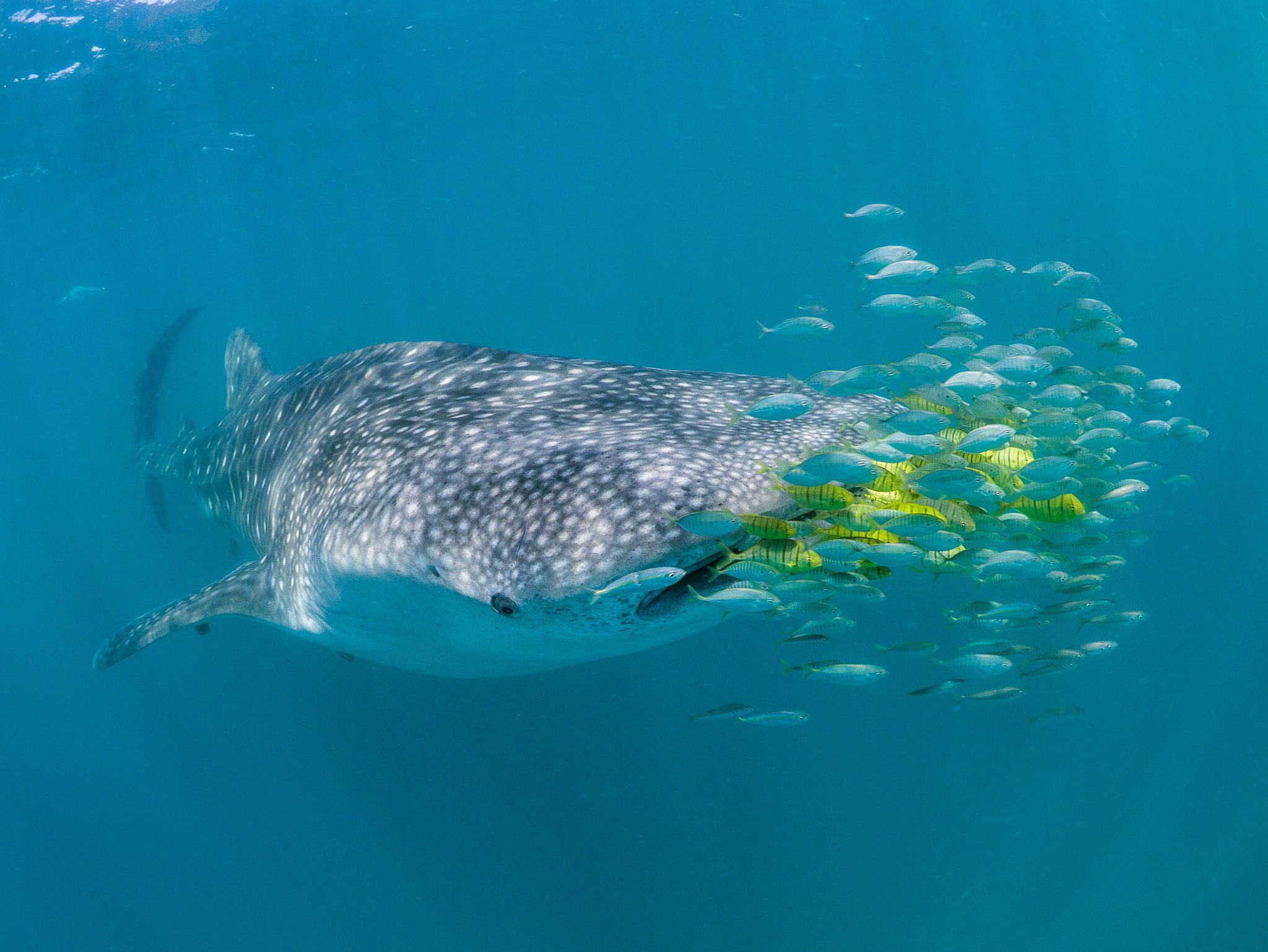
Satellite tags deployed in 2023 with the King Abdullah University of Science and Technology showed one Mafia shark traveling north past Zanzibar and Pemba to Somalia and then east into the open Indian Ocean, her tag releasing roughly halfway between the Seychelles and the Maldives. Photo-identification matches support this picture, with individual sharks recorded both at Mafia and in the Seychelles, and sharks first identified in southern Mozambique later resighted at Mafia. Protecting this population, therefore, means looking well beyond Tanzanian waters.
Economic value and tourism pressure
Working with the Whale Shark Tour Operators Network of Tanzania, we surveyed 200 visitors during the 2025 season, repeating surveys we ran in 2013 and 2023, and the results make the economic case for protection. Nearly three quarters of respondents had decided to take a whale shark tour before they arrived, and 46% said they would not have come to Mafia Island at all without them, up from 29% two years earlier. Visitors stayed an average of 5.4 days and spent around US$1,142 each on the island. With 3,139 whale shark tour fees paid between September 2025 and February 2026, that places the season’s economic footprint at roughly US$2.4–3.6 million.
Satisfaction remains high, with 93% of visitors satisfied and 99% saying they would recommend the experience. Crowding, however, has increased: almost half reported too many boats around a single shark, up from under a third in 2023. The largest group of snorkelers visitors saw with one shark averaged about 16 people, well above both the maximum of ten recommended in the code of conduct and the eight that visitors themselves considered reasonable. Crowded sharks dive deep to escape, which is detrimental to the animals and, ultimately, to the experience. Supporting the local operator network to uphold the code of conduct is therefore now one of our priorities at Mafia.
National Geographic film
The whale sharks of Mafia Island, and our research there, feature in this short National Geographic video, Why the World’s Biggest Sharks Love Mafia Island.
MMF Project Team
 Dr. Chris Rohner
 Dr. Clare Prebble
 Dr. Simon Pierce
Collaborators and Partners



Recent research
- 2025Trophic and feeding ecology of whale sharks (Rhincodon typus) using bulk stable isotope analysis
- 2022Improving sightings-derived residency estimation for whale shark aggregations: A novel metric applied to a global data set
- The need for long-term population monitoring of the world’s largest fish
- Pieces in a global puzzle: Population genetics at two whale shark aggregations in the western Indian Ocean
- 2020No place like home? High residency and predictable seasonal movement of whale sharks off Tanzania
- 2018Limited latitudinal ranging of juvenile whale sharks in the Western Indian Ocean suggests the existence of regional management units
- 2017Undersea constellations: The global biology of an endangered marine megavertebrate further informed through citizen science
- 2015Laser photogrammetry improves size and demographic estimates for whale sharks
In the news
Coverage of this work.
 Coral Sea Whale Shark Project
 Galapagos Whale Shark Project
 Madagascar Whale Shark Project
 Microplastics & Megafauna