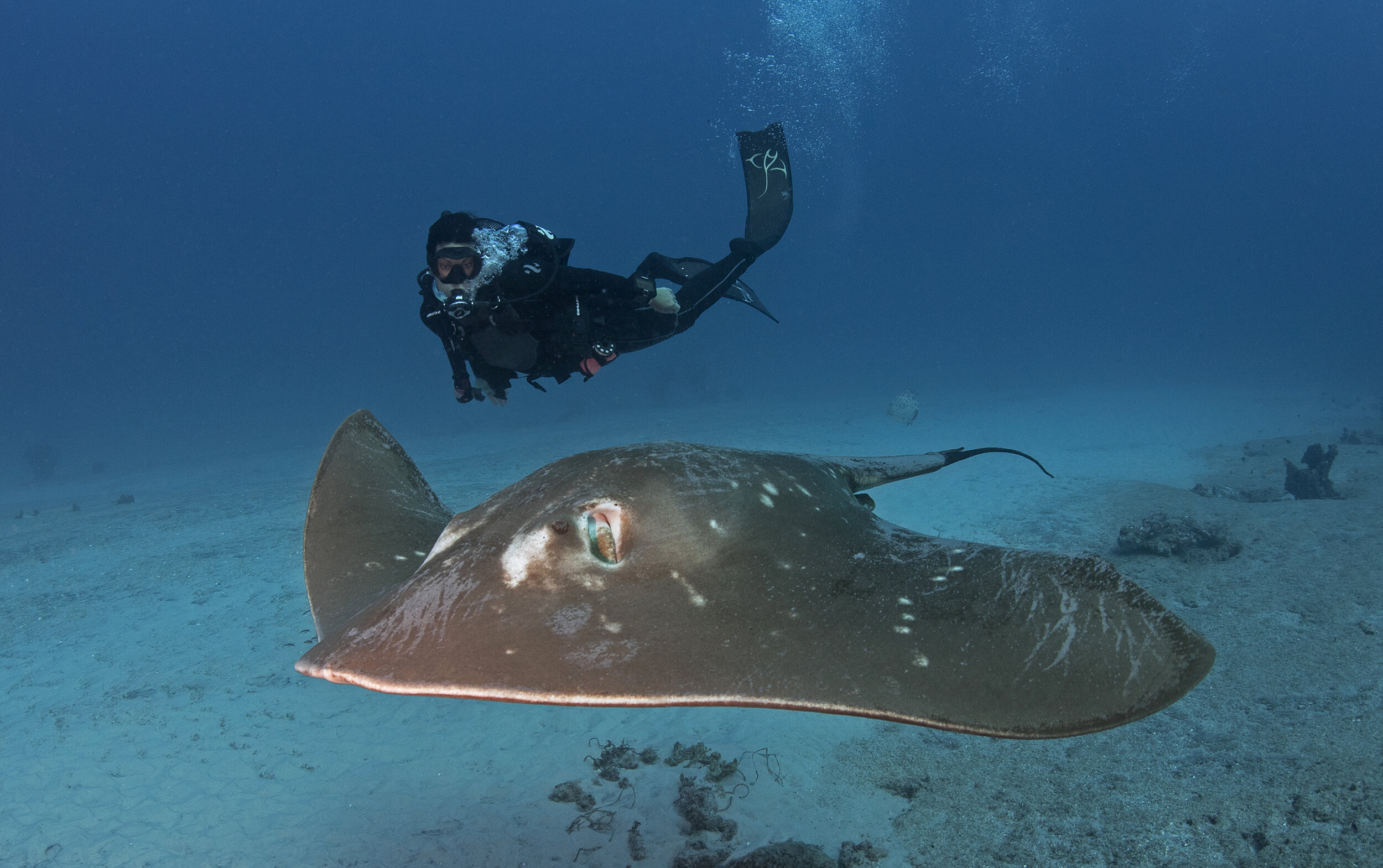
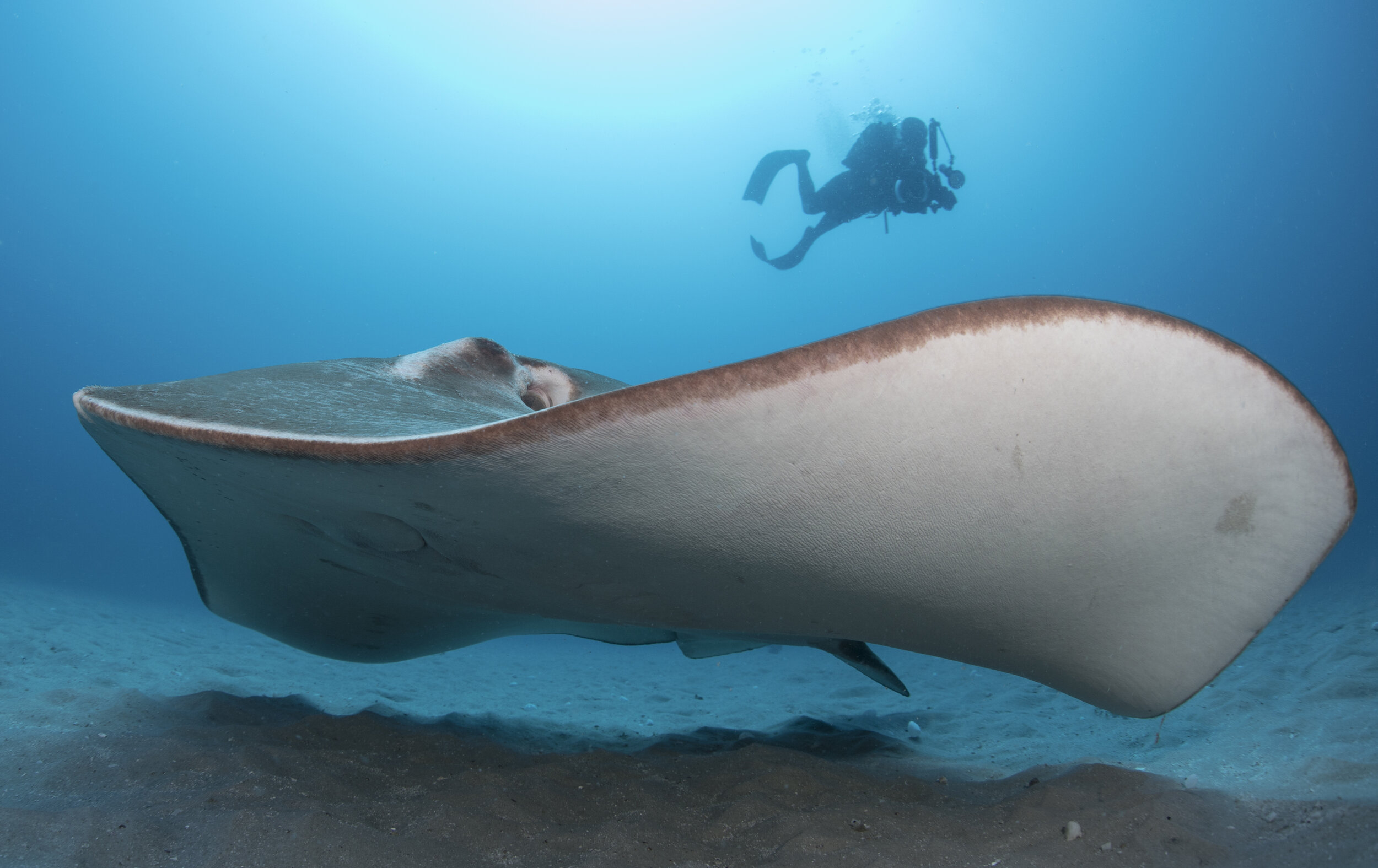




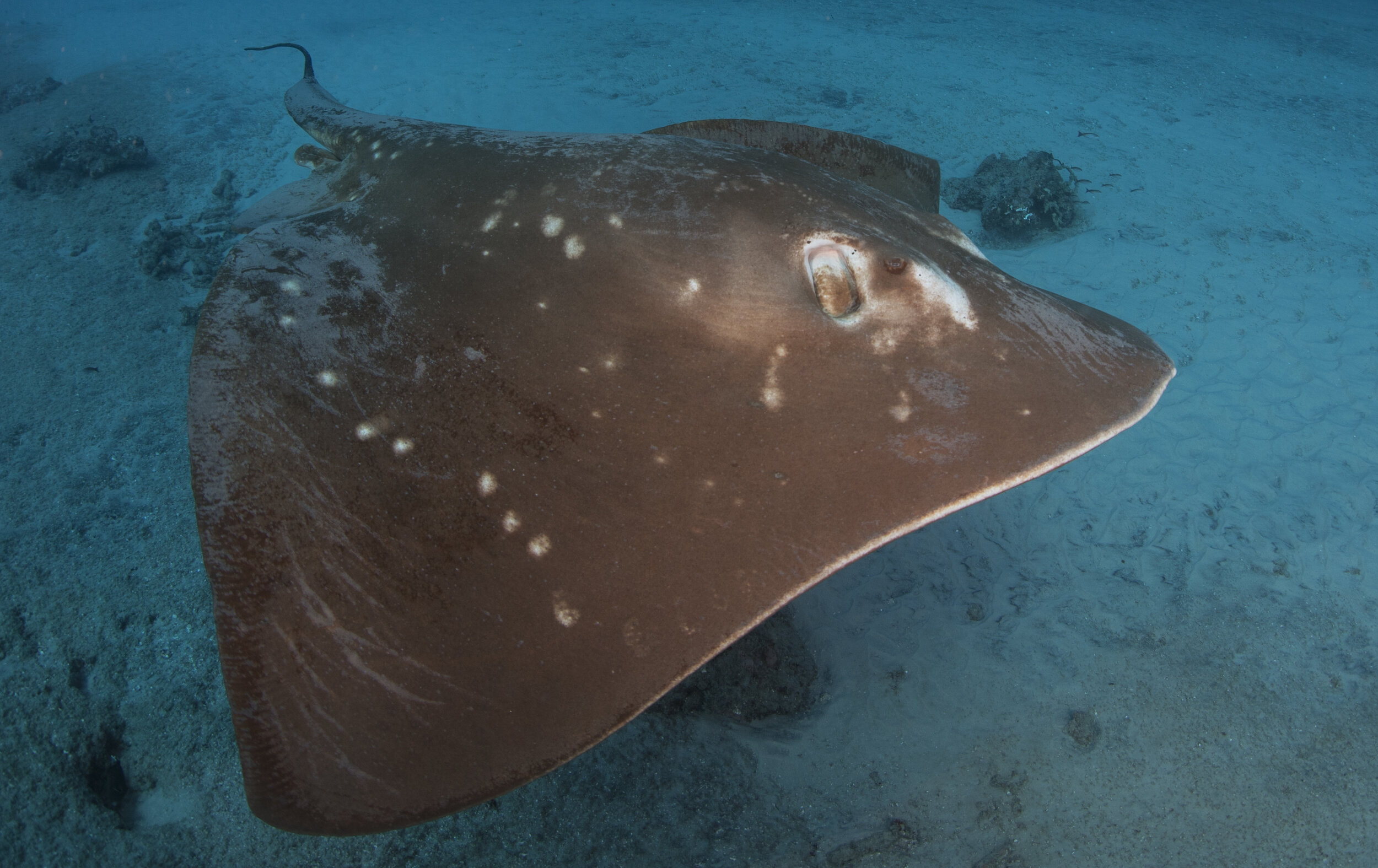
A smalleye stingray glides over sand in southern Mozambique, showing the white spots across its brown back and its tiny eye

Adopt a Smalleye Stingray

The largest marine stingray on record, a rare giant MMF scientists first reported from Africa in 2008.

Adopt a smalleye stingray · $39Personalized certificate · Instant download

Your smalleye stingray adoption

Adopt a smalleye stingray, the largest marine stingray on record. This symbolic adoption comes with a personalized certificate and supports MMF's work, including our research on this rare, little-known giant in southern Mozambique.

  • 222 cmmaximum recorded disc width
  • 5,000+ kmrange extension when MMF found them in Africa
  • ~100individual rays identified by MMF in Mozambique
  • 400 kmreturn trip by one pregnant female

What you'll give

The name stays in your browser and is not stored by MMF. You can change it after checkout.

Plus a gift card with your own message:

  • Birthday gift cardBirthday
  • Valentine's Day gift cardValentine's Day
  • Christmas gift cardChristmas
Dr. Simon Pierce

Signed by the scientist

Every adoption certificate is signed by MMF's Co-Founder & Executive Director.

Dr. Simon PierceCo-Founder & Executive Director, Marine Megafauna Foundation

Why adopt a smalleye stingray?

Looking to adopt a stingray? When you adopt a smalleye stingray, you back research on one of the ocean's least-known giants. The smalleye (Megatrygon microps) is the largest marine stingray on record, reaching disc widths of up to 222 cm, yet almost nothing is known about it. It is listed as Data Deficient on the IUCN Red List.

Southern Mozambique is the best place in the world to study it. MMF researchers reported the first record of the species in Africa in 2008, a range extension of more than 5,000 km (3,100 miles) from its closest known location, in the Maldives. Elsewhere, sightings are infrequent, and MMF co-founder Dr. Andrea Marshall has written that southern Mozambique may hold the largest remaining population of these giant rays.

That population faces growing pressure. Gill-netting, long-lining, and seine netting have increased markedly along the Mozambican coast, and the smalleye's large size and curiosity toward people make it an easy target. Large stingrays typically take years to reach adulthood and have small litters, so losses are slow to replace. When Mozambique's fishing law protected whale sharks and manta rays, smalleye stingrays were left out, and MMF has lobbied for them to be added.

About smalleye stingrays

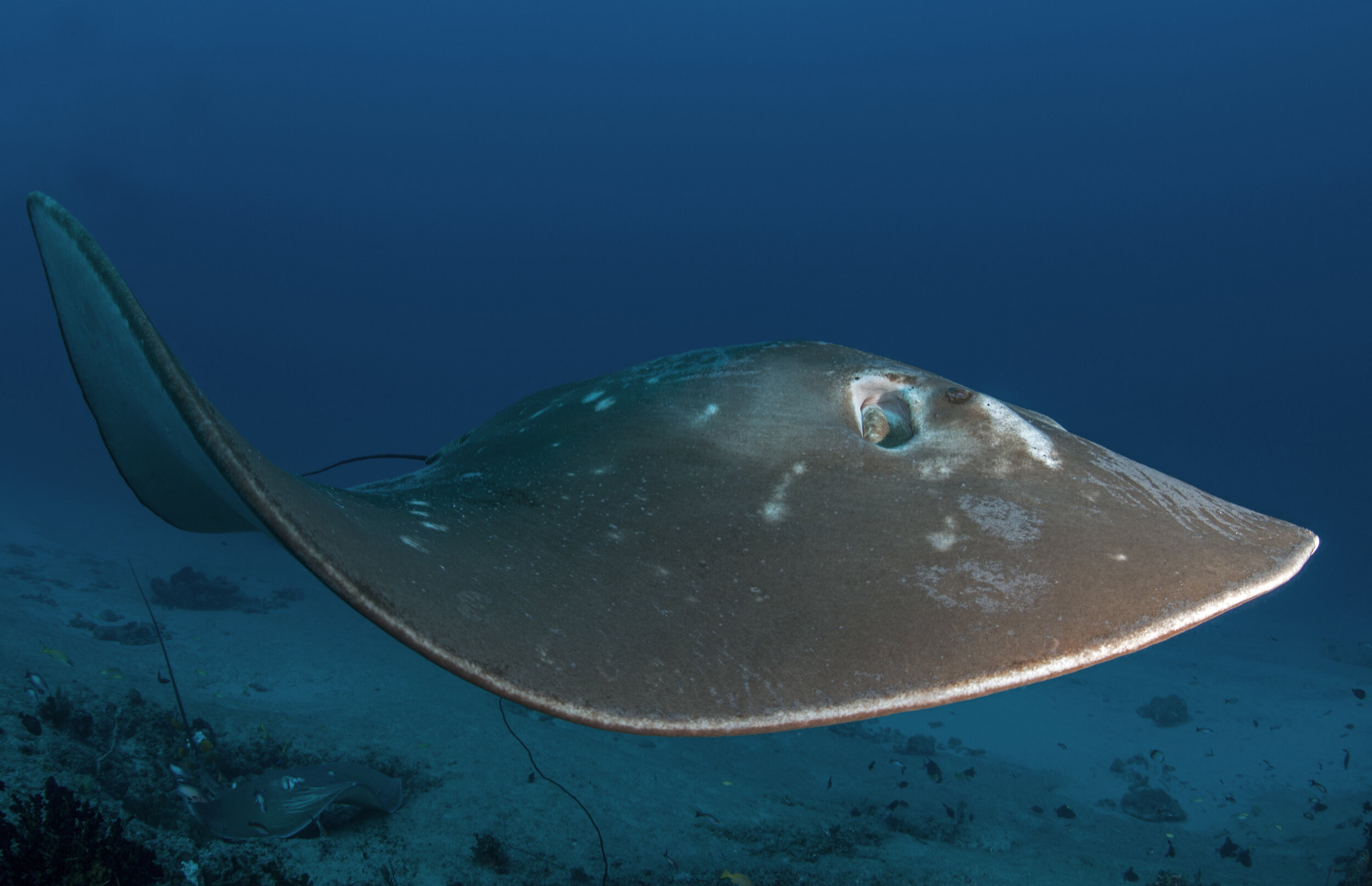
The name fits. Their eyes are tiny for their body size, and MMF researchers often see them bump into soft coral sea whips and sponges as they move around the inshore reefs to visit cleaning stations. There, reef bannerfish and other small fish appear to pick parasites from their skin.

Their long, wing-like pectoral fins are built for swimming, and researchers once thought smalleyes might never rest on the seabed. Then, after the first tagging, the divers followed him across the sand and watched him stop and bury himself, just like a typical stingray.

Each ray carries white spots across its back, and MMF has shown that the pattern is stable enough to identify individuals over many years. Those photographs have revealed long trips along the coast: one near-term pregnant female traveled from Tofo to the Bazaruto Archipelago and back, a 400 km (250 mile) return trip, and came back no longer visibly pregnant. In 2025 an MMF researcher filmed a pair courting at the surface in Tofo.
How your smalleye stingray adoption helps

Your smalleye stingray adoption supports MMF's work as a whole, including the Mozambique Smalleye Stingray Research Project, led by Dr. Nakia Cullain, and MMF's wider research and conservation work along Mozambique's Inhambane coast. The team is beginning to estimate the abundance and movements of smalleyes along the southern Mozambican coast, and plans to monitor artisanal fisheries to measure catches of the species and identify hotspots for further investigation.

Since reporting the species from Mozambique in 2008, MMF has:

  • Identified almost 100 individual smalleye stingrays in southern Mozambique by photo-identification, the largest database of its kind in the world, helped by photos and video from recreational divers.
  • Published the first study of how long the rays' dorsal spot patterns last, and whether photo-identification works for monitoring them over the long term.
  • Recorded regular sightings at more than a dozen sites in southern Mozambique, including throughout the Bazaruto Seascape.
  • Placed the first tags on free-swimming smalleye stingrays: 11 tags by 2023, with three rays carrying two tags each, and more rays tagged at Tofo in August 2026. Their acoustic signals are logged by the underwater receiver network MMF shares with partners.
  • Co-authored the current IUCN Red List assessment for the species.

Ready to help? A smalleye stingray adoption is $39, with a personalized certificate to download straight after checkout.

Adopt a smalleye stingray · $39
How it works

  1. 1

    Adopt

    Pay securely in the pop-up. Your receipt arrives by email.

  2. 2

    Add the name

    Type the adoptee's name and see it on the certificate.

  3. 3

    Download and give

    Download the certificate and a gift card, then print or forward them.

Smalleye stingray adoption FAQs

How big do smalleye stingrays get?

Smalleye stingrays are the largest marine stingrays on record, reaching disc widths of up to 222 cm. The first one MMF tagged was a mature male of about 2 meters disc width, not a particularly large individual.

Are smalleye stingrays dangerous?

They carry a stinger the size of your forearm, but MMF's researchers find them docile, slow-moving, and easy to approach. The team has only ever seen them raise their tail to strike mid-water as a direct response to being tagged.

Why is it called the smalleye stingray?

Its eyes are extremely small for the size of its body, a bit like tiny raisins sunken into the head.

Where can you see a smalleye stingray?

They are thought to be patchily distributed across the Indian Ocean and Western Pacific, but southern Mozambique is one of the only places where they are regularly seen in the wild. MMF has recorded regular sightings at more than a dozen sites there, and every smalleye stingray adoption supports MMF's work, including the research on that population.

What is a symbolic adoption?

A symbolic adoption is a gift to MMF's work as a whole. We use it where it does the most good, and that includes the research and conservation behind the animal you chose. No animal is taken from the wild or sent to you. Your certificate records your support.

What do I receive?

A personalized adoption certificate (PDF) with the name you choose and the date, ready to download as soon as checkout is complete. You can also make a gift card for a birthday, Valentine's Day, or Christmas with your own message. Both are yours to print or send by email.

Can I give an adoption as a gift?

Yes. Type the recipient's name for the certificate and write your message on the gift card. Because everything is digital, it works as a last-minute gift too.

How do I get my certificate?

After checkout you are taken to a page where you type the name and download the certificate. The link to that page is also in your receipt email, so you can come back to it later.

Is my adoption tax-deductible?

Your adoption is tax-deductible in the USA. MMF is a registered 501(c)(3) non-profit conservation organization, and you receive a receipt by email.

Is anything sent by mail?

No. The certificate and card are digital files, so nothing is printed or shipped.

Adopt a Smalleye Stingray · $39

Secure checkout by Donorbox. As soon as your adoption is complete you can make your certificate and gift card.

Form not loading? Open the secure checkout in a new tab.