
Australia · Since 2019
Australia Leopard Shark Project
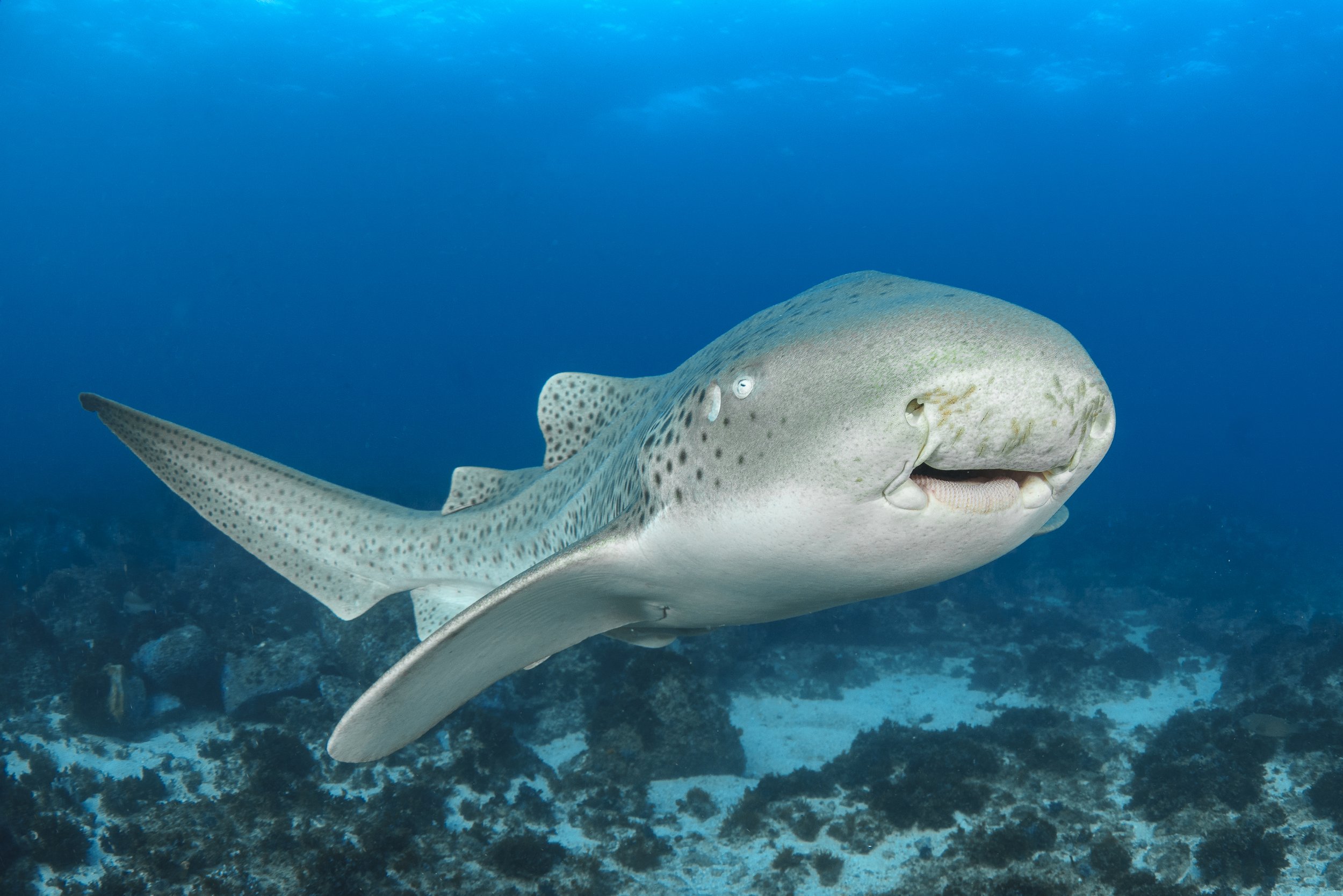
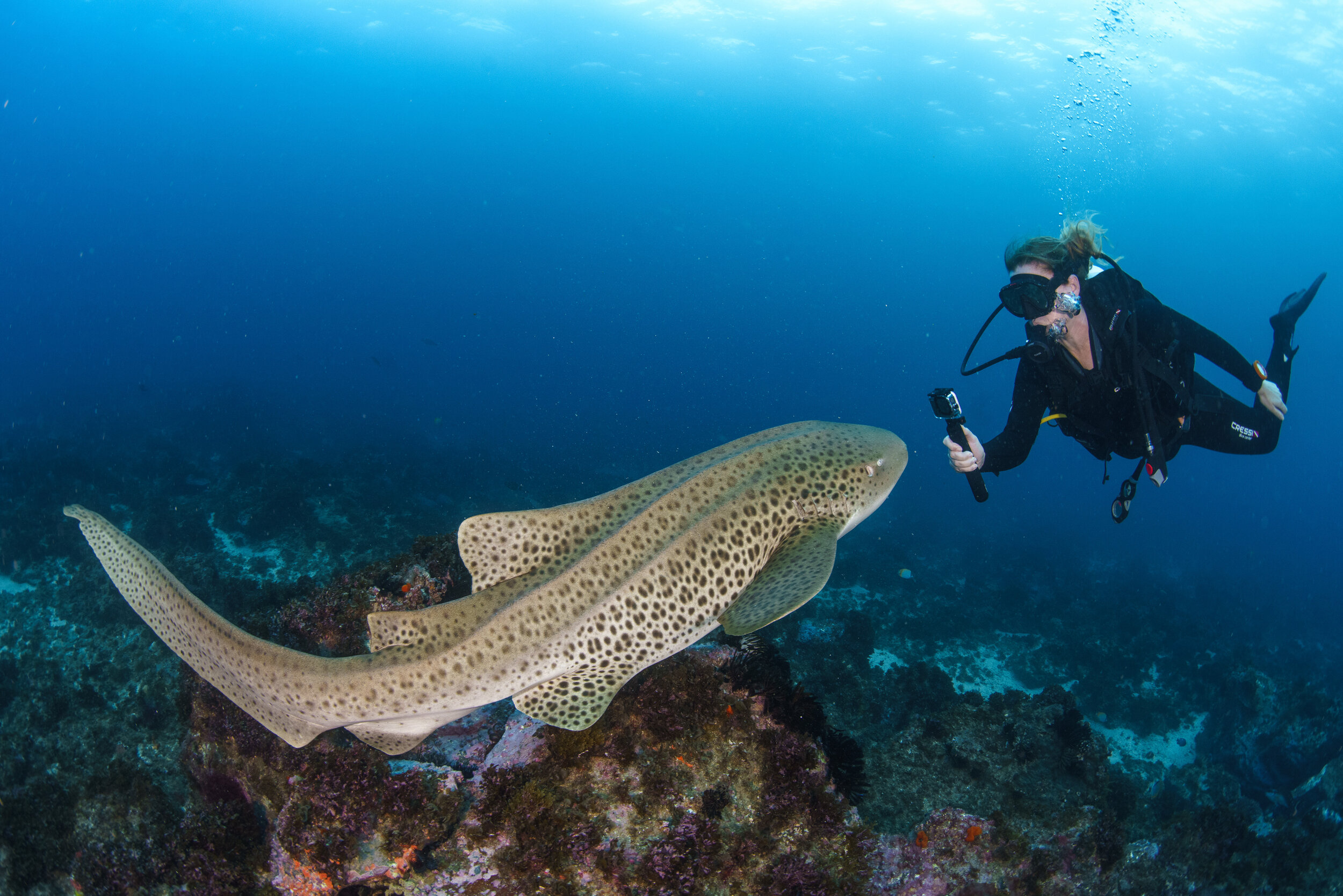
Each summer, hundreds of endangered leopard sharks aggregate at Julian Rocks off Byron Bay, and since 2019 the project has identified individual sharks from their spot patterns.
Led by Sundive Research, with MMF
Each summer, endangered leopard sharks (Stegostoma tigrinum) aggregate at Julian Rocks, off Byron Bay in northern New South Wales, in numbers seen almost nowhere else. The Cape Byron Leopard Shark Project identifies the individual sharks that visit and investigates why the aggregation forms.
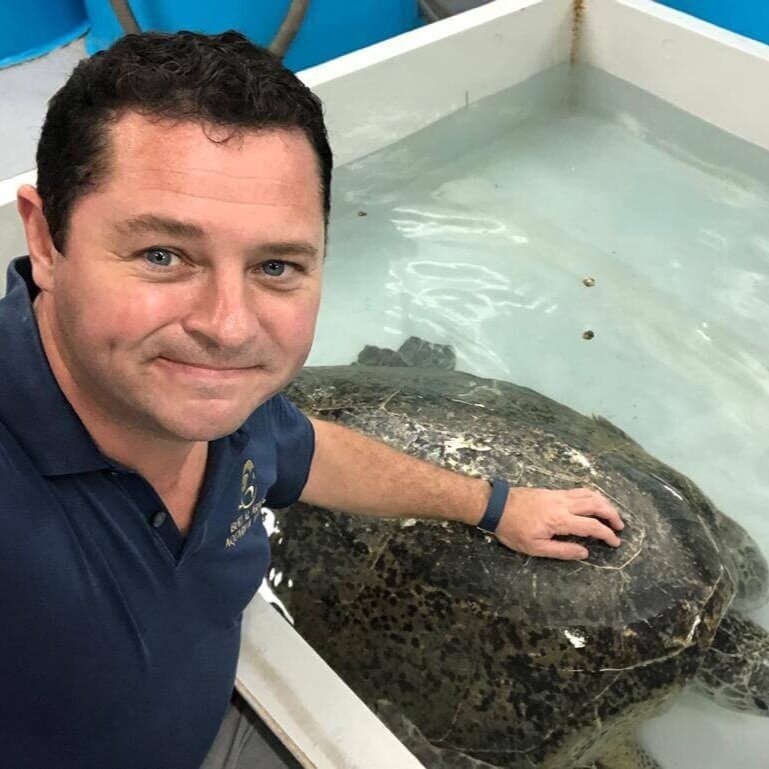
MMF Research Associate Dr. David Robinson founded the project in 2019, soon after he and his partner took over Sundive, a dive center in Byron Bay. He runs it through Sundive Research, in partnership with the Cape Byron Marine Park, the University of the Sunshine Coast, and MMF. David first worked with leopard sharks in 2006 at the Burj Al Arab aquarium in Dubai, and has worked with MMF for years on whale sharks and sea turtles. At Byron, divers and snorkelers contribute photographs for individual identification.
Objectives
- Build a long-term record of the individual leopard sharks that visit Julian Rocks.
- Determine why so many leopard sharks aggregate here, and whether the aggregation is linked to mating.
- Establish where the sharks go when they leave at the end of each summer.
- Involve divers and snorkelers along the coast in monitoring the sharks.
What the project has done
- Started the Cape Byron Leopard Shark Project in 2019, with the support of the Cape Byron Marine Park.
- Ran weekly photo-identification surveys at Julian Rocks through the 2020–21 season, weather permitting, identifying 306 sharks that visited between December and May.
- Identified 489 individual leopard sharks by January 2025.
- Matched a shark at Byron to one tagged at North Stradbroke Island, off Brisbane, 16 years earlier.
- Documented the Cape Byron area as a global hotspot for leopard sharks.
What's next
- Continue building baseline data on the aggregation, with a view to expanding the project.
- Collect evidence on whether the sharks aggregate at Julian Rocks to mate.
- Determine where the sharks spend the rest of the year.
- Involve more dive centers along the east coast in the project.
Support our leopard shark research
Your gift helps us monitor endangered leopard sharks, from the summer aggregation at Byron Bay to our leopard shark work in Mozambique.
Our work on leopard sharks at Byron Bay
A global hotspot for leopard sharks
Julian Rocks, known in full as Nguthungulli Julian Rocks Nature Reserve, is a rocky outcrop about 2.5 km (1.6 miles) off Byron Bay and the centerpiece of the Cape Byron Marine Park. Cape Byron is the most easterly point of mainland Australia, and deep water lies just beyond the Rocks. Leopard sharks arrive in the warmer months, from around December to May.
On a good dive, more than 50 leopard sharks can be swimming around the divers. In January 2025, David photographed 31 sharks in a single frame and estimated that 80 to 100 were around the Rocks that day. Julian Rocks hosts one of the largest known aggregations of the species, and it is already a marine protected area.
Behavior at Julian Rocks
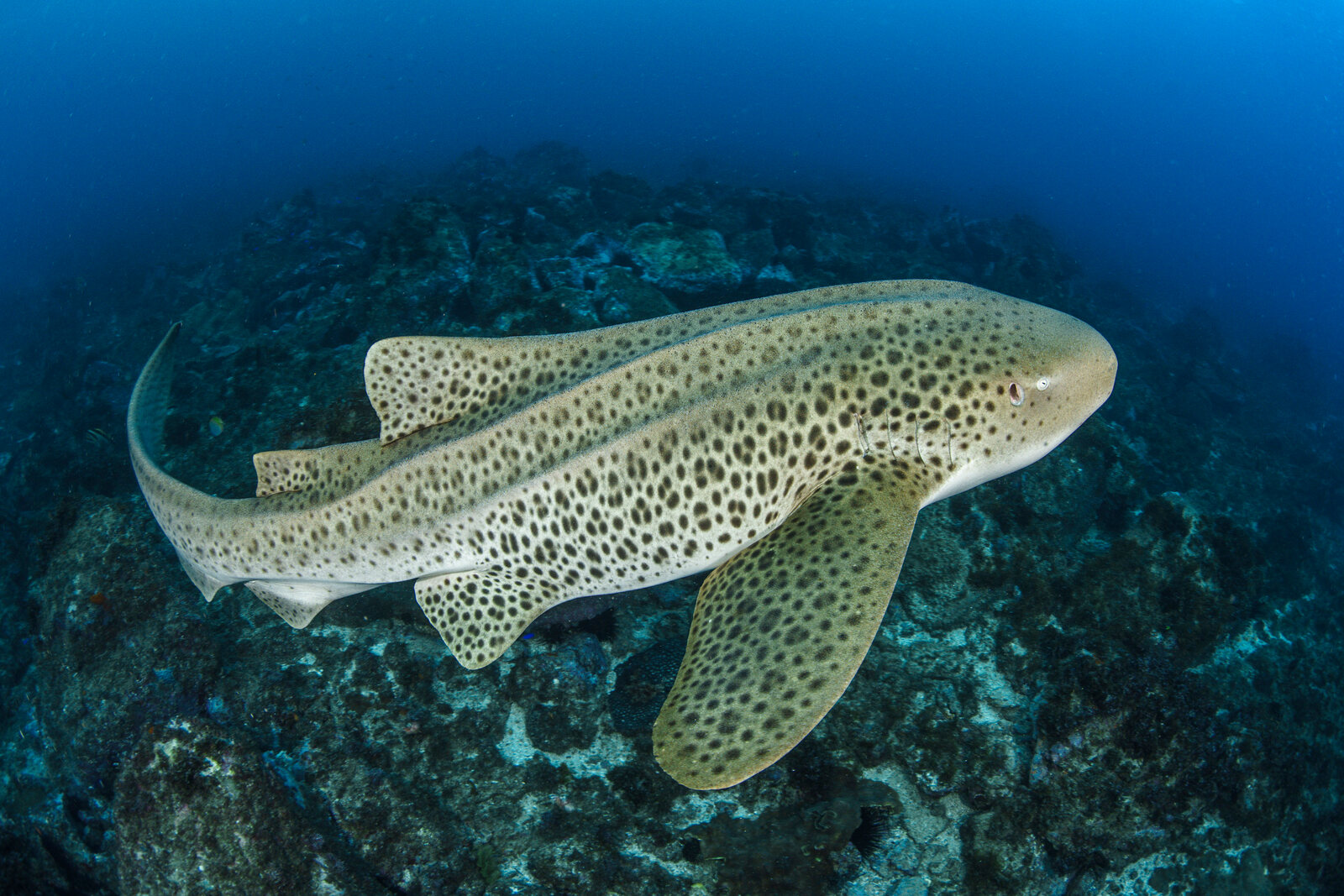
Elsewhere, leopard sharks are usually seen alone or in small groups, resting on the bottom during the day. At Julian Rocks, in contrast, they swim actively through the water all day long. In the project’s early seasons, about 74% of the identified sharks were adult females, with smaller numbers of mature males and sub-adults.
Males are seen following females, behavior we think is a precursor to mating, although no mating has been observed yet; it may happen at night. Young leopard sharks are rarely seen anywhere in the wild, so where the females lay their eggs remains unknown.
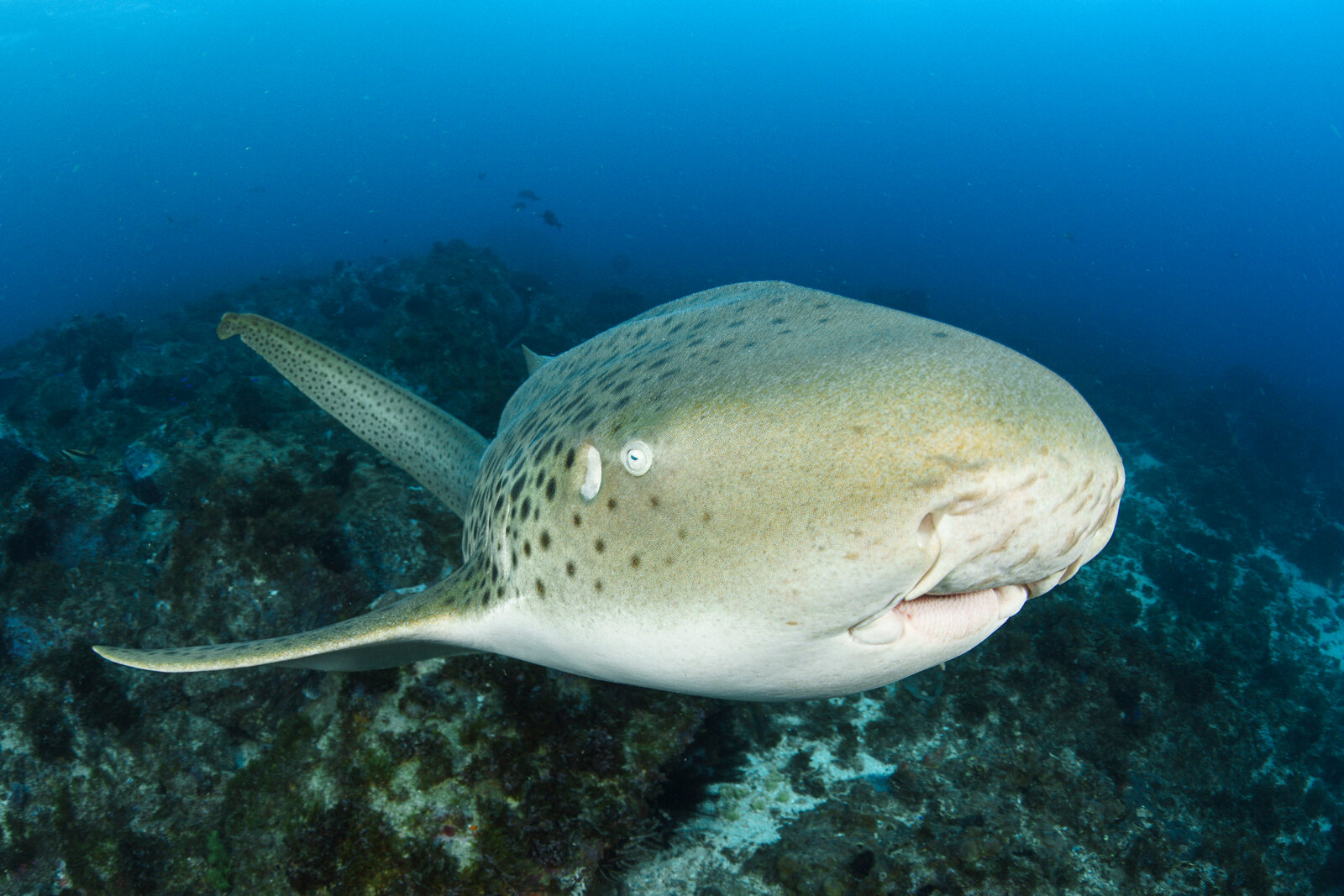
Photo-identification
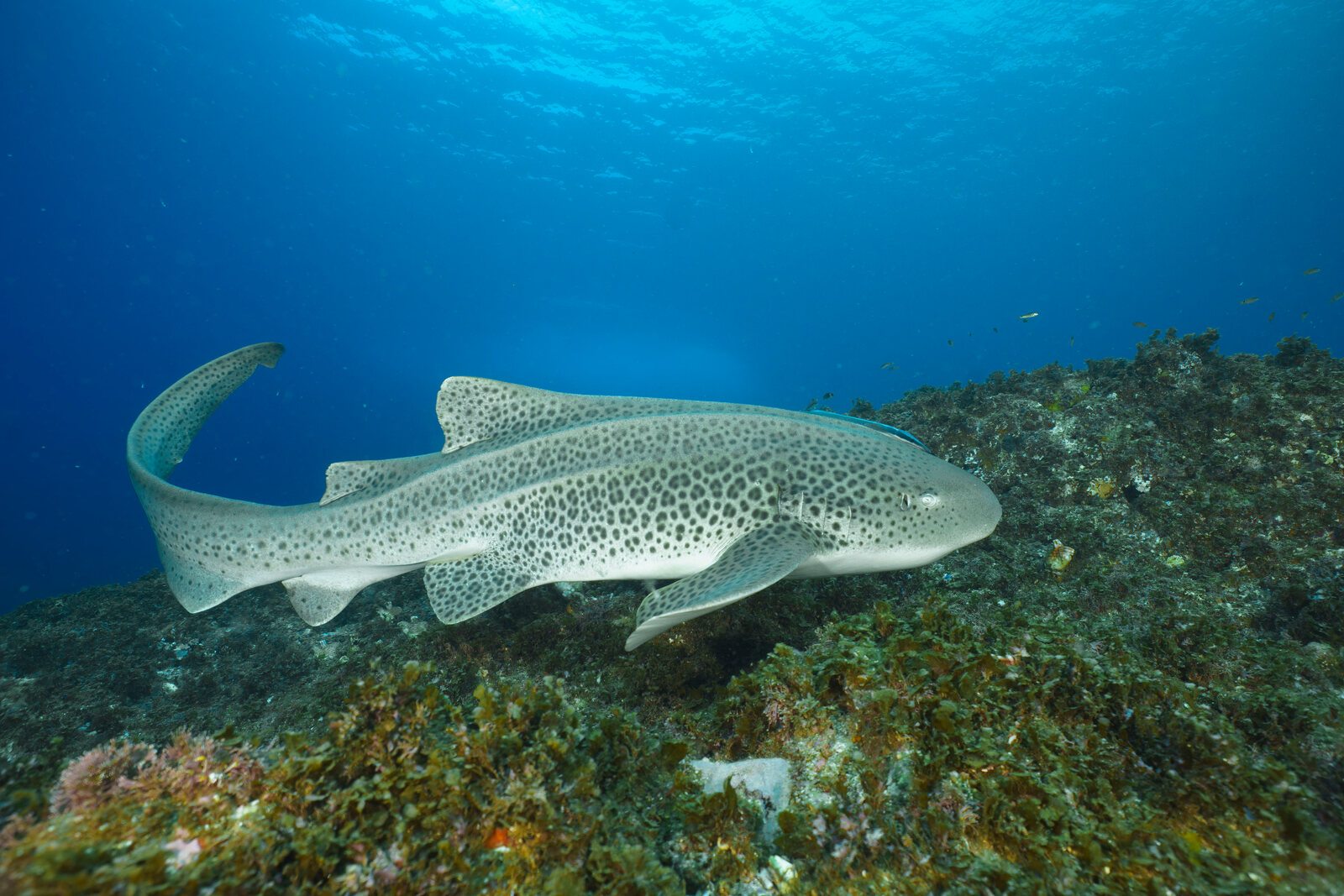
Leopard sharks are born with dark and light stripes, which is why they are also called zebra sharks. Within a year or two, the stripes fragment into spots, and the adult spot pattern then remains unchanged for life, which allows individual sharks to be recognized from photographs year after year.
Photos of the left side of the body, behind the gills, are matched on Sharkbook, the global photo-identification database. The 2020–21 season alone yielded 306 sharks, and the Julian Rocks catalog reached 387 sharks in 2021, more than 420 in 2023, and 489 by January 2025.
Divers as researchers
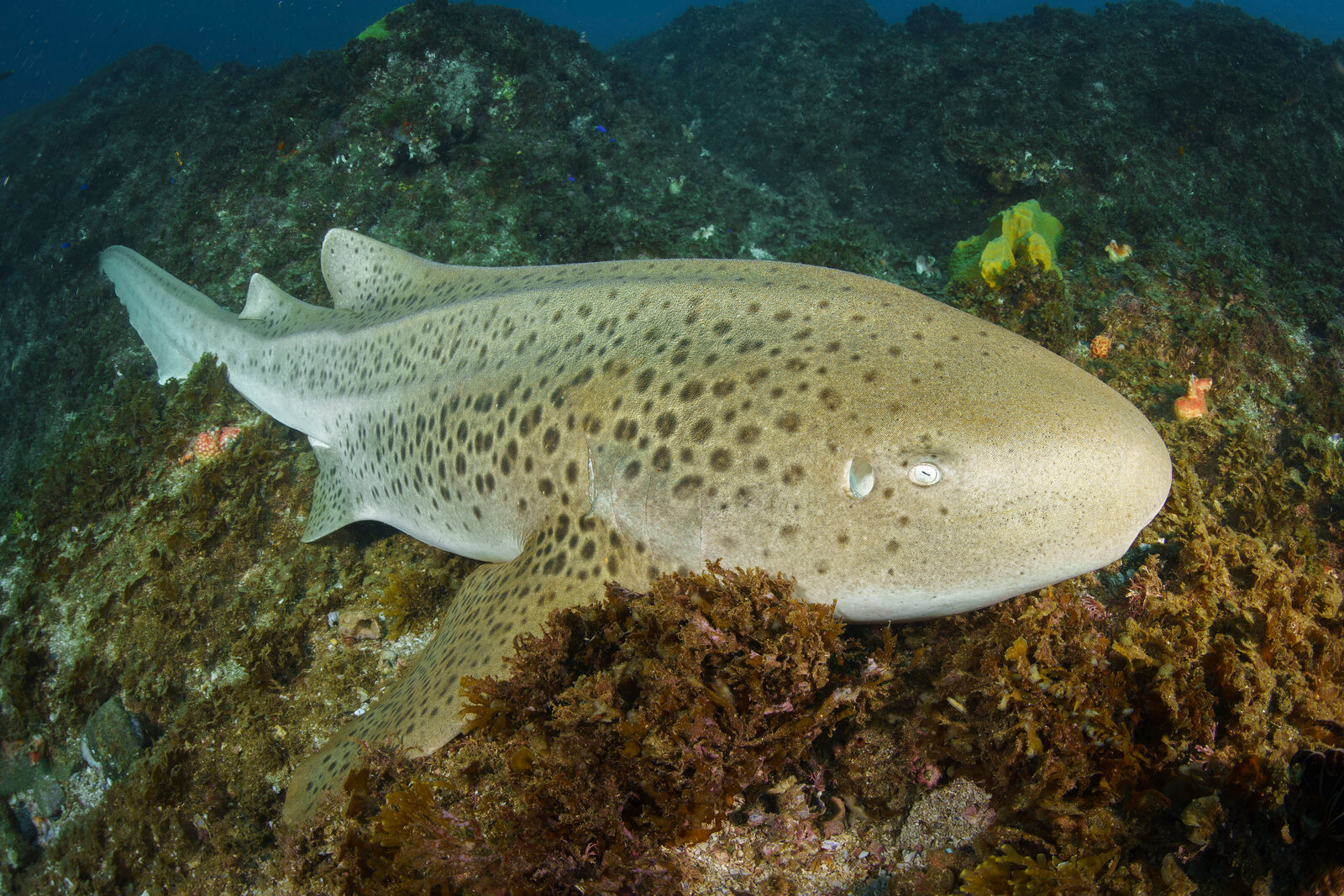
A team of regular research divers works at Julian Rocks, and divers and snorkelers along the coast also submit photos. Some sharks have become well known: Dot, a particularly friendly leopard shark, returned to Byron Bay again at the end of the 2023–24 summer.
If you see a leopard shark, please photograph its left side and upload the photo to Sharkbook.ai. Sightings are welcome from Byron Bay or anywhere else in the world.
Longevity
In the 2000s, Dr. Christine Dudgeon of the University of Queensland and the University of the Sunshine Coast identified hundreds of leopard sharks at North Stradbroke Island, off Brisbane, and her photos are being added to the database. One of the Byron sharks carried an old tag mark below its dorsal fin. It proved to be a shark she had tagged at North Stradbroke in 2005, when it was already a mature male, 16 years before its Byron sighting. Leopard sharks have been thought to live for about 25 years; David, however, suspects they live much longer.
Protecting a stronghold
The leopard shark is listed as Endangered on the IUCN Red List. Although leopard sharks are thought to be doing well on Australia’s east coast, they have declined steeply in other parts of the world. They are harmless, live close to the coast, and often rest on the bottom, which makes them an easy target for fishing; an unprotected aggregation like the one at Julian Rocks could be fished out in a day.
Julian Rocks is already protected, but the sharks leave after the summer and we do not yet know where they go. Following their movements beyond Byron Bay is therefore the next step in understanding which places they need.
 Dr. David Robinson
 Dr. Simon Pierce
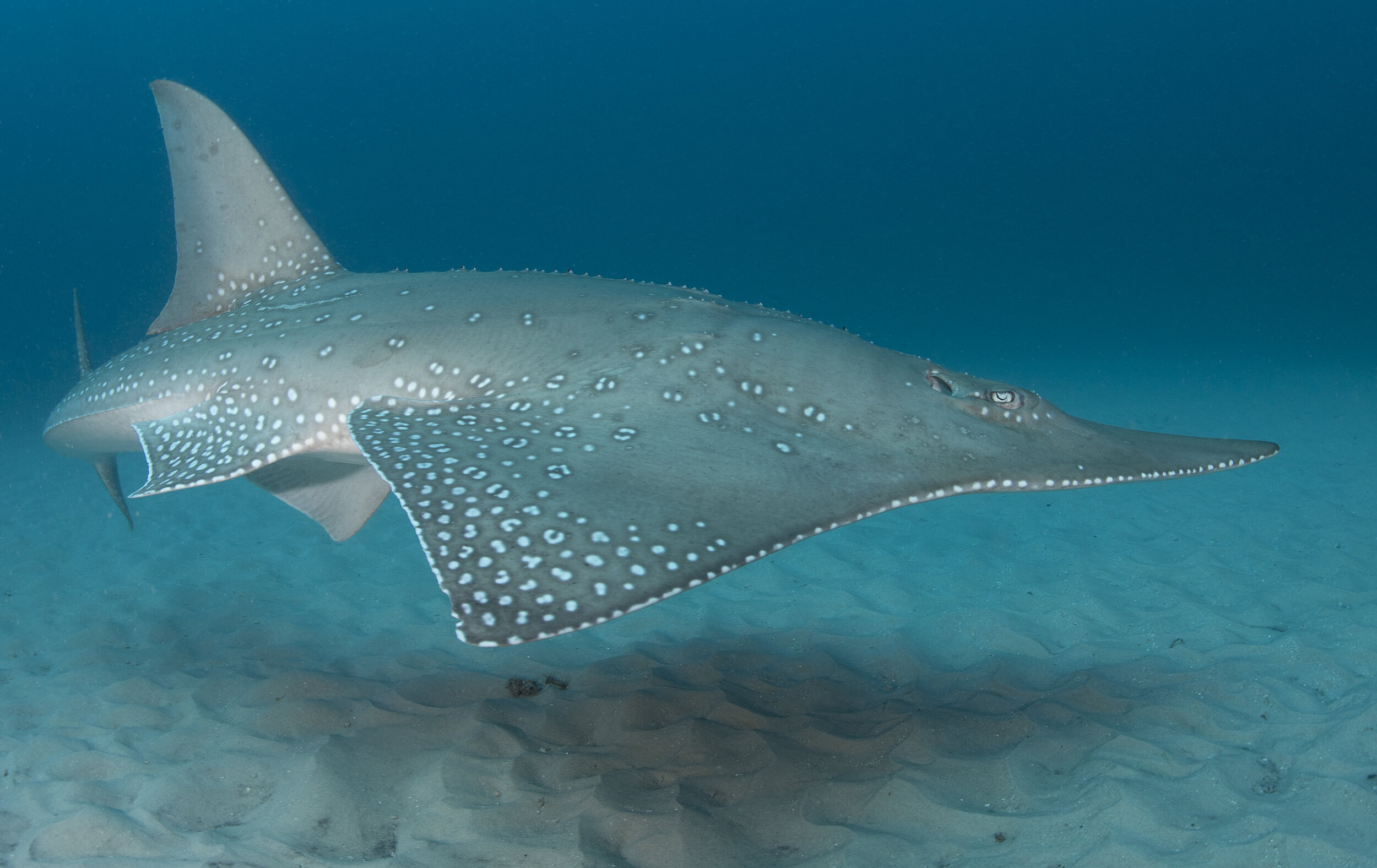
 Mozambique Elasmobranch Diversity Research Project
 Mozambique Acoustic Telemetry Network
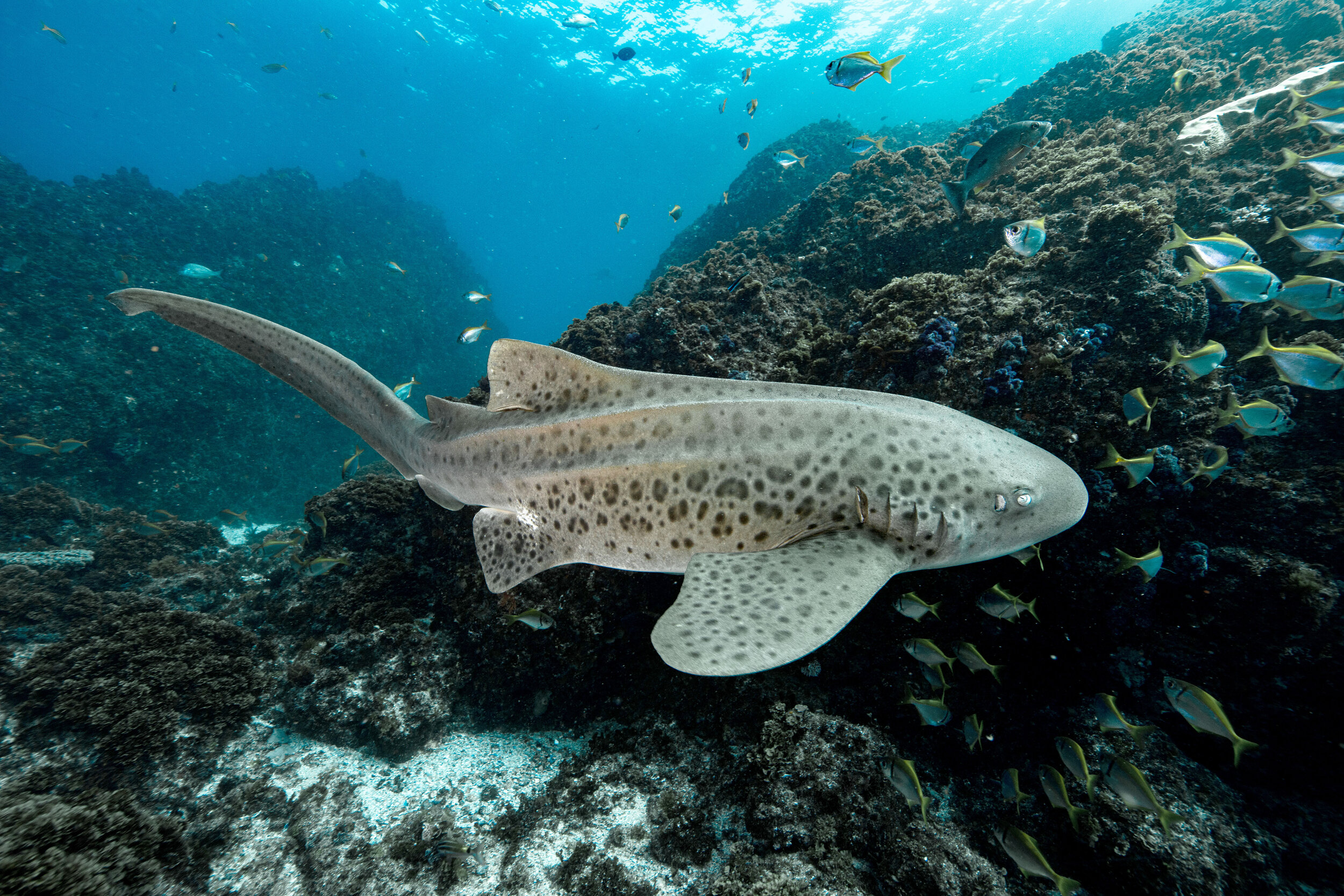 Mozambique Leopard Shark Research Project
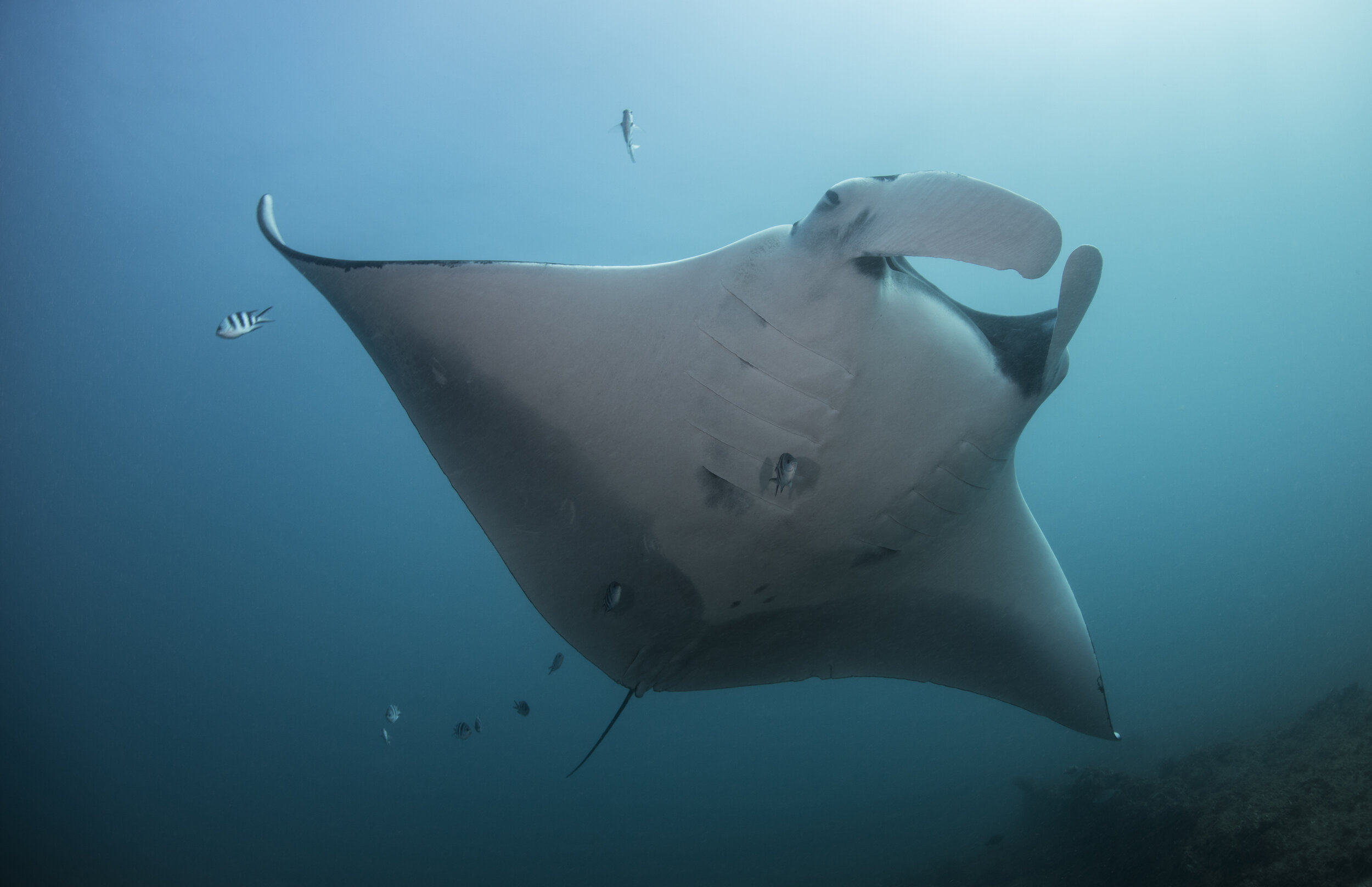 Závora Marine Conservation