
Mozambique
Mozambique Bull Shark Research Project
Acoustic and satellite tracking show that Mozambique's bull sharks include year-round residents of the Bazaruto Archipelago and migrants that travel thousands of kilometers across national borders.
Bull sharks (Carcharhinus leucas) are among the top predators along the Mozambican coastline and play a vital role in marine ecosystems. However, fisheries assessments have revealed a drastic increase in catch rates in recent years, indicating the need for swift and effective management action.
This project combines several techniques to investigate the fine- and broad-scale movements and connectivity of bull sharks (also known as Zambezi sharks), addressing key knowledge gaps for this important coastal predator in southern Africa. Our researchers and collaborating partners coordinate research at several locations in Mozambique, using a range of methods to investigate the species’ movement ecology, habitat use, genetic connectivity, and trophic position (its level in the food web).
Objectives
- Investigate the regional and transboundary movements of bull sharks.
- Understand their fine-scale movement patterns and habitat use.
- Determine the connectivity of bull shark population(s) in southern Africa.
- Characterize, and help resolve, the conservation conflict between local communities and these predators.
What we've done
- Identified numerous aggregation sites for bull sharks throughout southern Mozambique, positioning our team to conduct focused research on the species.
- Collected observational sightings data from some of these sites for almost a decade before we began more formal work on the species in the province.
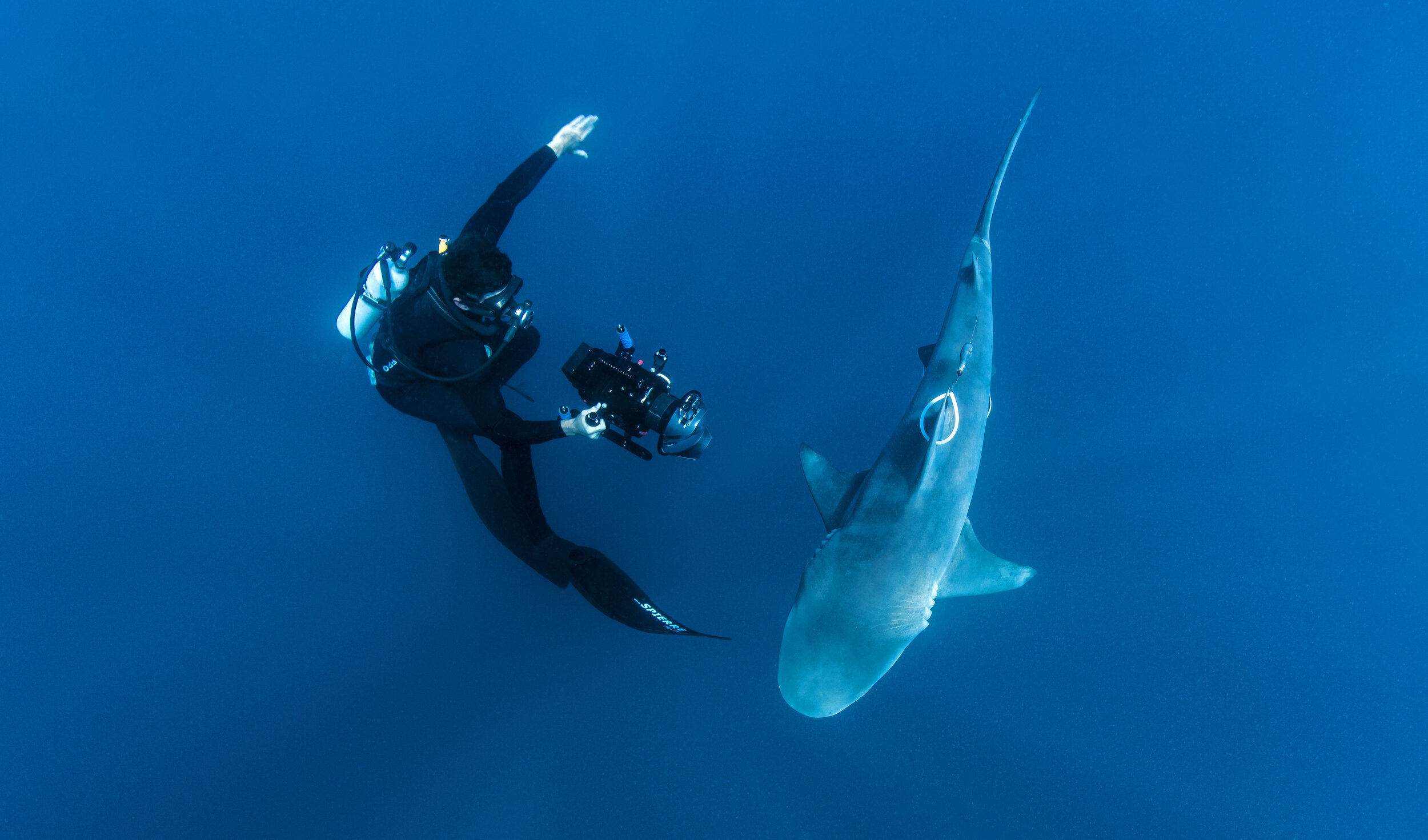
- Tracked 38 bull sharks on a passive acoustic array (a network of underwater receivers) running since 2012, alongside satellite tagging of individual sharks.
- Joined a regional network: our receivers now form part of a network spanning roughly 400 kilometers (250 miles) of the Mozambican coast, shared with collaborators in South Africa and across the western Indian Ocean.
- Documented year-round residency by individual bull sharks in the Bazaruto Archipelago National Park, alongside sharks that visit seasonally on predictable annual migrations.
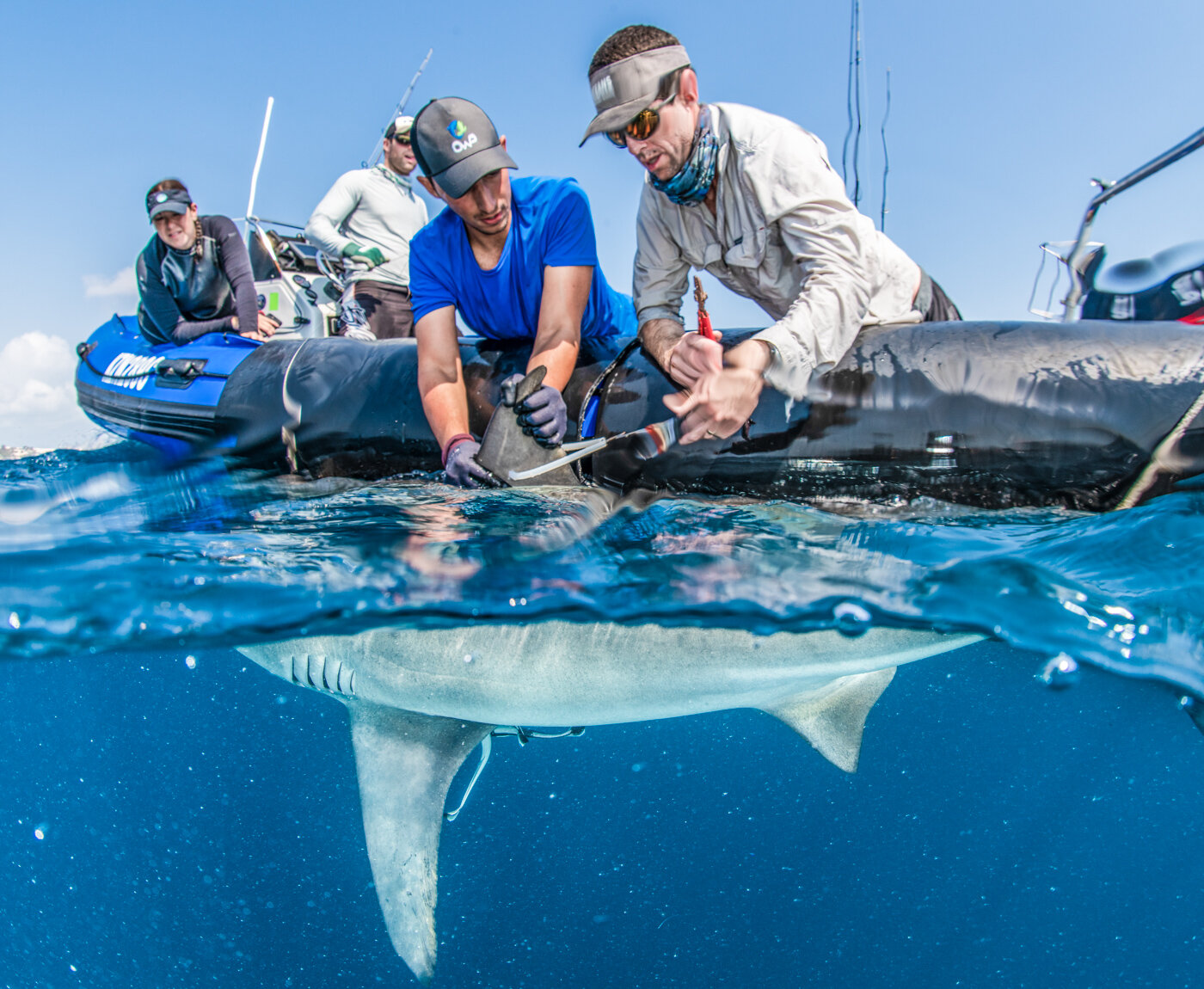
- Collected fin clips and muscle tissue samples from tagged sharks for genetic and stable isotope analyses.
Support our work in Mozambique
Donations to our Mozambique program fund the fieldwork, community work, and government engagement behind studies like this one.
Our work on bull sharks in Mozambique
From rivers to reefs
Bull sharks can live in marine, brackish, and freshwater environments. As large-bodied, mobile predators, they likely play a vital role in the functioning of the different aquatic ecosystems they move through along the eastern African coastline.
Estuaries, mangroves, and rivers are critical nursery habitats for bull sharks, and females have shown strong philopatric behavior, returning to their natal sites. Recent studies in southern Mozambique have shown that bull sharks remain resident in marine reef systems, yet are also capable of long-distance return migrations of hundreds of kilometers. One satellite-tagged individual swam more than 2,000 kilometers (1,240 miles) from the Breede River in South Africa to the Bazaruto Archipelago in Mozambique.
In 2025, our collaborative tracking work went further still, following a bull shark more than 2,000 kilometers (1,240 miles) from Mozambique to the southern tip of South Africa, and then a further 5,000 kilometers (3,100 miles) on to the Nigerian coast, a movement between ocean basins that had not previously been documented for the species. The journey was published in the journal Ecology by a team led by Dr. Ryan Daly.
Fishing pressure
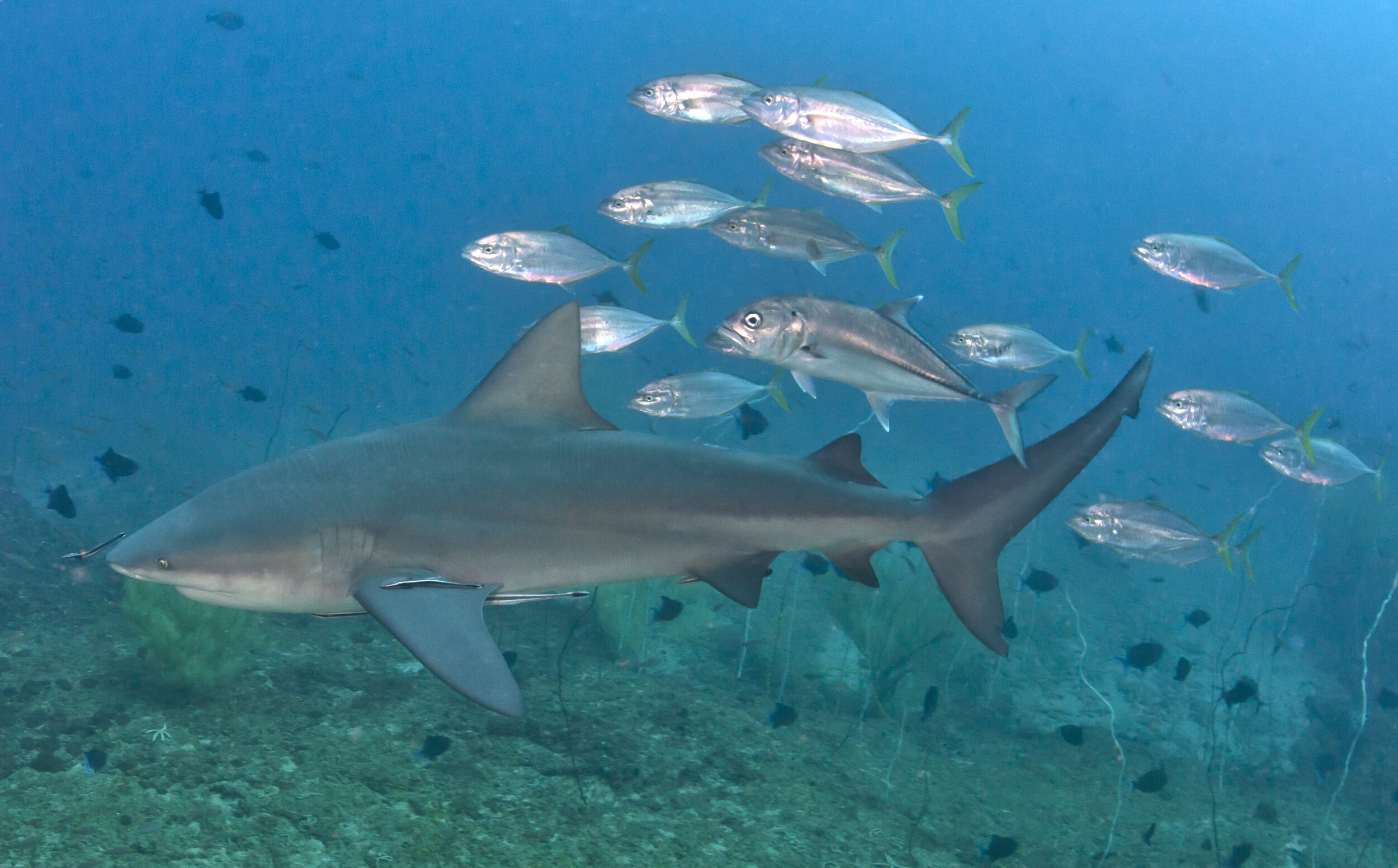
Fisheries assessments have revealed that shark catches in Mozambique have increased by up to 220% in recent years. Bull sharks are among the most commonly landed species in some areas of Mozambique, making up as much as 17.3% of total shark catches. Their long-distance migrations and movements between marine and freshwater environments make them especially vulnerable to capture in seine net and gillnet fisheries.
Bull sharks are also particularly susceptible to habitat degradation and pollution, because they rely on sensitive habitats such as estuaries, mangroves, and shallow bays. Declining catches, such as those recorded in shark nets in South Africa, suggest localized depletions of bull shark populations in some areas and highlight the species’ vulnerability to exploitation.
Bull sharks and people
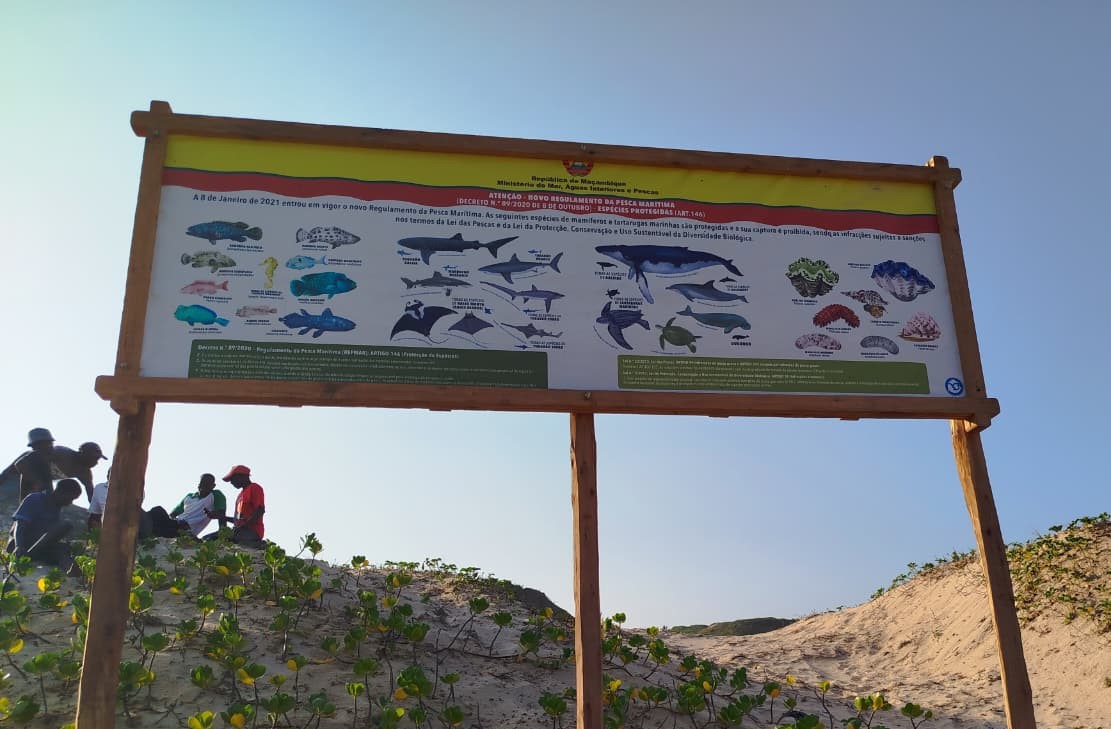
Frequent interactions between people and bull sharks in coastal habitats have resulted in numerous fatalities in Mozambique. Resentment toward the species, and active persecution in some communities, pose an additional challenge for the conservation and management of bull sharks.
Meanwhile, a lack of data on the species’ distribution, habitat use, and population structure makes it difficult for scientists and managers to adequately assess and address other potential threats to bull sharks in the country. Filling those gaps is the purpose of this project.
Residency and seasonal migration
More than a decade of acoustic tracking has revealed two distinct strategies within the same population. Some bull sharks are year-round residents of the Bazaruto Archipelago National Park, present almost continuously and punctuating that residency with brief excursions; one female, for instance, was detected on the same handful of receivers for over five years. Others are visitors, tagged elsewhere in the wider seascape, that return to the park on a predictable annual basis as a stopover during coastal migrations.
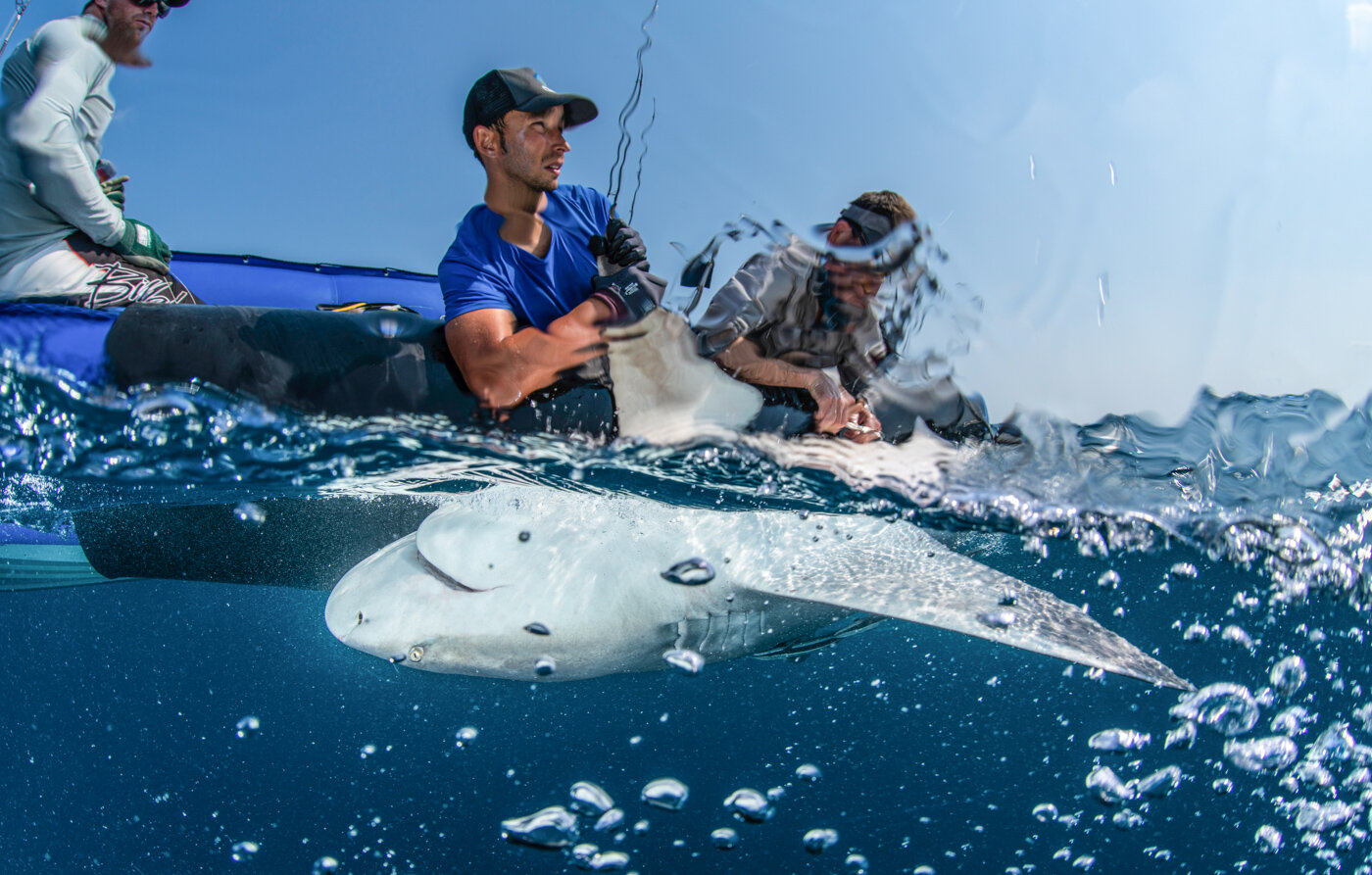
The team fits sharks with acoustic tags, and some with satellite tags, and samples their tissue for genetic and stable isotope analyses. (Photo: Uli Kunz.)
A network of habitats
The sharks also use the seascape’s reefs in complementary ways. At a deep rocky ridge off Bazaruto Island, about 72% of detections occurred during the day, whereas a reef about 3 kilometers (2 miles) away recorded more sharks at night. Inshore sites off the San Sebastian Peninsula recorded the most activity before dawn. Taken together with the long-distance movements now documented between Mozambique, South Africa, and beyond, these patterns indicate that protecting bull sharks means protecting a network of habitats across national borders, not a single site.
The full analysis of bull shark habitat use across the Bazaruto Seascape, led by MMF’s Dr. Stephanie Venables, was published in 2026. It found that adult bull sharks are present year-round and that 82% of their core habitat already falls inside existing marine protected areas. (Photo: Uli Kunz.)
MMF Project Team
 Dr. Stephanie Venables
 Dr. Chris Rohner
Recent research
- 2026Habitat use, residency, and connectivity of bull sharks (Carcharhinus leucas) in the Bazaruto Seascape, Mozambique
- 2025Breaking barriers: Transoceanic movement by a bull shark
- 2023Persistent transboundary movements of threatened sharks highlight the importance of cooperative management for effective conservation
 Mozambique Acoustic Telemetry Network
 Bazaruto Seascape Marine Conservation
 Mozambique Elasmobranch Diversity Research Project
 Mozambique Leopard Shark Research Project