
Mexico · Global Whale Shark Program · Since 2013
Yucatan Whale Shark Research
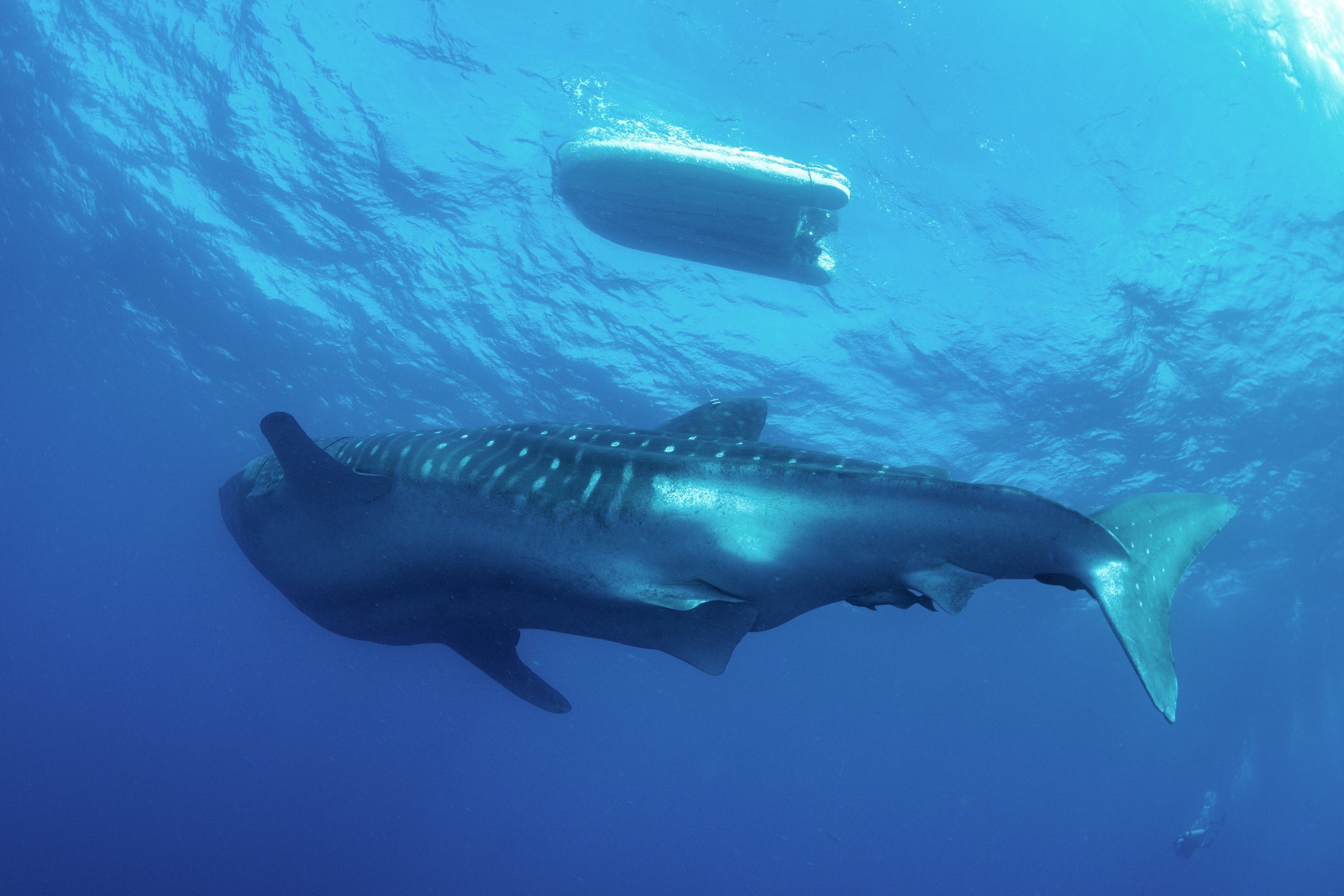
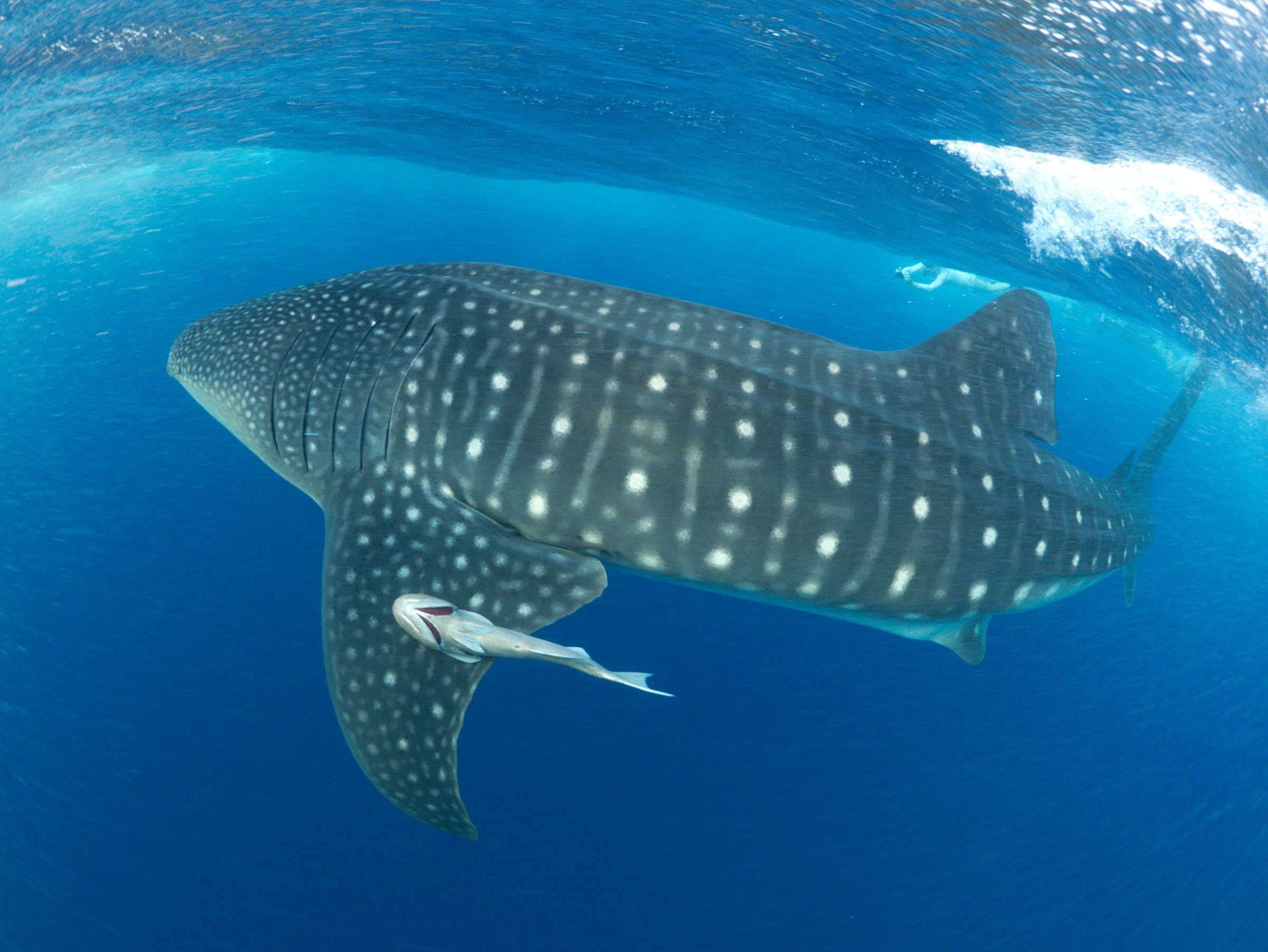
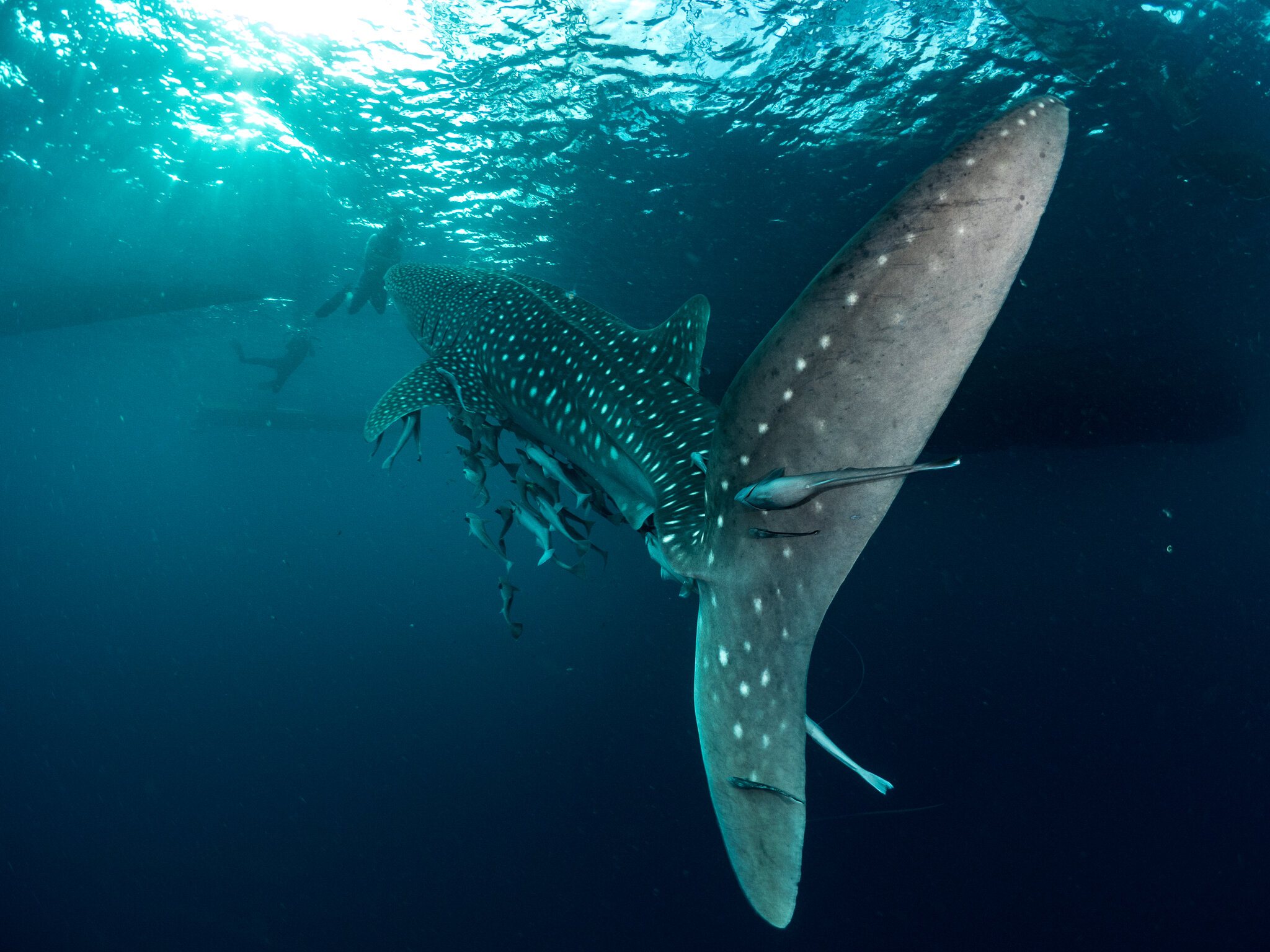
Each summer, hundreds of whale sharks gather off the Yucatan Peninsula to feed, forming the largest aggregation of the species yet recorded.
Led by Ch'ooj Ajauil AC, with MMF
From May to September, whale sharks (Rhincodon typus) gather to feed off the northeastern tip of Mexico’s Yucatan Peninsula in greater numbers than anywhere else on record. Rafael de la Parra of Ch’ooj Ajauil AC leads long-term research on these sharks, and MMF scientists have worked alongside his team since 2013.
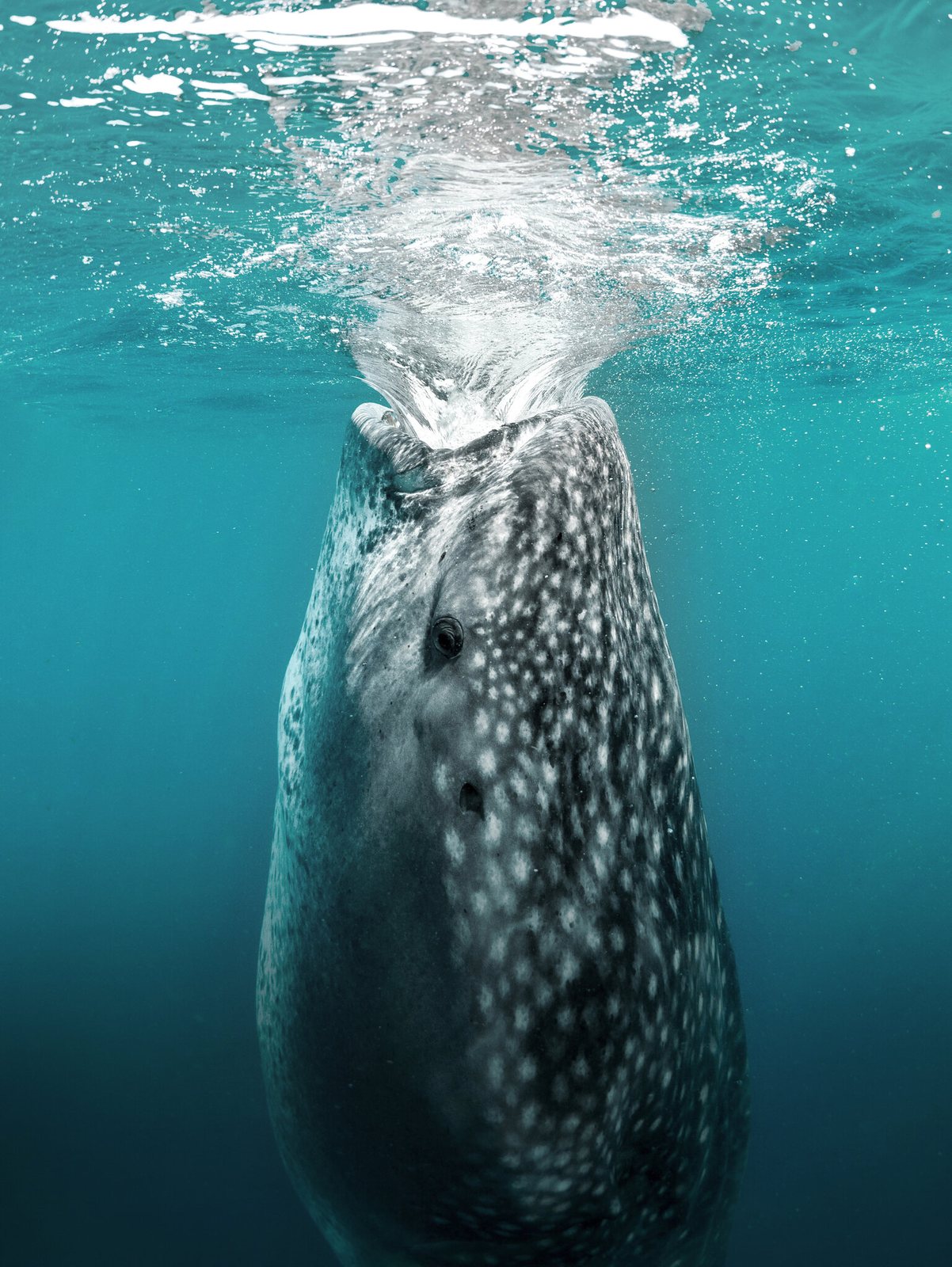
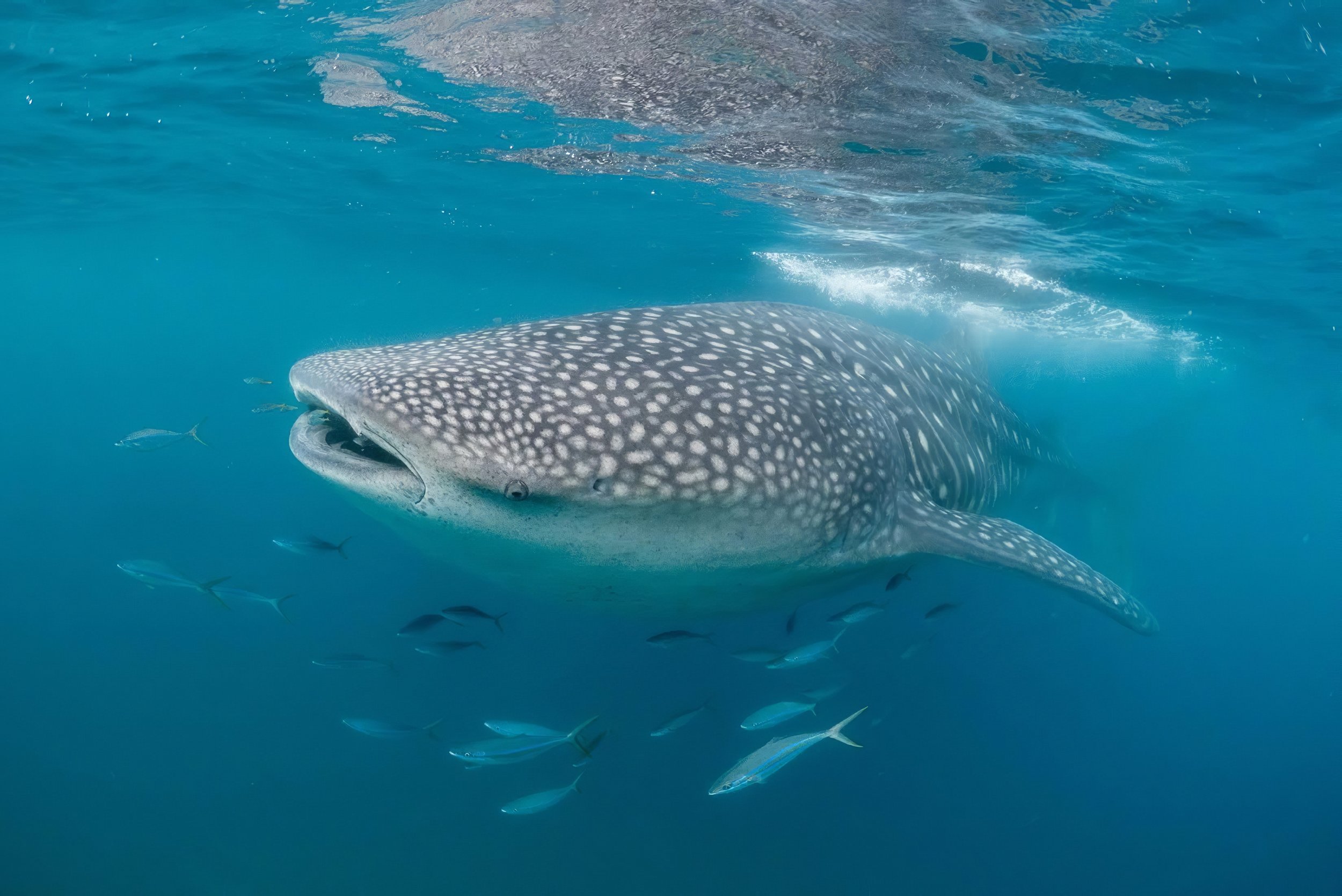
The sharks use two feeding areas. North of Cabo Catoche, near Isla Holbox, they feed mostly on small crustaceans in coastal water. Farther east, in the open Caribbean off Isla Mujeres, they gather to feed on the eggs of a small tuna, the little tunny. This second area is known as the “Afuera”.
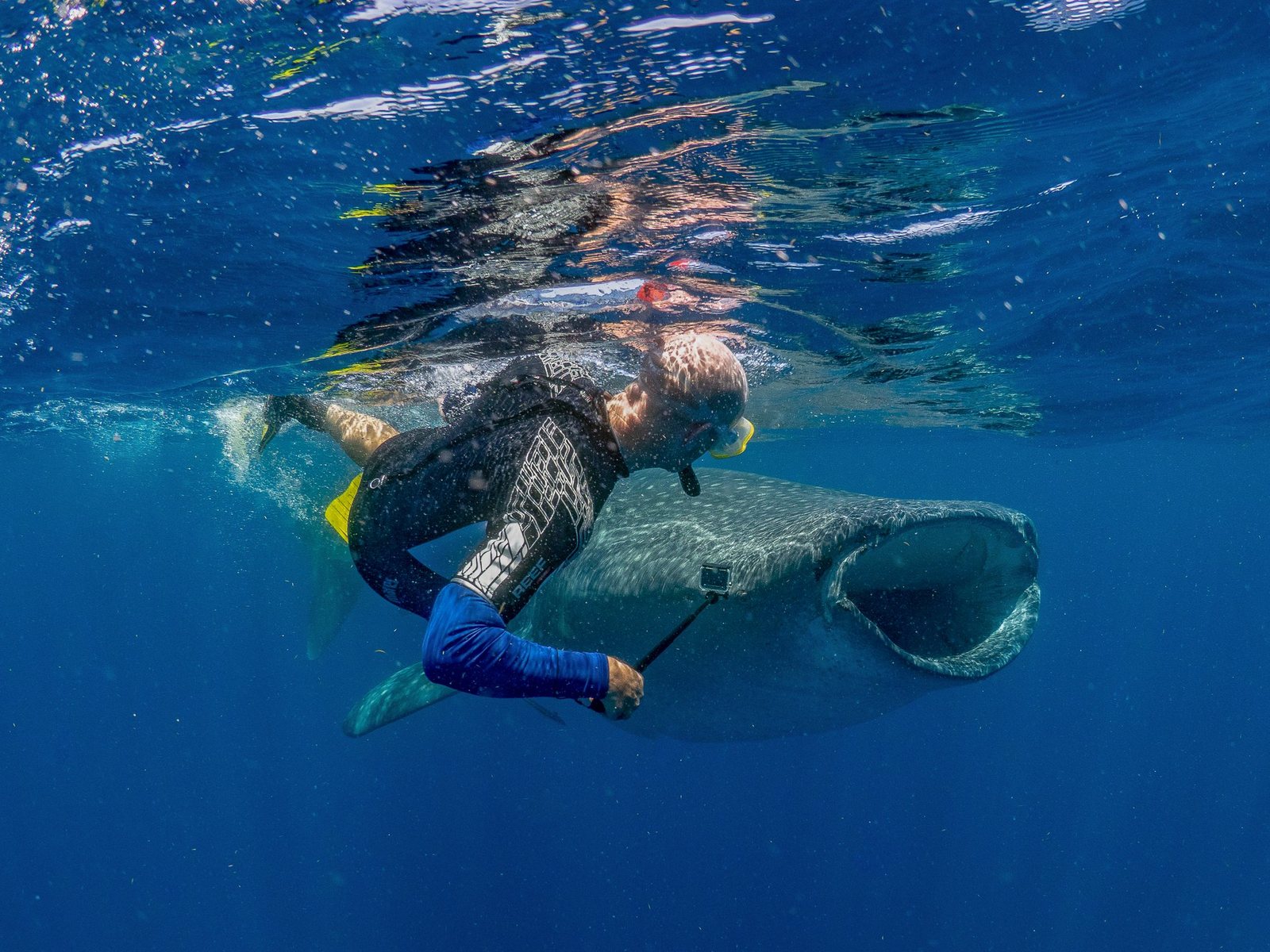
MMF’s Dr. Simon Pierce first joined Rafael de la Parra’s team in 2013, in partnership with our travel partner Aqua-Firma, and MMF scientists have returned on Aqua-Firma’s trips since. Dr. Chris Rohner worked with the team in 2017, and Dr. Clare Prebble joined in 2022. We photograph the sharks for identification and contribute to the regional and global studies that draw on those records.
Objectives
- Identify the individual whale sharks that visit the Yucatan each year, and follow their return over time.
- Establish how these sharks are connected to those seen in Belize, Honduras, and the United States.
- Provide the information needed to reduce the risks the sharks face from vessel traffic in and around their feeding areas.
What the project has done
- Photographed whale sharks for identification alongside Ch’ooj Ajauil AC since 2013, including 61 individual sharks in one week of surveys in 2017.
- Contributed to the 2017 study of whale shark movements across the western Atlantic, which identified 1,115 sharks off the Yucatan.
- Co-authored global studies of the collision risk that shipping poses to whale sharks, published in 2022 and 2024, with Rafael de la Parra and colleagues.
- Co-authored a 2023 study of the bacteria living on whale shark skin, which compared sharks from the Yucatan with those at four other aggregations around the world.
What's next
- Continue photo-identification on our visits.
- Return in July 2027 with Aqua-Firma, hosted by Dr. Clare Prebble.
Support our whale shark research
Every shark we identify adds detail to the picture for this Endangered species. Your gift supports our whale shark research around the world.
The research
The largest whale shark aggregation on record
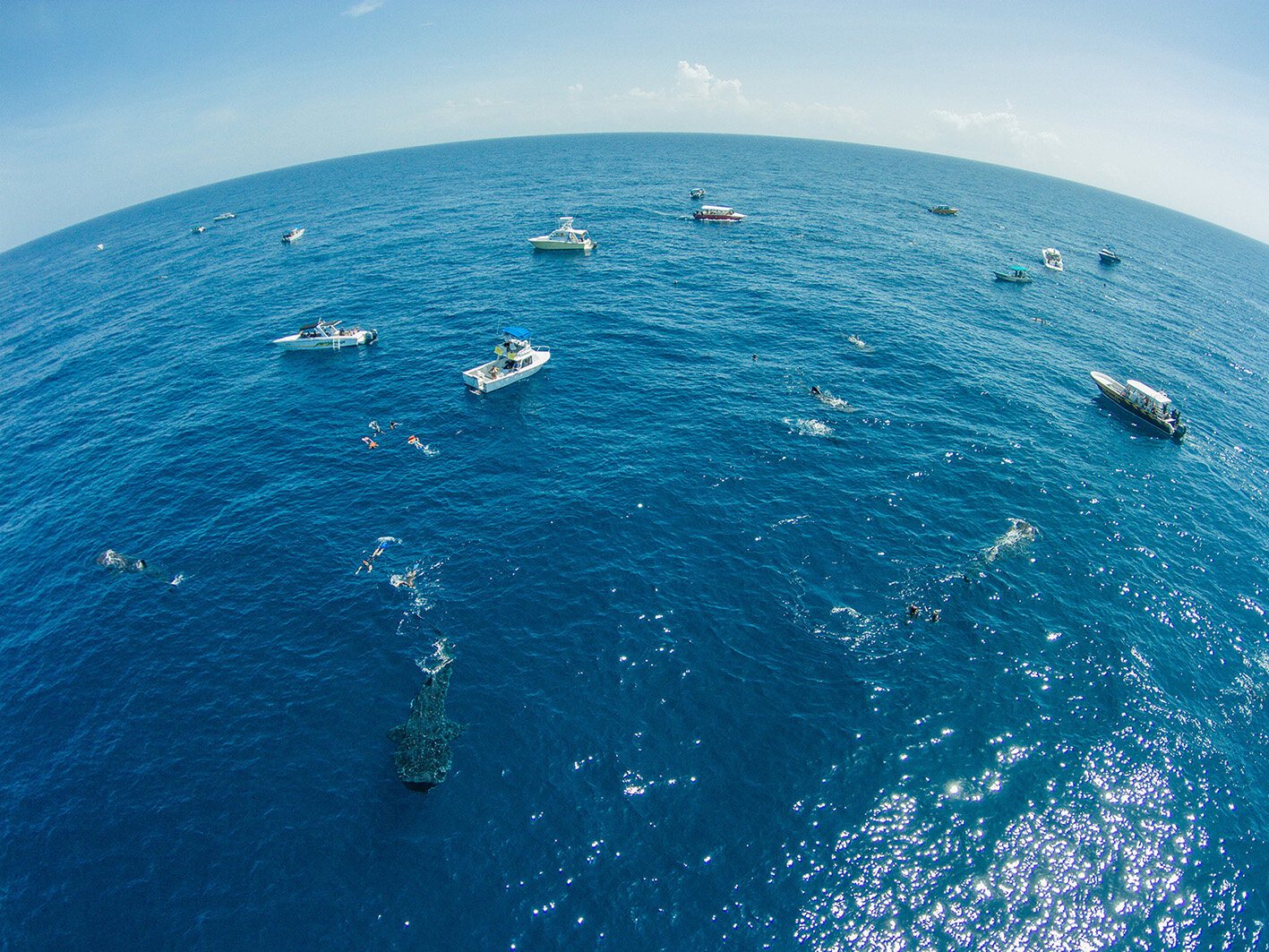
In 2009, Rafael de la Parra and colleagues from Mote Marine Laboratory and the Georgia Aquarium counted 420 whale sharks in a single aerial survey, all within an area of about 18 km² (7 square miles) at the Afuera. It is the largest aggregation of whale sharks yet reported. Plankton samples showed that the sharks were feeding on dense patches of fish eggs, which genetic analysis identified as those of the little tunny. In the same year, Mexico established the Whale Shark Biosphere Reserve to protect the sharks’ coastal feeding area between Isla Holbox and Isla Contoy.
More than a thousand sharks, and many return
Each whale shark has a unique pattern of spots, so photographs taken by researchers and visitors can be matched to known individuals. The 2017 western Atlantic study, led by Jennifer McKinney of the Louisiana Department of Wildlife and Fisheries and co-authored by Rafael de la Parra and MMF’s Dr. Simon Pierce, identified 1,115 individual sharks off the Yucatan from 3,669 encounters between 2001 and 2015. That was about four-fifths of all the sharks identified in the region. Sharks first identified in Mexico were also the most likely to be seen there again, although the authors note that survey effort was far greater in Mexico than elsewhere.
Connections with Honduras, Belize, and the United States
The same study recorded 39 movements of sharks between Mexico and Honduras, 18 between Mexico and Belize, and 13 between Mexico and the northern Gulf coast of the United States. Among sharks recorded in both areas in the same year, almost all were seen off Honduras or Belize in spring and off Mexico in summer. One shark, first photographed in Belize in 1999, was recorded off Mexico in five different years up to 2015. These results connect the Yucatan to our completed study at Utila in Honduras, and they support coordinated management of whale sharks across the countries of the Mesoamerican Reef. The study estimated that about 2,170 whale sharks use the wider region.
Sharks and shipping
The waters off the Yucatan are also busy with vessels. A 2024 global study, co-authored by MMF scientists and Rafael de la Parra, ranked whale shark aggregation sites by the amount of large-vessel traffic passing through them. Isla Mujeres and Isla Holbox were among the sites identified as most in need of measures to reduce the risk of collisions, because large numbers of sharks and ships use the same water in the same months.
Visiting with Aqua-Firma
Aqua-Firma’s trips to the aggregation began in 2013, with Rafael de la Parra as captain and MMF scientists as hosts, and Aqua-Firma supports MMF’s whale shark research. Guests attend talks on whale shark science, and can contribute their own identification photographs. Dr. Clare Prebble’s account of the 2022 trip describes a day with whale sharks in every direction. The next trip runs from July 11 to 17, 2027, hosted by Dr. Prebble; details are on Aqua-Firma’s website.
MMF Project Team
 Dr. Clare Prebble
 Dr. Chris Rohner
 Dr. Simon Pierce
Collaborators and Partners


Recent research
- 2026Methods for tagging whale sharks: insights into performance and best practices with a focus on clamp attachments
- 2024Identifying priority sites for whale shark ship collision management globally
- 2023Emergent community architecture despite distinct diversity in the global whale shark (Rhincodon typus) epidermal microbiome
- 2022Global collision-risk hotspots of marine traffic and the world’s largest fish, the whale shark
- 2017Undersea constellations: The global biology of an endangered marine megavertebrate further informed through citizen science
- Long-term assessment of whale shark population demography and connectivity using photo-identification in the Western Atlantic Ocean
 Utila Whale Shark Project
 Pacific Mexico Whale Shark Tracking
 Mozambique Whale Shark Project