
SAVING OCEAN GIANTS.
Oceanic manta ray
Mobula birostris
EndangeredThe world's largest ray: a 7-meter open-ocean giant that feeds hundreds of meters down, breeds barely once every few years, and is disappearing from the places we have watched longest.
Key facts
- The oceanic manta ray is the largest ray in the world, reaching about 7 meters (23 feet) from wing tip to wing tip.
- It was separated from the reef manta ray in 2009, in a study led by MMF co-founder Dr. Andrea Marshall.
- Since 2025 the Atlantic population has been recognized as a separate species, so the oceanic manta is now an Indo-Pacific and eastern Pacific animal.
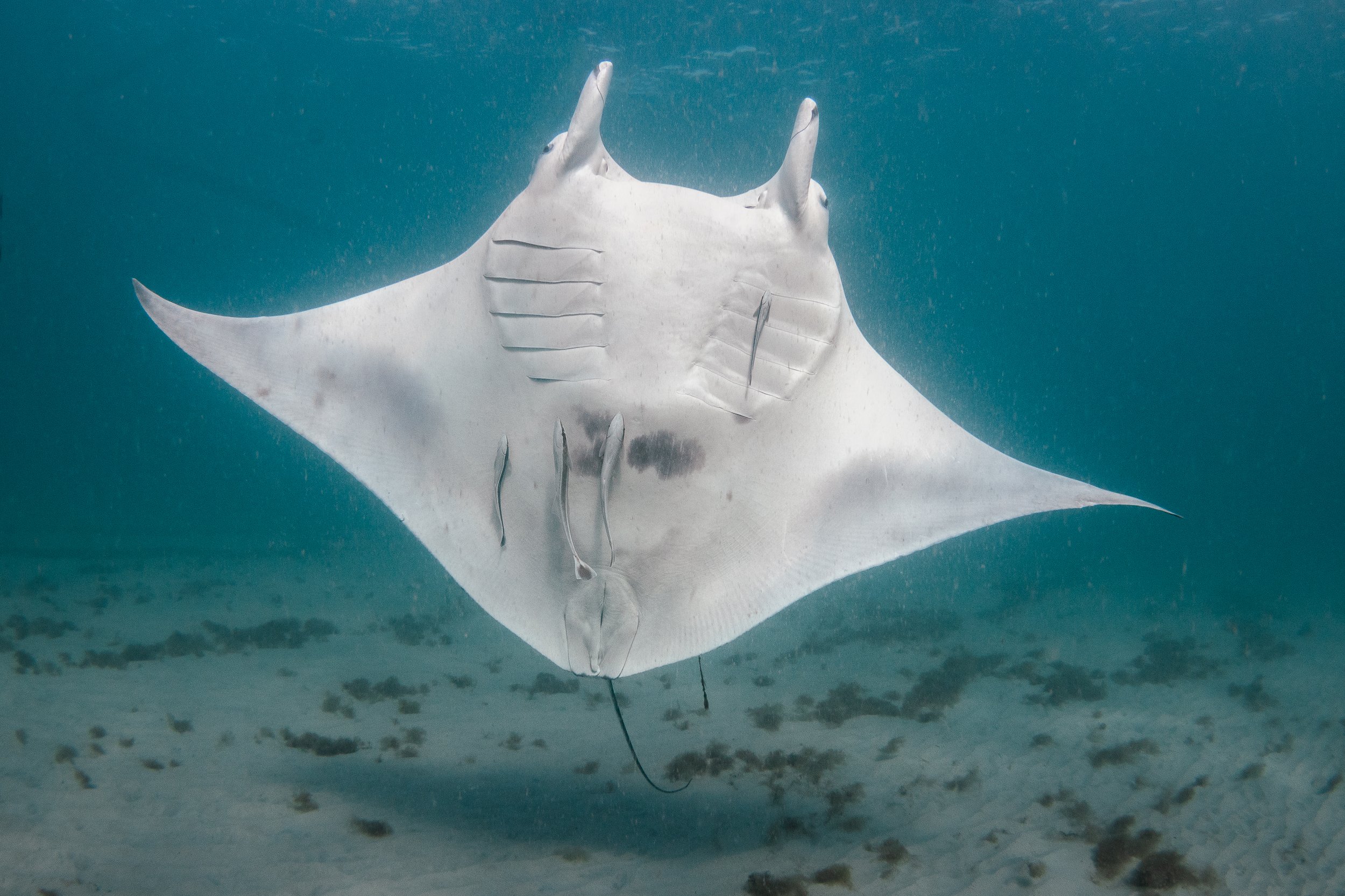
- Every oceanic manta has a unique pattern of spots on its belly, and the pattern is already formed before birth.
- Much of its food comes from the deep: a submersible filmed one feeding in a plankton layer 130 to 140 meters (430 to 460 feet) down.
- A satellite-tagged oceanic manta off Peru reached 648 meters (2,130 feet) on a single dive.
- Females give birth to one pup at a time and are thought to wait two or more years before the next.
- Manta rays have one of the lowest population growth rates of any shark or ray, so a depleted population recovers over decades.
- The coast of Ecuador and Peru holds the largest known population, where researchers including our scientists have identified more than 2,800 individuals.
- Off Praia do Tofo in Mozambique, our 20-year survey recorded a 92.5% decline in oceanic manta sightings.
Meet the oceanic manta ray
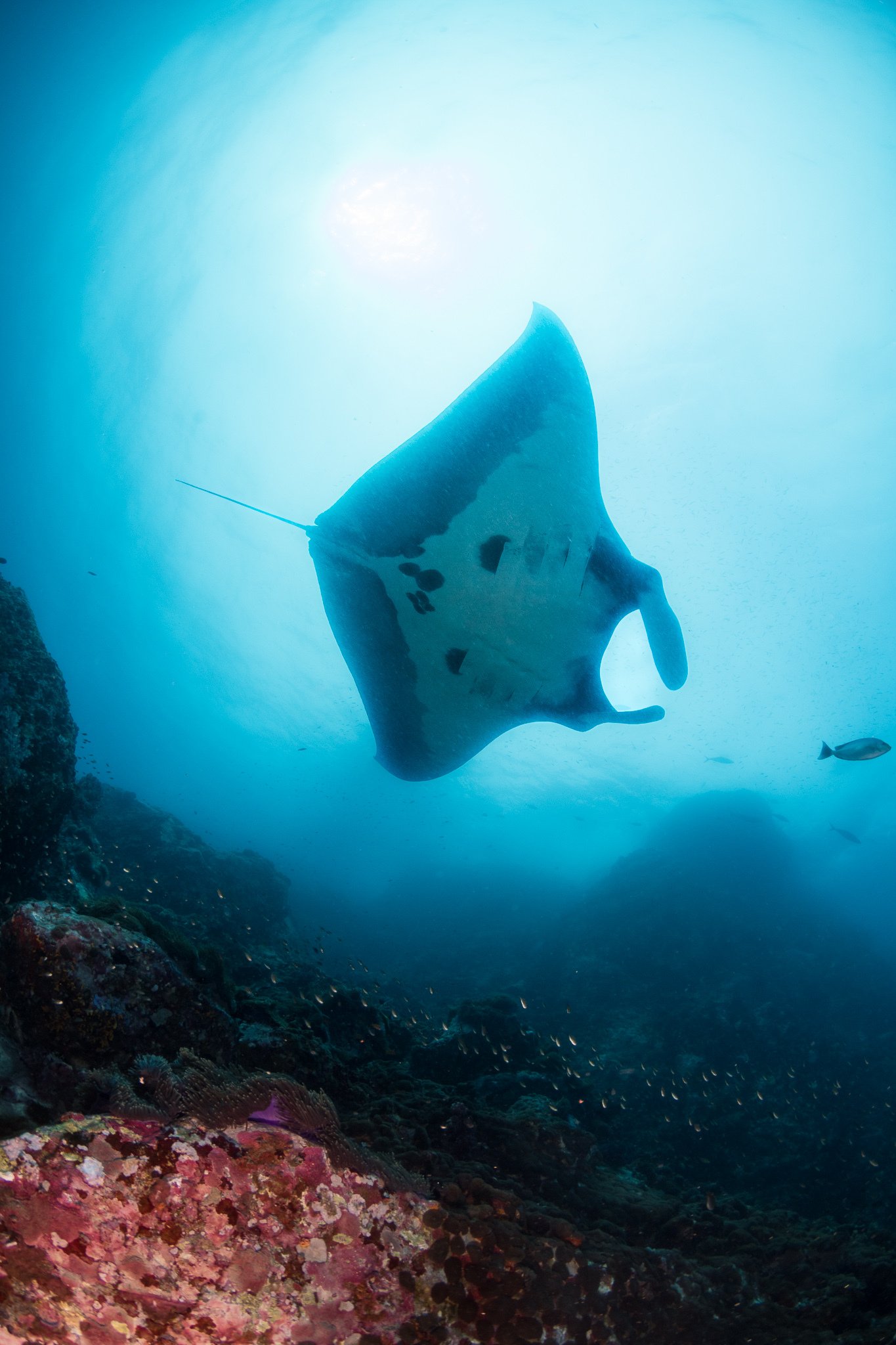
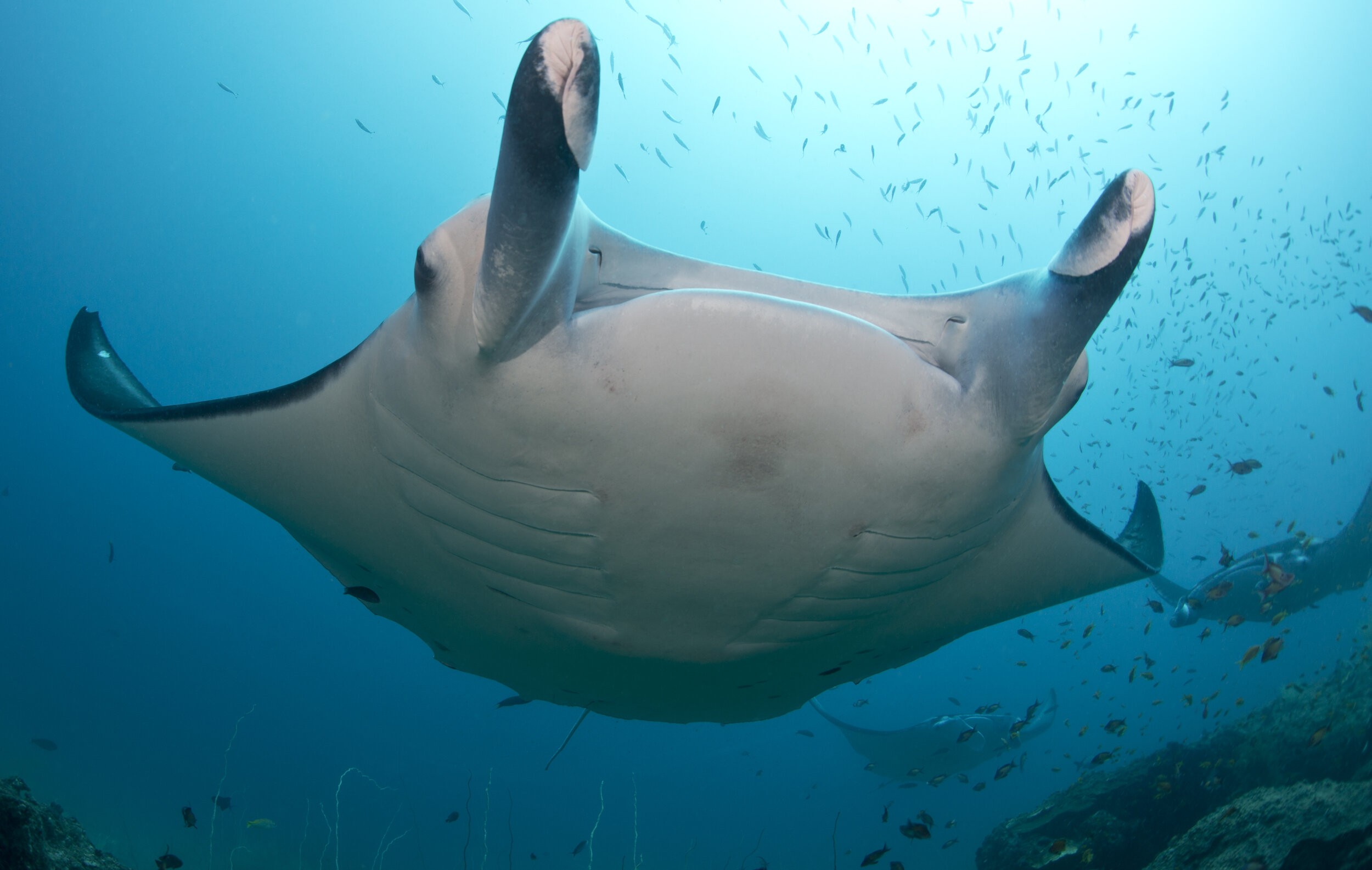
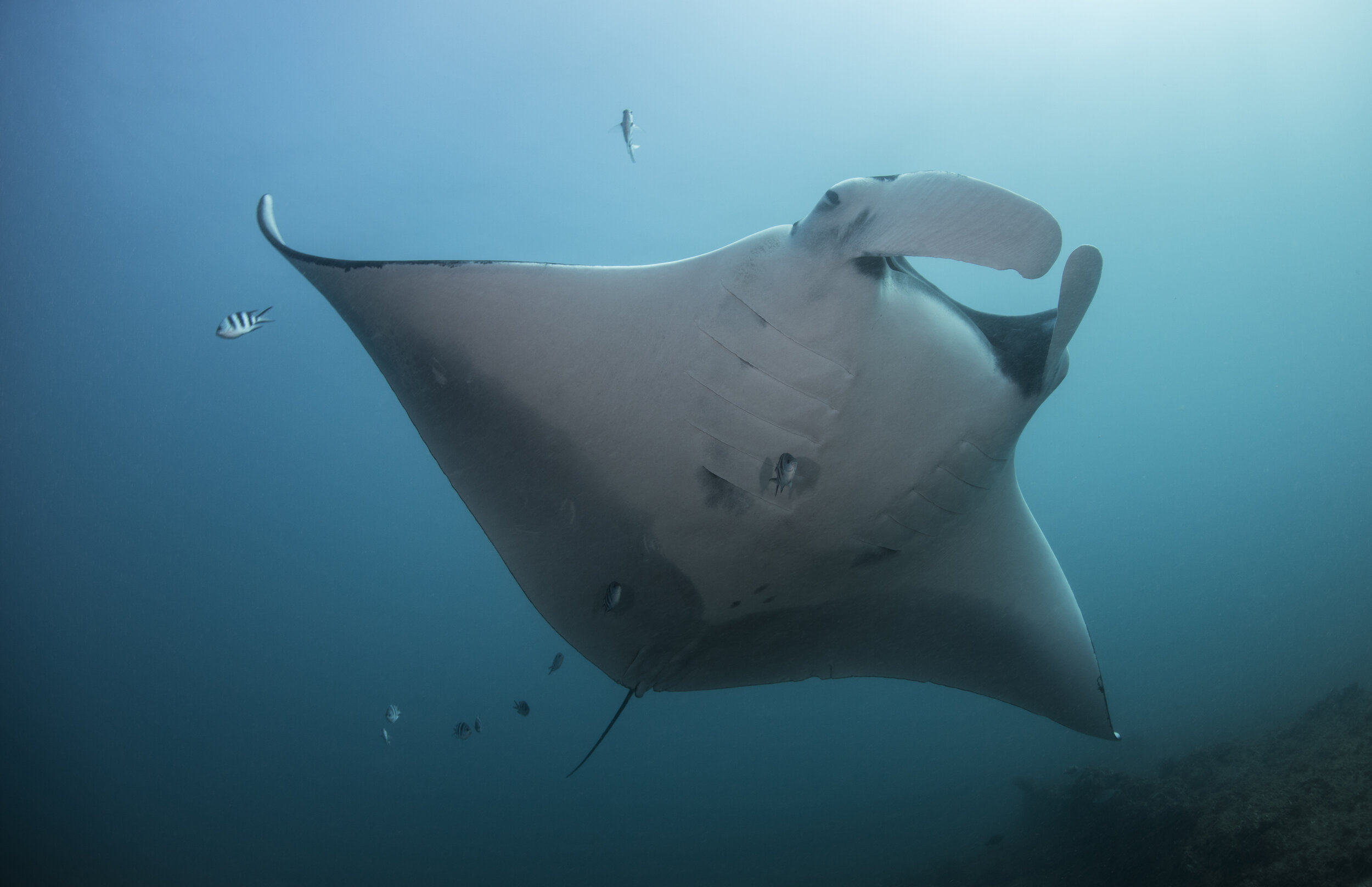
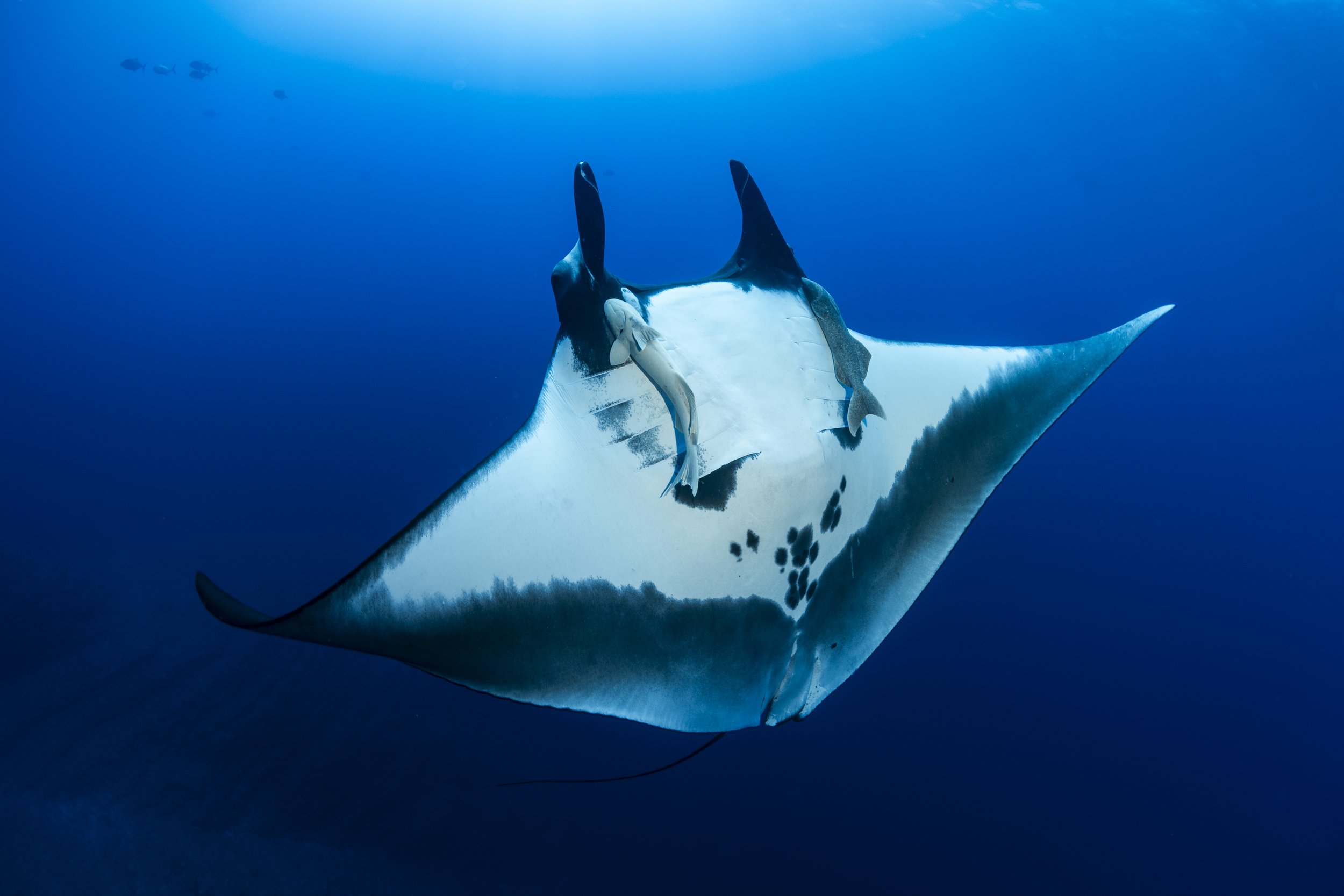
Until 2009, science recognized a single manta ray. Working from animals off southern Mozambique, MMF co-founder Dr. Andrea Marshall showed that there were two, and restricted the name Manta birostris to the larger, more oceanic of them. Genetic work later moved both species into the devil ray genus, so today it is Mobula birostris. The oceanic manta is the one to look for offshore: a dark mouth, white shoulder patches whose front edge runs in a straight line from the spiracle, a bony knob with an embedded spine at the base of the tail, and a size no reef manta reaches. Reef mantas (Mobula alfredi) have a pale mouth, curved shoulder markings, and no tail spine.
That same 2009 paper flagged a probable third manta in the Atlantic. In 2025 the animal was formally described as a separate species, the Atlantic manta ray (Mobula yarae), with Dr. Marshall and MMF’s Jessica Pate among the authors and a type specimen from our Florida Manta Project. The practical consequence is that the oceanic manta ray is now an Indo-Pacific and eastern Pacific species, and the Atlantic animals have their own page. Earlier records from the western Atlantic, including an important juvenile habitat in the Gulf of Mexico, were written before that split and may refer to either species.
Oceanic mantas are genuinely huge. The diagnosis puts maximum disc width at over 7 meters (23 feet), with anecdotal reports to 9.1 meters (30 feet); the largest animals our team estimated in the water off Mozambique were a little over 6 meters (20 feet). Males mature at around 4 meters (13 feet) in Mozambique and about 3.8 meters (12 feet) in Indonesia, and the only mature females examined in Mozambique were larger than 4.7 meters (15 feet). A near-term fetus recovered from a female killed by fishers in Inhambane Province measured 1.33 meters (4 feet 4 inches) across and already carried the belly spot pattern used for photo-identification. Those spots are why everything else on this page is possible: each pattern is unique, so a photograph works as well as a tag.
Where oceanic mantas live
Oceanic mantas occur in tropical, subtropical, and warm temperate waters, and they are typically animals of productive coastlines with upwelling, oceanic islands, offshore pinnacles, and seamounts. They are much harder to find than reef mantas, and their known range is patchy largely because observation is patchy. In Australian waters, for example, coastal sightings of oceanic mantas number in the tens against more than ten thousand reef manta records, while spanning a wider band of latitude — the signature of a species that mostly lives further offshore.
Where the two manta species share a coastline they tend to divide it up. Southern Mozambique, where MMF’s manta work began, holds both, and our sighting records for oceanic mantas there run from the mid-2000s onward. Further south, our African manta and devil ray research follows the same animals across the border into South African waters. Genetics tells us something important about how the species is put together globally: our comparative genomic work found that oceanic mantas are more genetically connected worldwide, and more genetically diverse, than reef mantas. Earlier phylogenomic work by the same group also confirmed the species boundaries within the manta and devil rays and picked up the Gulf of Mexico lineage that later became the Atlantic manta.
Aggregation sites
Oceanic mantas gather where food is reliable, and a handful of these sites carry a disproportionate share of what we know about the species. The largest is in coastal Ecuador. At Isla de la Plata and Bajo Copé, a study we co-authored identified 2,803 individual mantas from 3,322 encounters over 14 years — more animals than at any other known site, and the reason the Ecuador–Peru population is considered the world’s largest. Only 12.9% of those mantas were ever seen again, which tells you how loosely they use even their best sites.
In Indonesia, the Raja Ampat archipelago holds a well-studied aggregation: six years of photo-identification identified 588 oceanic mantas and estimated a population of about 1,875, with sightings rising sharply during the 2015–2016 El Niño. Mexico has two contrasting sites — the remote, fully protected Revillagigedo Archipelago and the coastal Bahía de Banderas, where sightings peak around April and track sea temperature, moon phase, and tidal range, and where 66 acoustically tagged mantas showed a seasonal pattern with two peaks a year. Northern Peru is a feeding ground, southern Mozambique is a long-term monitoring site, and Hawaii is a gap: oceanic mantas are seen there regularly but had never been studied, which is why we launched the Hawaii Oceanic Manta Project with local researcher Dr. Mark Deakos to build the first distribution baseline.
Movements and migrations
Because oceanic mantas live offshore, they were long assumed to be great migrators, and international agreements were written on that assumption. Satellite tagging, stable isotopes, and genetics tested it. Mantas tagged at four sites across the Indo-Pacific made no long-range migrations and held non-overlapping ranges, a pattern the isotope and genetic data showed to be stable over years and generations. The conclusion was that local and regional management matters more for this species than anyone expected.
That does not make them sedentary. Off Mexico, 22 individuals were tracked moving between the Revillagigedo Archipelago, Bahía de Banderas, Bahía de Navidad, and the Gulf of California over 21 years, with the longest transit about 560 kilometers (350 miles) — a metapopulation linking offshore islands to the mainland coast. So the picture is a species that ranges widely within a region and crosses ocean basins rarely, but often enough over evolutionary time to stay genetically connected. For managers, the useful version is simpler: protect the sites, because the animals using them are largely local.
Feeding
Oceanic mantas eat zooplankton, straining it through the plates on their gills, and the surface feeding that divers occasionally see is a small part of the story. Our stable isotope work on mantas in Ecuador placed them at a trophic position of about 3.4 and found carbon values inconsistent with a surface-plankton diet, pointing instead to prey from the mesopelagic “twilight zone.” A follow-up study of fatty acids in the same population found a profile low in polyunsaturated fatty acids and rich in compounds typical of deep-sea organisms — the same answer from independent chemistry. Comparable work across five mobulid species in the Indo-Pacific found broad dietary overlap between species sharing a site, which is part of why bycatch tends to take several mobulids at once.
The behavioral data match. Archival tags at Revillagigedo showed mantas spending much of their time around the top of the thermocline, shifting through the season from surface waters down to 100–150 meters (330–490 feet), and on one dive a submersible filmed an oceanic manta feeding inside a dense plankton layer at 130 to 140 meters. Off northern Peru, tagged mantas dived deeper at night than by day — the reverse of the usual pattern — and one reached 648 meters (2,130 feet), apparently feeding on vertically migrating plankton at night and returning to warm surface water in between. The world’s largest ray gets most of its food from water most of us will never see.
Reproduction and life history
Oceanic manta reproduction is the biggest gap in what we know, because pregnant females are rarely seen and almost all records come from fisheries. What is consistent across those records is a life history with almost no slack in it: a single pup, a pregnancy of roughly a year, and a gap of two or more years before the next. Females are large before they breed at all — the mature females examined in Mozambique exceeded 4.7 meters — and the pup is born already more than a meter across.
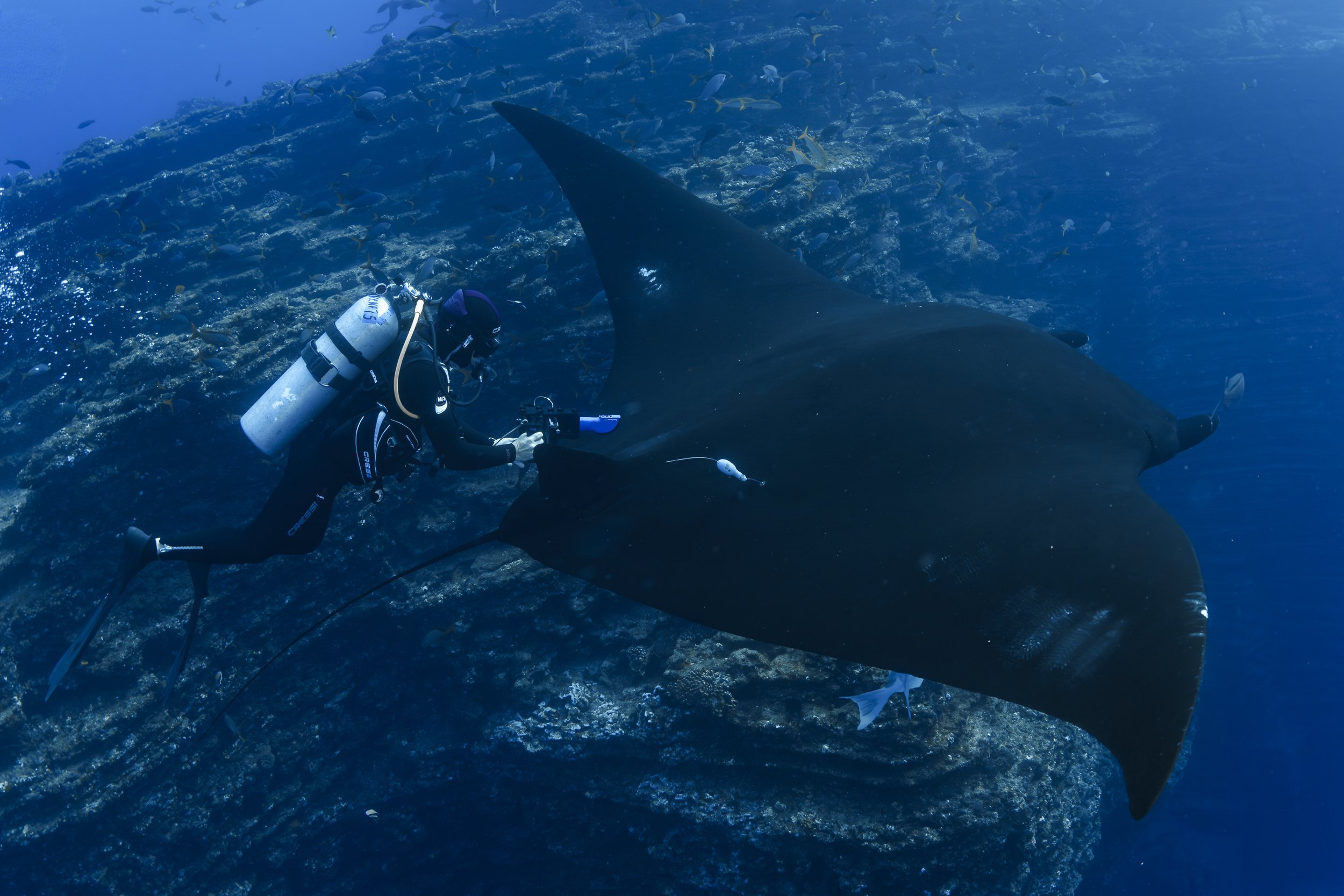
Pregnancy may also be easy to miss from the outside. In 2026 a team that included MMF’s Jessica Pate held a contactless underwater ultrasound a few centimeters (about 2 inches) above the backs of free-swimming oceanic mantas at Revillagigedo National Park, Mexico, and confirmed pregnancy in three females — the first time ultrasound has been used to confirm and stage pregnancy in wild oceanic mantas. The two in late pregnancy showed a visible bulge. The third, at a middle stage with a fetus roughly 56 to 60 centimeters (22 to 24 inches) across, showed no outward sign at all, which means surveys that count pregnant females by eye are probably missing some.
Courtship has been watched only a handful of times. Off the Ogasawara Islands in Japan, observers recorded a five-stage mating sequence: males chase the female, one bites the tip of her left pectoral fin, mates belly-to-belly within a meter of the surface for about a minute, then releases her. Put the pieces together and the demography is unforgiving. Manta rays have one of the lowest maximum population growth rates of the 106 sharks and rays for which it has been calculated, and that rate is most sensitive to the length of the reproductive cycle — precisely the thing fisheries cannot change back. Predators are a normal part of their lives, too: we documented the region’s first record of a killer whale killing an oceanic manta ray in the southwest Indian Ocean.
How many are there, and how are they doing?
There is no global population estimate for oceanic mantas, and the site-level estimates that exist are lower bounds for a mobile animal. The best of them is Ecuador, where mark-resight models put the superpopulation using Isla de la Plata and Bajo Copé at about 22,300 animals, with recruitment peaking in the coolest, most productive year of the study. Raja Ampat’s estimate is about 1,875. Both were built from photographs of belly spots, which is the only practical way to count a species this hard to catch.
Where we have watched longest, the trend is down. Our dive-log surveys at Praia do Tofo in Mozambique found a 92.5% decline in oceanic manta sightings between 2003 and 2023, and the decline held up after accounting for weather and ocean conditions — which points at fishing rather than the environment. That decline was not obvious early on: the first eight years of the same dataset showed no significant decline for oceanic mantas even as reef mantas and whale sharks fell sharply. It took two decades of consistent survey effort to see it, which is the argument for long-term monitoring in one sentence.
Current research
Our oceanic manta work runs on three fronts. In Mozambique, our senior scientist Nakia Cullain is consolidating twenty years of photo-identification, satellite tagging, and unpublished survey data into a population assessment for the species, alongside our expanding reproductive ultrasound program on wild rays. In Hawaii, Jessica Pate and Mark Deakos are assembling sighting records from across the islands into the first spatial and temporal description of oceanic mantas in Hawaiian waters, which is the evidence any future protection there would have to rest on — reef mantas have state protection in Hawaii and oceanic mantas do not. In Florida, our team’s work on the newly described Atlantic manta ray is what makes it possible to say anything precise about oceanic mantas elsewhere. Across all of it, the international priorities we helped set out with 30 other researchers — life history, nursery areas, population trends, and bycatch — are still the list.
Threats and protection
Oceanic mantas are caught deliberately and accidentally, and their biology means neither has to be large to matter. The targeted driver is the trade in dried gill plates, sold as a health tonic in Asia. Trader surveys estimated the market at about 130,000 mobulid rays a year by 2013, of which roughly 4% were manta rays, and a global assessment in 2024 found mobulid landings in 43 countries and gill plates selling for up to US$1,260 per kilogram, with online sellers replacing shopfronts. A review we co-authored counted 13 fisheries targeting mobulids and 30 taking them as bycatch. In Sri Lanka, artisanal gillnets alone land more mobulids than every industrial purse-seine fishery in the world combined. In East Java, market surveys over a decade recorded illegal landings of oceanic mantas and gill plates destined for export despite national protection.
The other threats are less visible. Oceanic mantas spend a lot of time at or near the surface, which puts them in the way of boats and fishing gear: mantas at a coastal site near a major population center in Mexico carried far higher injury rates than those at an offshore protected area. As filter feeders in some of the world’s most plastic-polluted seas, they are also exposed to microplastics and the toxins that ride on them. There is progress on bycatch: a release device designed with purse-seine crews got even the largest mantas off the deck in about three minutes.
Protection on paper is now substantial, much of it built on this research. The oceanic manta ray is Endangered on the IUCN Red List, assessed in 2020 with Dr. Marshall among the assessors. It has been on both appendices of the Convention on Migratory Species since 2011 and CITES Appendix II since 2014 (agreed in 2013), and the United States listed it as Threatened under the Endangered Species Act in 2018. Indonesia protected all manta rays nationally in 2014; Mozambique banned the capture of manta and devil rays under its 2020 marine fisheries regulations, in force from January 2021; and Peru banned the capture of oceanic mantas at the end of 2015, with protection later extended to all mobulids. Enforcement is the gap. In Peru, catches of the protected species did not fall after the ban, and monitoring since confirms mobulids are still landed in large numbers. A global review of mobulid policy in 2026 reaches the same conclusion: the rules exist and the mortality continues. Closing that gap — site protection where the animals actually are, and enforcement where the rules already exist — is what our field programs are for. You can adopt an oceanic manta ray to fund it, or read more manta ray facts.
Where we study them
 African Manta Ray Project
Following manta rays across the Mozambique–South Africa border to understand and protect the last large population on the East African coast.
 Atlantic Mobula Rays
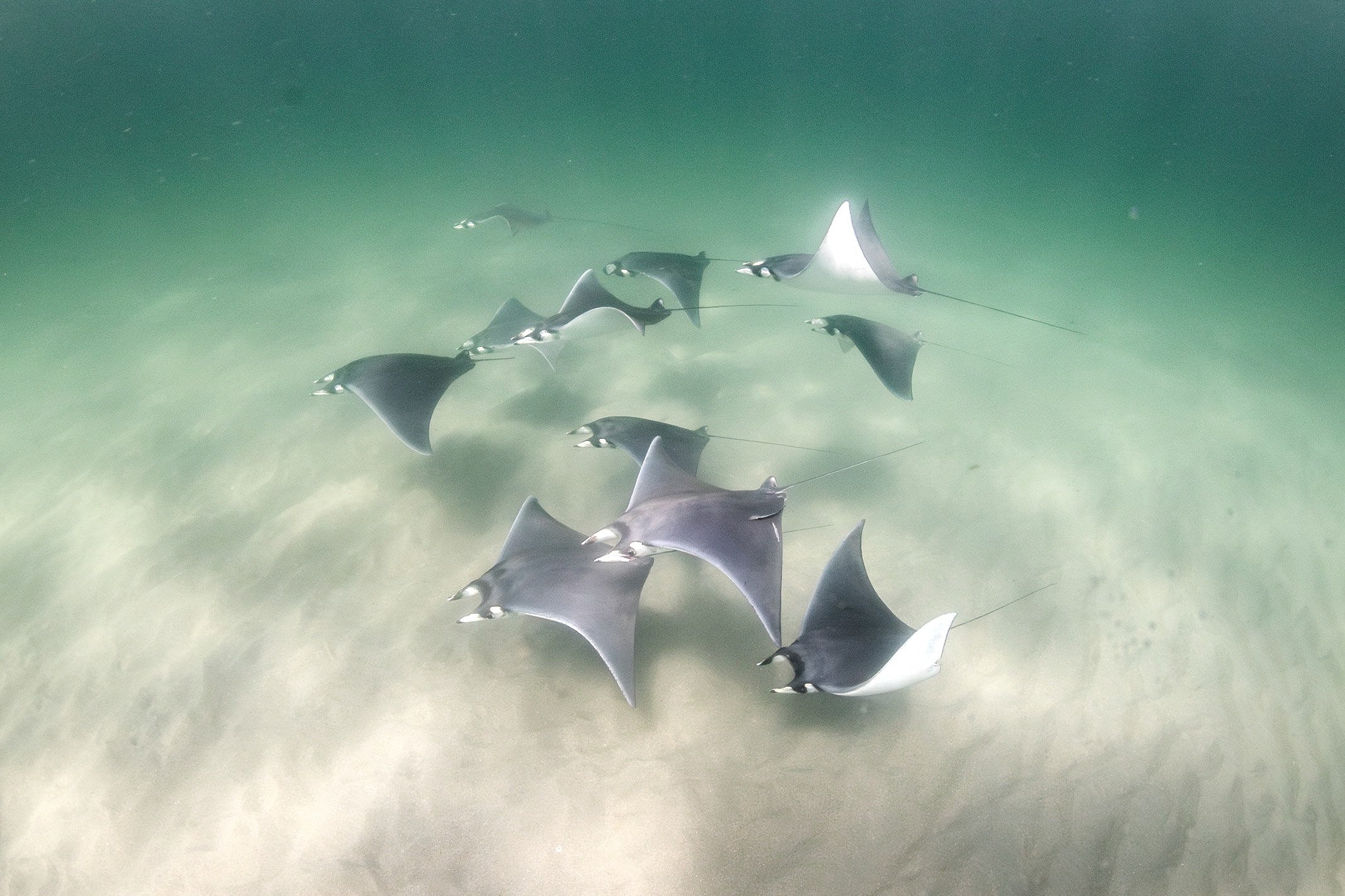
MMF's devil ray research in the western Atlantic: range extensions, the 2025 three-species distribution study, and the newly described Mobula yarae.
 Hawaii Oceanic Manta Project
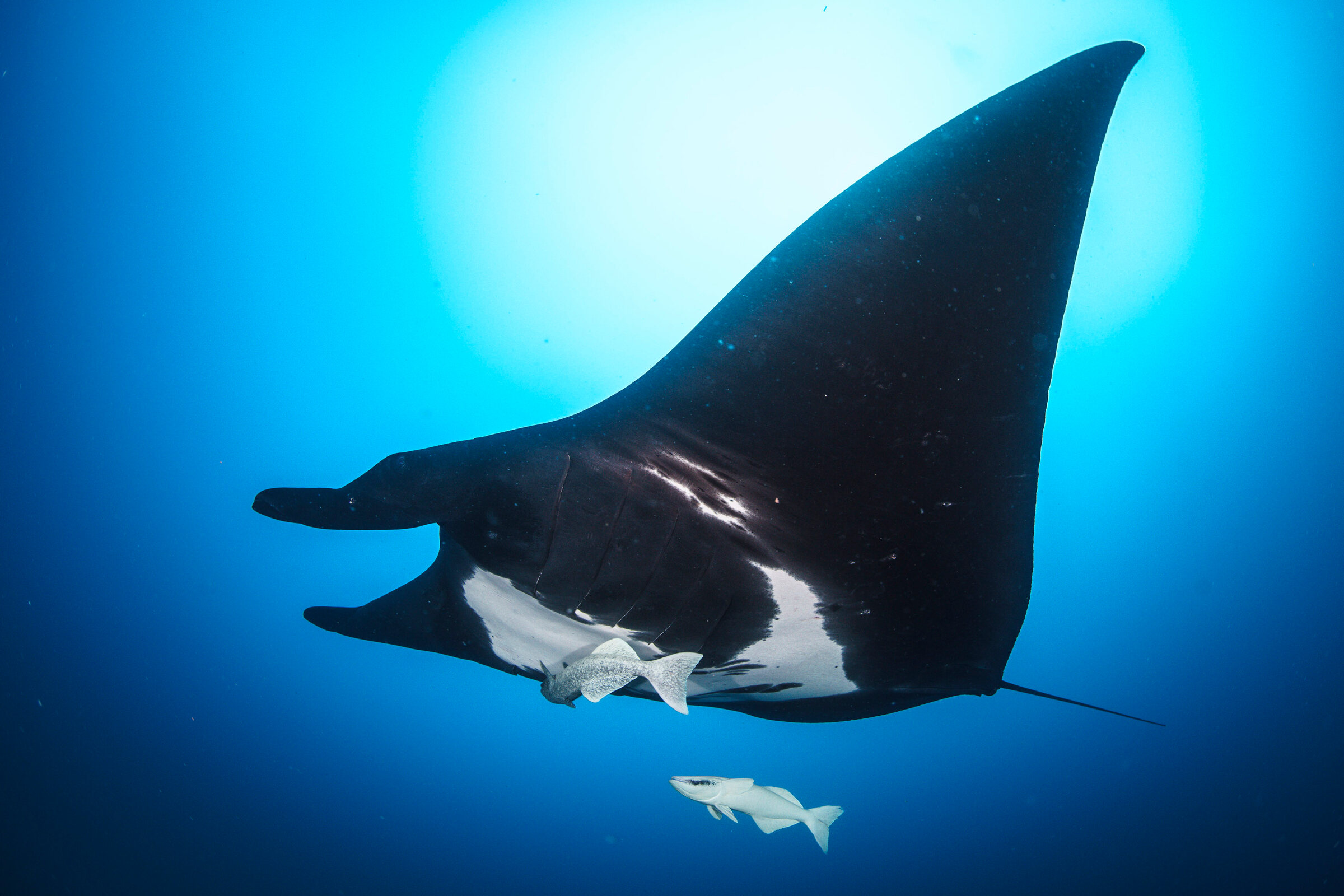
Compiling researcher and citizen-science sightings from across the islands to build the first picture of oceanic manta rays in Hawaiian waters.
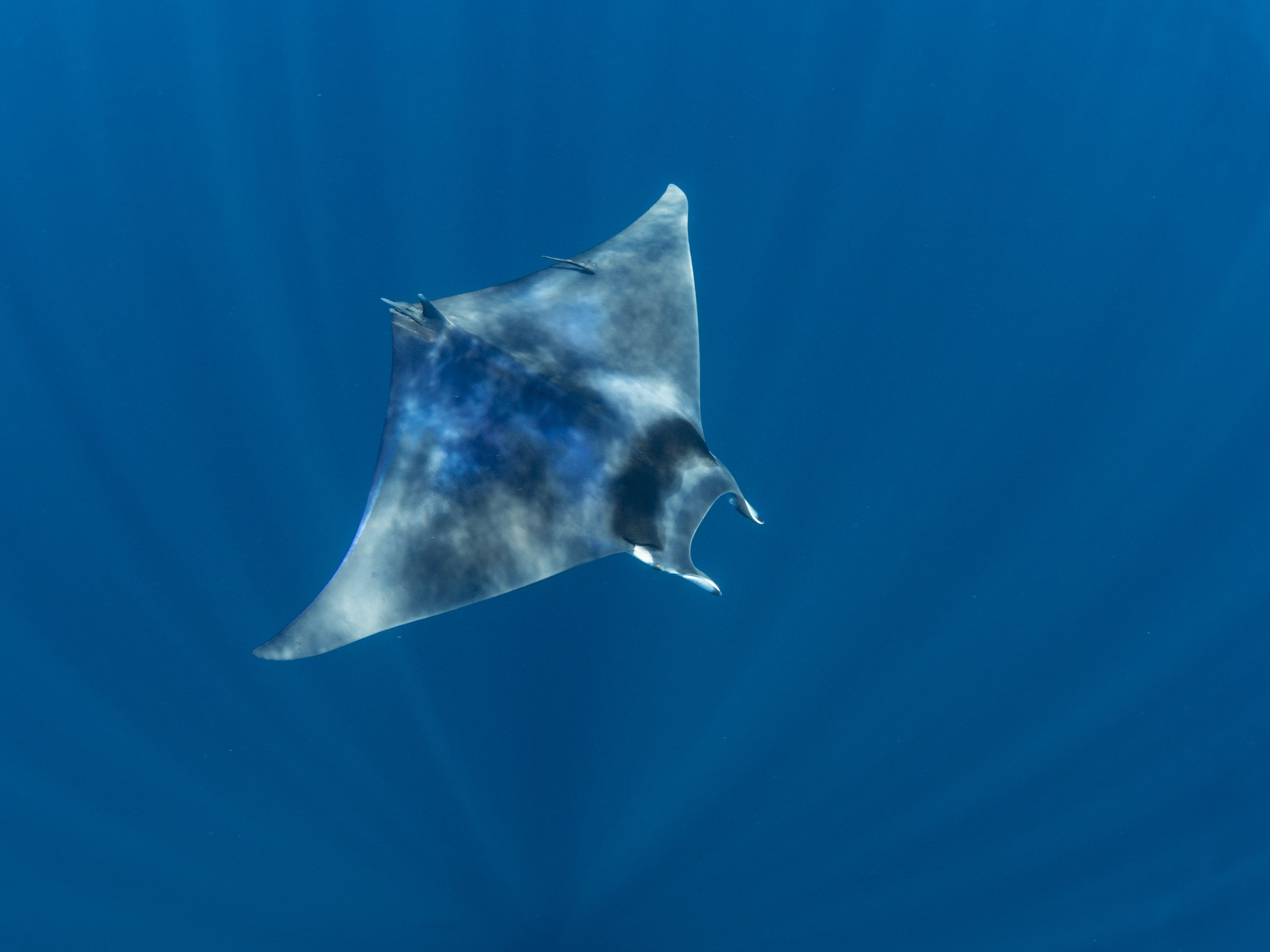 Madagascar Manta and Devil RaysCompleted
The first dedicated study of manta and devil rays in Madagascar, from seven years of surveys off Nosy Be.
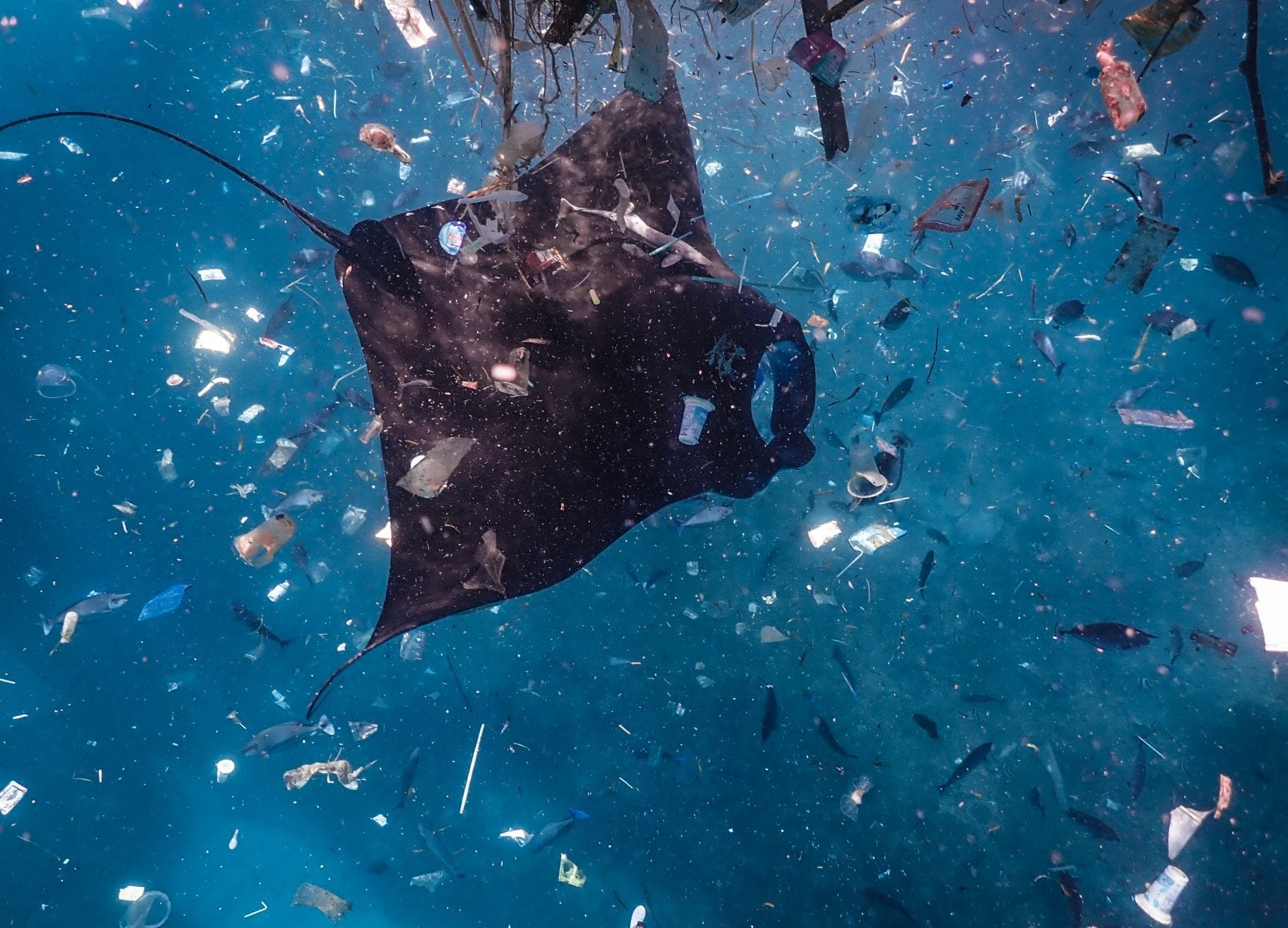 Microplastics & Megafauna
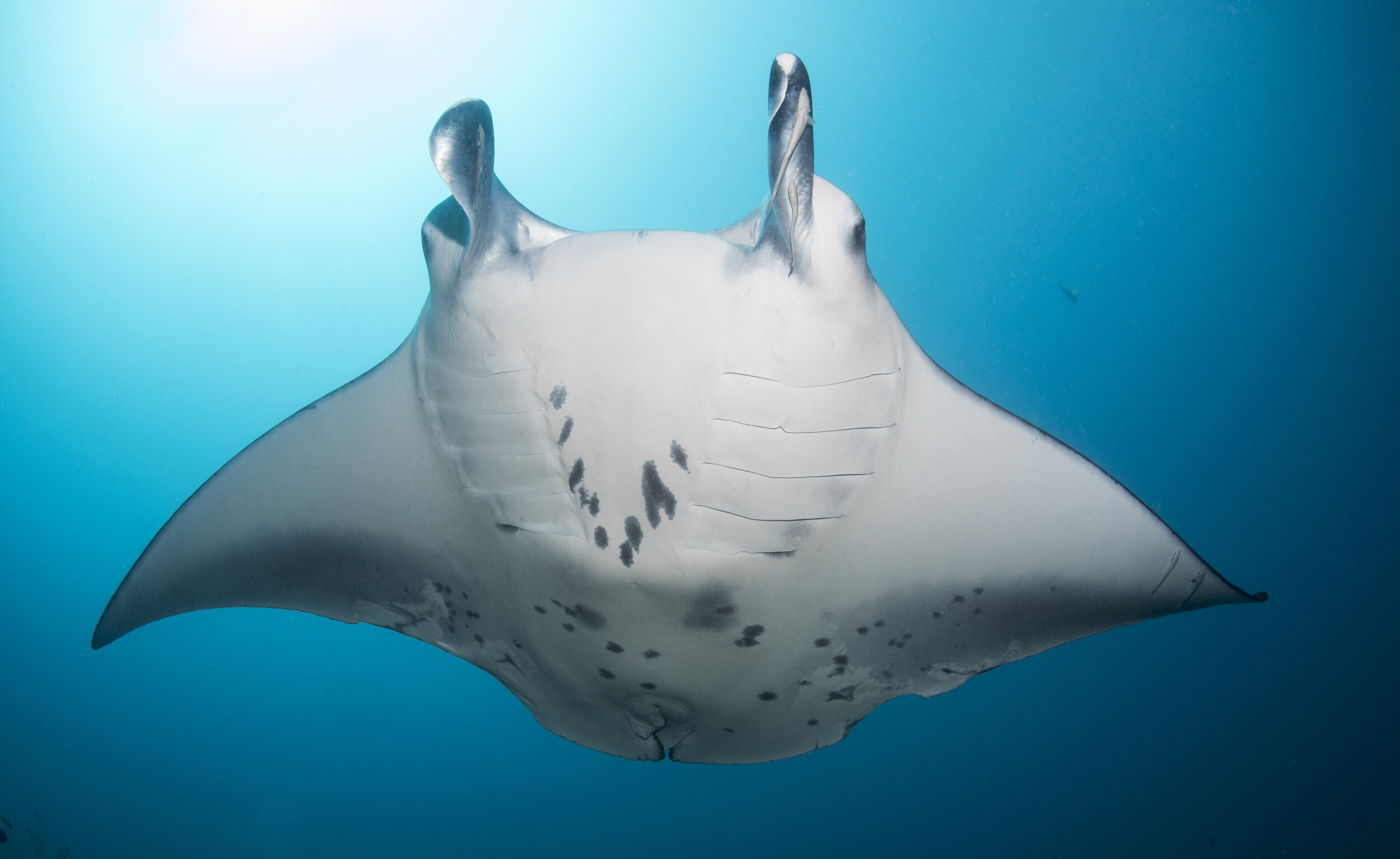 Mozambique Manta & Devil Ray Research Project
Two decades of research on manta and devil rays along southern Mozambique's Inhambane coast, home to Africa's largest known manta ray populations. Sightings have fallen steeply, and we work to find and protect the places these rays need.
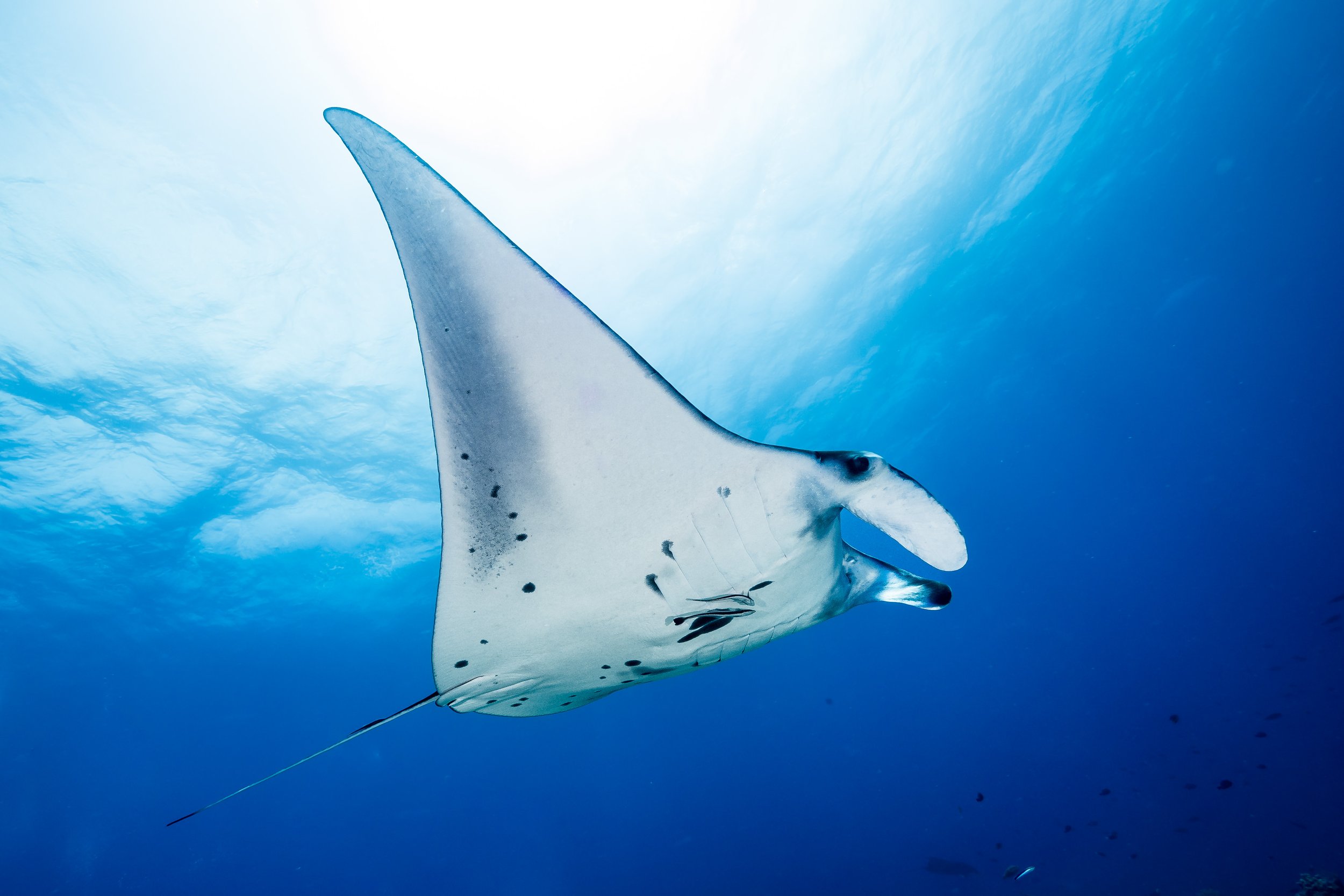 Philippines Manta and Devil RaysCompleted
Completed research with LAMAVE on the diet and slow reproduction of manta and devil rays in the Bohol Sea, Philippines, and on the distribution of manta rays across the country.
BryantTurffs.jpg) The Florida Manta Project
The Florida Manta ProjectThe first dedicated study of Florida's manta rays, from a rare urban nursery for young Atlantic manta rays to a seasonal aggregation of adults off central Florida.
 Závora Marine Conservation
Research, fisheries monitoring, and community-led protection at MMF's southernmost site in Mozambique, home to one of the last reef manta ray aggregations on the East African coast.
Publications
2026
2022
2020
In the news
Underwater Ultrasound Confirms Pregnancy in Wild Giant Manta Rays
September 24, 2026
Remoras Caught Hiding Inside Manta Rays
May 11, 2026
Killer Whales Meet Sharks and Rays in a New Global Dataset
February 4, 2026
How we study them
How you can help
With thanks to our supporters and partners
- Save Our Seas Foundation





- Pure Ocean FundFunder (2022–2024)