
Human-influenced climate change is an existential threat to many shark and ray species. Most sharks and rays are cold-blooded (ectothermic) animals, with their biology and metabolism dictated by the ambient water temperature. The ocean is presently absorbing an estimated 90% of the heat trapped in the earth’s atmosphere, causing a clear rise in surface temperatures.
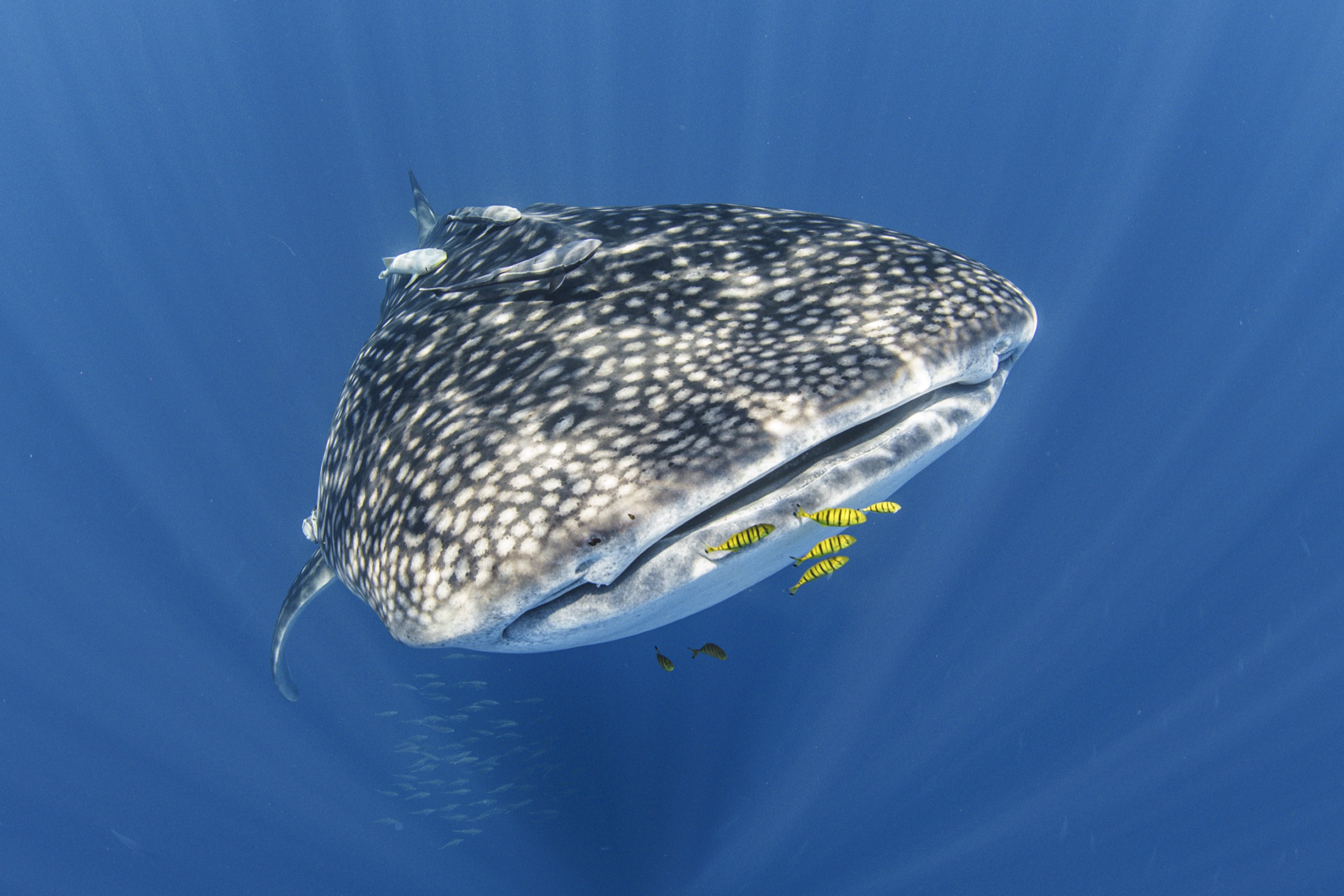
This is creating newsworthy changes in shark distribution. Warm water species like the Whale Shark (Rhincodon typus) have been reported in mainland Europe (Portugal) for the first time, Hammerhead Sharks (Sphyrna spp.) and Bigeye Thresher Shark (Alopias superciliosus) are increasingly common in Britain, and Tiger Sharks (Galeocerdo cuvier) are being caught off Canada in the north and Tasmania, in Australia, to the south. At the same time, though, some tropical waters are becoming uninhabitable for sharks and rays, while cooler-water species are feeling the squeeze as their habitats contract.
Latitudinal shifts in marine ecosystems are a gradual process, but many effects of climate change are moving much faster. Sea level rise is inundating coastal regions. Marine heatwaves and tropical storms are becoming more frequent, and more severe. Deoxygenated ‘dead zones’ in the ocean present a barrier to wildlife migrations, while acidification is degrading coral reef ecosystems. These are shared threats to sharks and people.
The long evolutionary history of sharks and rays, and their ancestor’s persistence through several mass extinction events, provide us with some insights into the species that may be most at risk of human-induced climate change. This time, however, their challenges are compounded by the overfishing and habitat modification that has already depleted shark populations. In this Fact Sheet, we explore the main threats to sharks and rays from climate change, particularly those listed on the Convention on the Conservation of Migratory Species of Wild Animals (CMS), and how we can shield the most at-risk species.
Shifting populations
Ocean temperature has a direct effect on physiological and metabolic functions in sharks, including digestion, growth, and reproduction. That makes it difficult to generalize how sharks and their relatives, a diverse group of around 1200 species, will respond to rising ocean temperatures; it depends on their preferred habitats, diet, and swimming ability, to note just a few factors. Projections of how each species will be affected by climate change generally rely on modeling their contemporary habitat use, based on fisheries, sightings, or tracking data, then predicting how these habitats will shift based on future change scenarios. Unsurprisingly, given the lack of data available for many sharks, these predictions are only available for a small number of species.
Some open ocean species, like migratory Blue Sharks (Prionace glauca), Shortfin Mako (Isurus oxyrinchus), Silky Sharks (Carcharhinus falciformis), and Oceanic Whitetip Sharks (Carcharhinus longimanus), can swim towards the poles to maintain their optimal temperature environment. However, pelagic sharks generally have a relatively narrow preferred temperature range. These species are all active hunters and, as such, they have naturally high metabolic rates. As water temperature increases, the shark’s metabolism does too. They have to swim faster to deliver sufficient oxygen to their bodies, eat more to supply energy, or suppress their growth and reproduction to compensate. Even at the best of times, these sharks live on an energetic knife-edge. While they can expand their distribution into cooler waters to adjust to rising ocean temperatures, tropical surface waters are becoming uninhabitable, resulting in an overall range contraction.
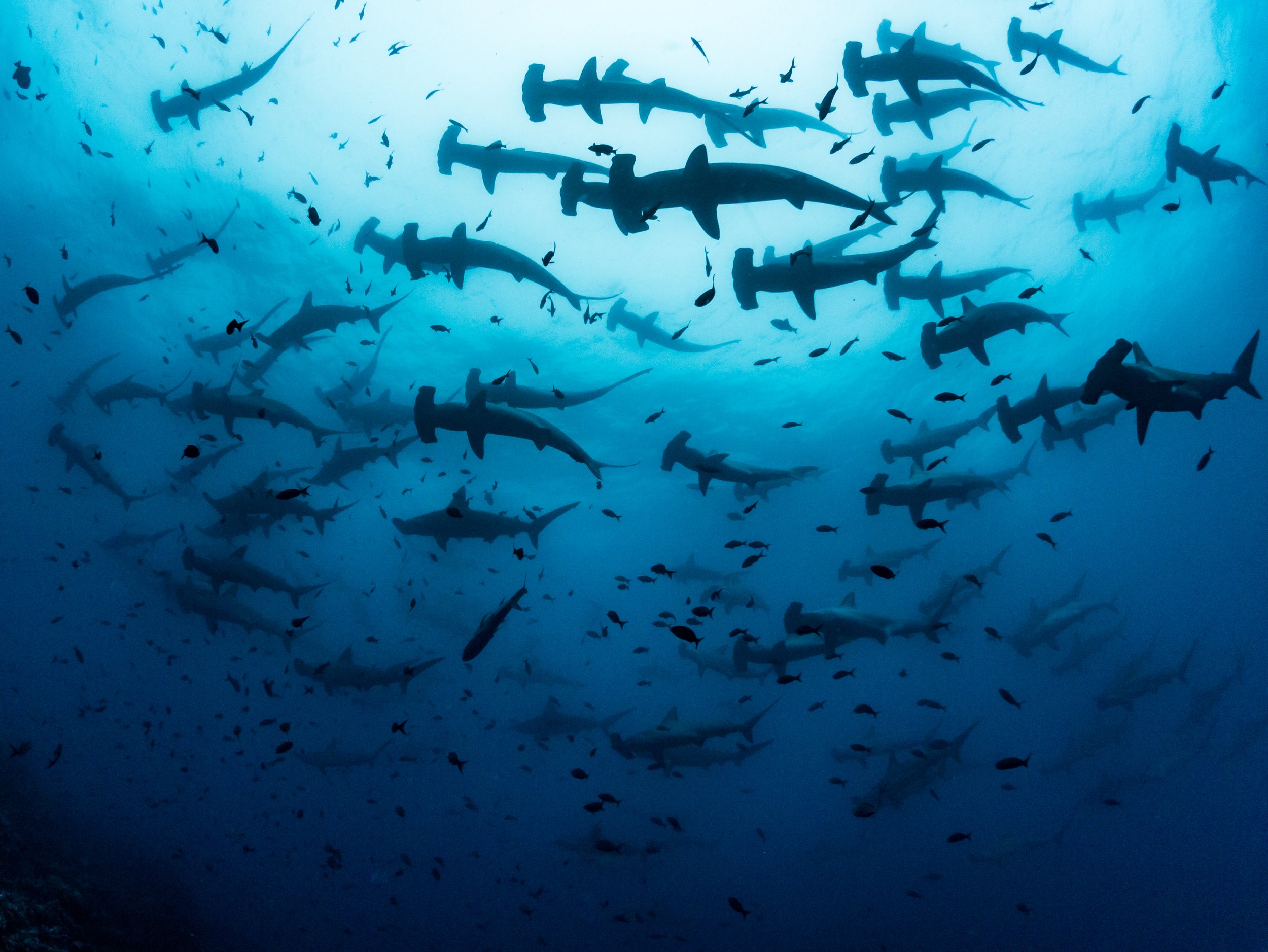
Warming oceans are increasing the strength and frequency of acute marine heatwaves, such as the El Niño Southern Oscillation (ENSO). These events provide additional insight into likely species- and community-level effects of longer-term climate change. A case study from Cocos Island off Costa Rica, based on 27 years of diver-recorded shark and ray sightings, investigated the effects of ENSO events on the Scalloped Hammerhead (Sphyrna lewini) which has one of the highest metabolic rates among all sharks. This species, which is Critically Endangered on the IUCN Red List, had the strongest response to temperature change of any shark in the monitored community. Predicted individual shark counts declined by 10% for a 1°C increase in water temperature, and by 40% with an increase from 25 to 30°C. The probability of observing Hammerhead schools (>50 individuals) was 43% more likely at 25°C than at 30°C. During cooler La Niña years, there were twice as many Scalloped Hammerheads present at the island, and schooling behavior was 118% more likely during strong La Niña events than during strong El Niño conditions.
Climate refugees
Since the 1950s, ocean surface warming has shifted marine taxa and communities poleward at an average of 59 km per decade. Many sharks and rays are dependent on particular habitats, such as coral reefs, which are not continuous. Walking Sharks (Hemiscyllium spp.), found only on shallow reefs in the tropical Indo-Pacific, can only shift their range if there is additional reef habitat with suitable environmental conditions that is close enough for these small sharks to swim to. Thermal stress on coral reefs is already evident, such as the well-publicized recent bleaching events on the Great Barrier Reef, where the 2016–17 event affected two-thirds of this huge reef system.
Some sharks and rays have very small natural or remnant ranges, such as the Maugean Skate (Zearaja maugeana), now found only in a single harbor in Tasmania, and the New Caledonia Catshark (Aulohalaelurus kanakorum), thought to be restricted to southern New Caledonia. Others appear to have hugely reduced ranges due to overfishing, such as the Clown Wedgefish (Rhynchobatus cooki), which has solely been recorded from the Lingga Archipelago in Indonesia in recent years, and the False Shark Ray (Rhynchorhina mauritaniensis) which is now restricted to the waters of Banc d’Arguin National Park in Mauritania. Species in this situation can be left stranded in habitats that push their physiological tolerances. It is analogous to the situation on land, where high-altitude species have been forced higher and higher up mountains, until they simply run out of space to live.
Similarly, there is concern for Critically Endangered species whose ranges have been heavily fragmented by overfishing and habitat loss, such as the Angelshark (Squatina squatina) and Common Guitarfish (Rhinobatos rhinobatos). These species use warm, shallow protected waters in the eastern Atlantic and Mediterranean as nurseries to speed the development of their pups. The Angelshark was historically known for coastal migrations into northern Europe, where it is now mostly absent. Their small contemporary population, decimated by overfishing, is now isolated in pockets of suitable habitat. The species is most commonly sighted in the Canary Islands, where its options for temperature-related adaptive movement are limited by the deep trenches between islands and between the island chain and the African continent.
This emphasizes the importance of maintaining habitat continuity for threatened populations by safeguarding movement corridors between suitable areas, and preserving critical habitats, such as the coastal nurseries used by the pups of many shark and ray species. Inshore and estuarine nursery areas are highly susceptible to climate change. Sea level rise may, in some cases, expand these areas through the inundation of marshes. However, increased water depth can also reduce the light required by seagrass meadows to maintain photosynthesis, reducing the availability of seagrass-associated prey species for young sharks and rays. Increasing water temperatures are exacerbated by sun exposure in these shallow environments, with associated deoxygenation (discussed below), while coastal areas are vulnerable to damage from storms.
In particular, heavy rains expose estuarine habitats to increased runoff and freshwater input. Juvenile Bull Sharks (Carcharhinus leucas), which are well-known for being able to move between fresh and saltwater environments, often live in rivers for their first few years of life. Studies of young Bull Sharks in the Logan and Albert Rivers in Australia found that flooding events caused rapid drops in both salinity and the water’s dissolved oxygen content that exceeded their ability to adapt. Three tagged sharks were not detected again after the flood, so they either left the system permanently or died. Public reports of dead sharks at the Logan River mouth after the flood suggest that not all survived the flood. As storms become fiercer, and more frequent, such events are projected to increase.
Ocean deoxygenation
Accelerating water deoxygenation, now seen in all oceans, is one of the most significant ecological consequences of climate change. Projected deoxygenation levels towards the end of this century will mimic conditions that were found during the end-Permian period, when a collapse of suitably aerobic habitat caused the largest marine extinction in geological history. In previous mass extinction events, large cold-blooded animals and top predators were among the worst-affected animals by ocean warming and associated deoxygenation. Sharks, of course, are among the largest animals in the marine environment.
Oxygen is less soluble in warmer water, which poses a serious problem for migratory sharks. Open ocean species have to swim constantly to maintain the flow of oxygenated water over their gills so they can, in turn, deliver oxygen to their muscles and organs. By itself, their constant swimming requires a lot of energy and oxygen. As water temperature increases, the shark’s metabolism does too, but their available gill surface area for extracting oxygen is a physical constraint.
Sharks live in a three-dimensional habitat, so they can normally use depth to avoid high surface temperatures. Blue Sharks, for instance, are one of the world’s most widely distributed cold-blooded animals, capable of swimming across entire ocean basins and diving to over 1600 m depth. With that comes a high tolerance for environmental variation, as they can naturally be exposed to temperatures of 4–30°C. During long-distance migrations, they often remain at ~400 m depth to reduce their energy costs by staying in cooler water. Their metabolic rate at this depth is estimated to be only 40% of that in warmer surface waters.
However, they still require a minimum oxygen level. A reduction in the oxygen content of surface waters, due to heating, is magnified at depth, as oceanic bacteria use up a high proportion of the remaining oxygen. In some regions, this has created permanent ‘oxygen minimum zones’ (OMZs) between 200–1,000 m depth, in which oxygen levels are too low for pelagic sharks to use routinely. As the oceans warm, OMZs are expanding both horizontally and vertically. In the eastern tropical Atlantic, the OMZ has been expanding for the past 50 years, increasing in thickness (depth range) by 85% between 1960 and 2006. Recent observations have detected such low oxygen content in some oceanographic features within this area that they are referred to as ‘dead zones’. Tracking data of Blue Sharks in this region found that their average maximum dive depth in the OMZ was 40% less than the mean depth outside the area, with a greatly reduced frequency of deep diving (to below 600 m) while inside the OMZ. Restricted dive profiles in OMZs have also been documented from White Sharks (Carcharodon carcharias) and Shortfin Mako in the eastern Pacific Ocean.
These deoxygenated zones reduce the habitable space for pelagic sharks, and compress their vertical movements. That makes the sharks more susceptible to capture in open ocean fisheries. Blue Sharks make up ~90% of the catch of pelagic sharks in the Atlantic, and their fins are the most commonly traded in international markets. Longline catches of Blue Sharks around the eastern Atlantic OMZ were higher inside than outside it, primarily in areas where shark dive depths were predicted to be shallower, based on the tracking data. As OMZs increase in size, restricting sharks to their edges, or to staying close to the surface if they have to cross these biological deserts, their already depleted populations become more catchable by industrial fisheries.