
Projects in the United States
Atlantic Guitarfish
What’s this project about?
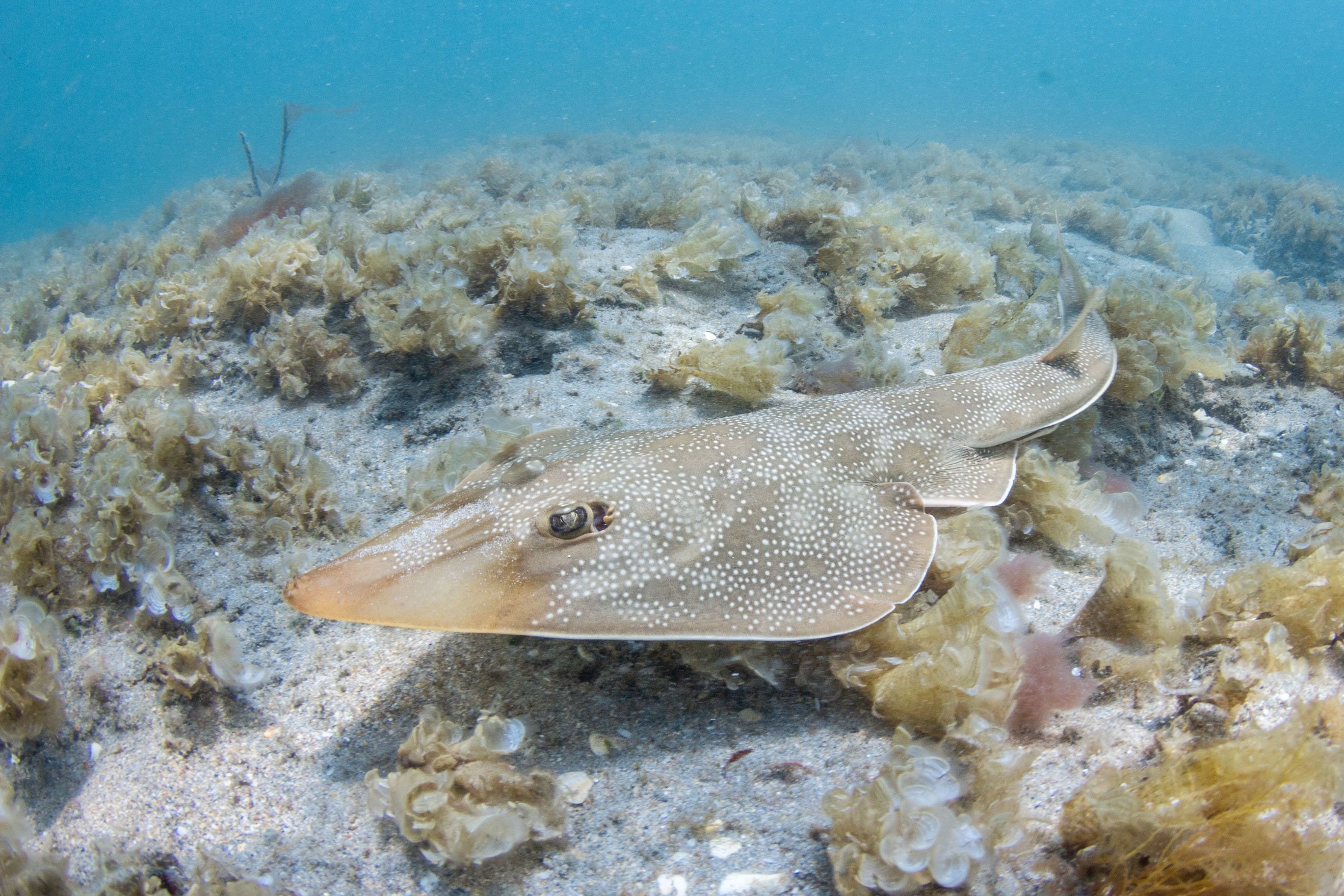
Atlantic guitarfish live close to shore along Florida’s Atlantic coast, yet almost nothing has been published about their lives. We are using photographs, acoustic tracking, and field observations to learn where individual guitarfish go, how long they stay, and which coastal habitats they need.
The Atlantic guitarfish (Pseudobatos lentiginosus) is a small rhino ray. MMF’s Florida team began studying the species in south Florida in 2020 while surveying the same coastal waters for manta rays. What started opportunistically has grown into a focused research program on individual identification, movement, reproductive behavior, and habitat use.
Key successes to date
- Identified more than 200 individual Atlantic guitarfish.
- Validated photo-identification for the species, showing that individuals can be recognized reliably from their spot patterns.
- Completed the first acoustic-tagging study of Atlantic guitarfish, with 25 animals tracked across receiver coverage extending from Palm Beach to Miami.
- Documented strong local site fidelity alongside occasional longer movements, challenging the assumption that these guitarfish remain in one small area.
Project leaders
Jessica Pate
US Country Manager; Founder, Florida Manta Project
Jessica leads MMF’s Atlantic guitarfish research alongside the Florida Manta Project.
MMF project team

With thanks to our supporters & partners
The project works with graduate researchers at the University of Miami on guitarfish physiology and feeding ecology, and with a Texas-based research group on habitat suitability.
This work is made possible by the organizations above and by MMF’s individual donors and grant-makers, who fund the fieldwork, analysis and conservation action behind it. Thank you.
Partner with MMF →Project Overview.
Recognizing individual guitarfish
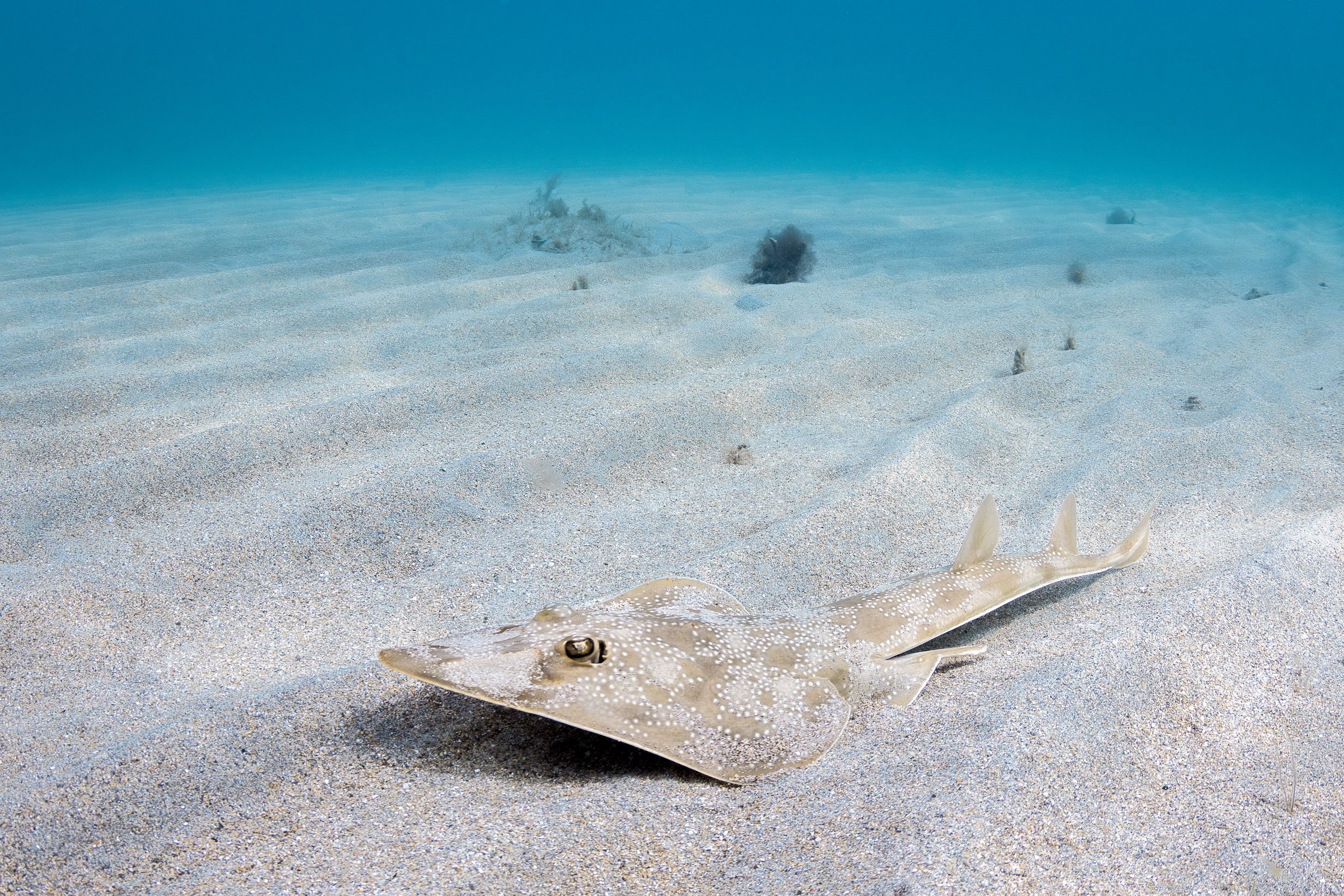
Each Atlantic guitarfish carries a pattern of spots that can be compared between photographs. The team tested this approach with the i3S pattern-recognition algorithm and confirmed that it can identify individuals reliably. The next step is to bring the catalog onto MantaMatcher so new photographs can be compared with animals already recorded.
Community scientists are already contributing photographs from along the Florida coast. Those records expand the catalog beyond the places and days the field team can survey directly, helping build a longer-term picture of where individual guitarfish are seen.
Following their movements
Acoustic tags allow researchers to detect a guitarfish when it passes a listening station. The completed study tracked 25 animals along a network extending from Palm Beach to Miami. The results show very high site fidelity, interrupted by occasional longer movements. The team is preparing those data for publication rather than repeating the tagging study.
Why guitarfish are hard to protect
Atlantic guitarfish are frequently caught in fisheries south of the United States, but US fisheries records combine them with other rays rather than recording species-specific catch. That makes it difficult to quantify pressure or build a case for species-level management. In Florida, the more immediate concern identified by the project is habitat change: guitarfish occupy a dynamic nearshore zone affected by coastal development, erosion, and beach renourishment.
The research program is building the baseline that management currently lacks — reliable individual identification, movement data, and a clearer account of habitat use. It is also developing a habitat-suitability study with researchers in Texas.
Get involved
Photographs of Atlantic guitarfish can help extend the photo-identification catalog and reveal when an individual is seen again.
Support this project
Support for the Florida Manta Project also sustains the field platform from which this guitarfish research grew.
Get involved
Fund this project
MMF’s research and conservation work is funded by grants, partnerships and individual donors. Gifts made through this form support MMF’s research and conservation work, including this project.
To discuss a larger gift, a grant, or a corporate partnership for this project, email [email protected]. Find out more about philanthropy and corporate partnerships with MMF.
MMF is a registered 501(c)(3) non-profit in the USA. Donations are tax-deductible to the extent allowed by law.