Migratory Species Program
Our work to help countries protect the ocean giants that cross their borders, organized around what Appendix I of the Convention on Migratory Species asks of them.
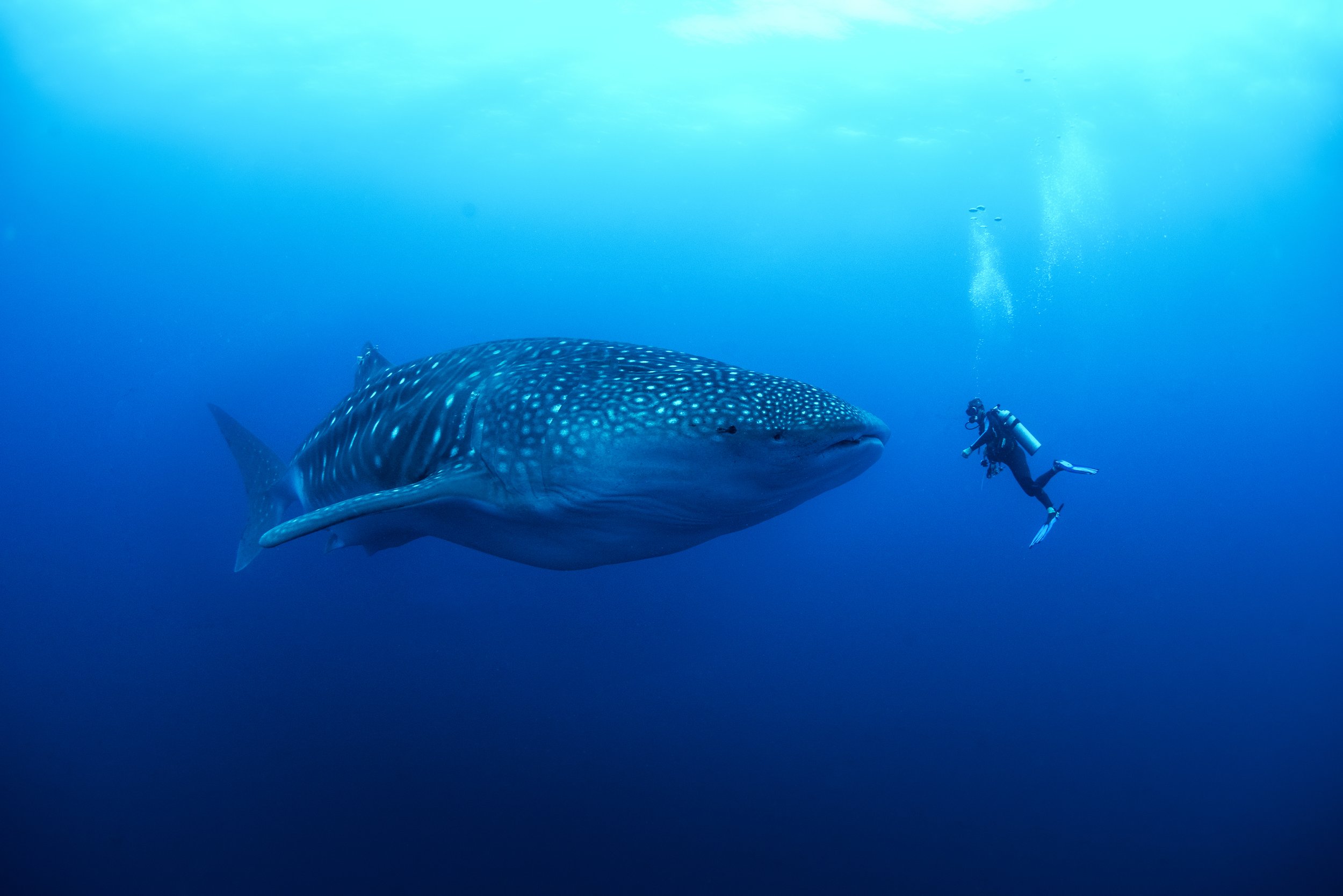
Many of the animals MMF studies cross national borders, and some travel thousands of kilometers. An animal that is safe in one country’s waters can be caught, struck by a ship, or lose the habitat it depends on in the next country, or on the high seas between them. MMF’s Migratory Species Program brings our work on these animals together, and its objectives follow the commitments that countries have already made for them under the Convention on the Conservation of Migratory Species of Wild Animals (CMS).
What Appendix I asks of countries
The CMS, a UN treaty concluded in 1979, lists migratory species in two appendices. Appendix II covers species with an unfavorable conservation status that need international agreements, or that would benefit significantly from international cooperation. Appendix I is reserved for migratory species that are endangered, and listing carries direct obligations for each Range State: a country with jurisdiction over any part of the species’ range, or whose flagged vessels take the species outside national waters.
Under Article III of the Convention, Range States that are Parties “shall prohibit the taking of animals belonging to such species”, with narrow exceptions such as scientific research and traditional subsistence use. The Convention defines taking broadly, to include fishing, capturing, and harassing. Range States also undertake to endeavor to conserve and, where feasible, restore the habitats the species needs to escape the risk of extinction; to prevent, remove, or minimize obstacles that seriously impede its migration; and to prevent, reduce, or control the other factors that endanger it.
Many of the species we study are on Appendix I, among them the whale shark (Rhincodon typus), the oceanic and reef manta rays, and the devil rays. MMF’s Dr. Simon Pierce wrote the technical proposal that moved the whale shark to Appendix I in 2017, and MMF scientists, building on the manta ray research begun by co-founder Dr. Andrea Marshall in 2003, led the technical work behind the listings of the oceanic manta ray in 2011 and the reef manta ray in 2014. A listing, however, is a commitment rather than an outcome. The program’s objectives are the Convention’s own: we provide the evidence that countries need to meet these obligations, and work with governments, fisheries bodies, industry, and communities to put them into practice, including in waters beyond any single country’s jurisdiction.
Ending the taking
Prohibiting the taking of an Appendix I species begins with national law. Our research has contributed to the national protection of manta rays and whale sharks in several countries, including Indonesia, Mozambique, and Tanzania. In Mozambique, where our work began in 2003, whale sharks and manta and devil rays have been protected from capture under marine fisheries regulations in force since January 2021, after years of our research and advocacy. Protection can work when it is given time: at Nusa Penida in Indonesia, under national protection since 2014, MMF’s Janis Argeswara and colleagues used 11 years of photo-identification to show that the reef manta ray population grew from about 170 in 2012 to about 447 in 2022 (opens in a new tab).
Our research also identifies where the law has yet to catch up. Off Nosy Be, the first dedicated study of manta and devil rays in Madagascar, led by MMF Research Associate Stella Diamant of the Madagascar Whale Shark Project, documented bottom-set gillnets that can catch up to 30 rays in a single night, and recommended aligning national fisheries law with Madagascar’s commitments under the CMS.
Much of the taking happens far offshore, in industrial fisheries that cross national and international waters. In 2025, the Indian Ocean Tuna Commission adopted a conditional ban on retaining whale sharks caught in the fisheries it manages; the ban takes effect only once its Scientific Committee recommends it. A paper led by James Bell of the UK’s Centre for Environment, Fisheries and Aquaculture Science, and co-authored by Dr. Pierce, was submitted to the Commission’s 2026 bycatch working group to set out the evidence for that recommendation.
Because taking includes harassment, we also measure disturbance. At Tofo Beach, our research showed that boat proximity predicts avoidance and shortens encounters with whale sharks (opens in a new tab), and produced Mozambique’s first code of conduct. In Florida, a 2025 drone study (opens in a new tab) found that juvenile Atlantic manta rays spent 37% of their time avoiding divers when divers were present, and the authors concluded that this small population is unsuited to tourism development.
Protecting the habitats that matter most
The habitats a species needs to escape extinction have to be identified before they can be conserved. Our long-term sightings, aerial-survey, and tagging data were instrumental in the designation of Important Shark and Ray Areas (habitats assessed against global scientific criteria as critical for sharks and rays) along the Mozambican coast, identified at the 2023 Western Indian Ocean regional workshop. Identification is only the first step: a 2026 study co-authored by MMF scientists found that only 1% of Important Shark and Ray Areas in the Western Indian Ocean are fully protected from fishing pressure (opens in a new tab), which gives countries in the region a clear list of places where protection would do the most good.
Tracking shows how those habitats connect. The Mozambique Acoustic Telemetry Network documents habitat use and movements through underwater listening stations along about 400 kilometers (250 miles) of coast, from Závora to Bazaruto. The network is shared by MMF, South Africa’s Oceanographic Research Institute, and Oceans Without Borders, and because we share tracking data with South Africa’s Acoustic Tracking Array Platform, an animal tagged in one country can be detected in the other. A study led by MMF’s Dr. Nakia Cullain tracked 48 reef manta rays (Mobula alfredi) between 2022 and 2025; of the 46 with sufficient data, 14, about 30%, crossed between Mozambique and South Africa (opens in a new tab). In 2026, our Indonesia team deployed the first receivers of the Lesser Sunda Seascape Tracking Network, designed to show how reef manta rays move between aggregation sites from Bali to Komodo National Park.
Some of these habitats lie beyond national waters. Across 111 satellite tags deployed at five Indian Ocean whale shark aggregations (opens in a new tab), in a study we co-authored, sharks were detected in the waters of 24 countries and on the high seas. In the northern Galápagos, the Galapagos Whale Shark Project leads the research, with MMF as a collaborator; its satellite tracks have extended up to 2,747 km (1,707 miles) from Darwin Island, with some sharks heading west into the open Pacific. That collaborative research contributed to the expansion of the Galápagos Marine Reserve and to a protected corridor toward Cocos Island, off Costa Rica.
Protection also has to reach the places where people and animals overlap most. In Mozambique’s Bazaruto Seascape, where our work is led by Dr. Clare Prebble, we are working with The Sanctuary (Santuário Bravio de Vilanculos) and the local community fishing council to establish a protected no-netting area around critical habitat for Critically Endangered rhino rays (wedgefish and guitarfish).
Reducing the threats along the way
Range States also undertake to minimize obstacles to migration and to reduce the other factors that endanger these species. Our work concentrates on the threats that kill animals or prevent populations from recovering.
- Ship strikes. An international study we contributed to found that 92% of whale sharks’ space use overlaps with heavy large-vessel traffic (opens in a new tab), and a follow-up we co-authored identified priority sites for managing collision risk (opens in a new tab) at whale shark aggregations worldwide. In Qatar, the Qatar Whale Shark Research Project, to which MMF scientists contributed, worked with the operator of the Al Shaheen oil field to reduce that risk, and a go-slow zone was established around the primary feeding area. Our shipping risk monitor plots live vessel traffic against whale shark habitat.
- Fishing line and boat strikes. Off southeast Florida, 27% of the manta rays we identified (opens in a new tab) were foul-hooked or entangled in fishing line, and vessel-strike injuries were also documented. Our surveys of shore-based anglers (opens in a new tab) suggest that most entanglements are accidental, so we work with anglers through outreach signs and videos, and with the International SeaKeepers Society on a boat-strike awareness campaign for boaters.
- Gillnets and coastal nets. Nets set in shallow coastal waters catch manta rays, devil rays, and rhino rays as bycatch across the regions where we work, from Mozambique and Madagascar to the western Atlantic, which is why reducing net deaths in critical habitat runs through our Bazaruto, Madagascar, and Atlantic work.
Manta and devil rays in the western Atlantic
Every manta and devil ray species recorded in the northwestern Atlantic is on Appendix I: the Atlantic manta ray (Mobula yarae), the oceanic manta ray (M. birostris), and the sicklefin (M. tarapacana), Atlantic pygmy (M. hypostoma), spinetail (M. mobular), and bentfin (M. thurstoni) devil rays. Yet several are encountered so rarely that even their ranges are still being mapped. Knowing which countries share these rays is the first step toward the cooperation the Convention asks for.
MMF’s Jessica Pate founded the Florida Manta Project in 2016. Its first study identified potential nursery habitat (opens in a new tab) along southeast Florida’s highly developed coast, where every male and 96% of females identified were sexually immature, and later work published the first evidence of reproductive and feeding habitat (opens in a new tab) in a seasonal adult aggregation off central Florida. Satellite tags deployed on those adults are now tracking their movements away from the coast, and genetic work will help establish how Florida’s mantas connect to those in the Gulf of Mexico and the wider Caribbean. In 2025, the rays were formally described as a distinct species (opens in a new tab), the Atlantic manta ray, in a study led by Nayara Bucair with MMF co-founder Dr. Andrea Marshall, who led the description until her illness, and Jessica Pate among its authors; the type specimen was collected by the Florida Manta Project and is held at the Smithsonian Institution. In the United States, the giant manta ray was listed as Threatened under the Endangered Species Act in 2018, before the Atlantic manta ray was described, and no critical habitat has yet been designated for lack of data; the team provides data to NOAA to support its work under the Act.
The devil rays have been documented across the wider region. Our Atlantic mobula ray work combines aerial surveys, incidental records, and photographs from community scientists: a 2023 study (opens in a new tab) extended the known range of the sicklefin devil ray north to 40°N in the Atlantic, a 2025 study led by Jessica Pate (opens in a new tab) mapped three devil ray species across the western Atlantic and Caribbean, and a 2026 account of the Endangered Atlantic pygmy devil ray, which she co-authored, confirmed the species in 10 more Caribbean countries and territories. That account found the rays depend on shallow coastal and estuarine waters that expose them to coastal fishing nets, and its authors recommend seasonal fishing closures and protected areas at key coastal sites, limits on nets set close to shore, and handling methods that let caught rays be released quickly.
The animals it reaches
Appendix I also covers many of the other ocean giants that share these waters, including the white shark (listed in 2002), the oceanic whitetip shark (2020), the scalloped and great hammerheads (2026), the humpback whale (since 1979), and the green, loggerhead, and hawksbill turtles. The dugong is on Appendix II. The tiger shark is not yet listed, although in a review co-authored by MMF’s Dr. Chris Rohner and Dr. Simon Pierce, the authors consider its cross-border movements strong evidence for listing. Off southern Mozambique, a study led by Dr. Ryan Daly of South Africa’s Oceanographic Research Institute (opens in a new tab), to which we contributed, showed repeated cross-border movements by most tracked bull, blacktip, and tiger sharks.
Protecting the habitats of the species we study can benefit the other animals that share them. Writing about whale sharks in Whale Sharks: Biology, Ecology, and Conservation (2021), Dr. Pierce and his co-authors found “considerable support and precedent” for viewing the whale shark “as a globally relevant umbrella species for ecosystem-level marine conservation initiatives”: a species whose protection can also benefit the other animals that share its habitat. Off Mozambique, those animals include the tiger and bull sharks detected on the receiver network, and the dolphins and humpback whales of the Bazaruto Seascape.
Support the work
Symbolic adoptions of animals for which MMF has no dedicated project, such as hammerheads, oceanic whitetips, and humpback whales, are connected to this program. Like every adoption, they are gifts to MMF’s work as a whole, which we use where they do the most good.