
Mexico
Revillagigedo Manta Ray Research
Revillagigedo National Park is a well-known aggregation site for oceanic manta rays, and the first place where pregnancy has been confirmed in free-swimming oceanic manta rays by underwater ultrasound.
Led by Dr. Madalena Cabral, Cuidando los Mares de México A.C., with MMF
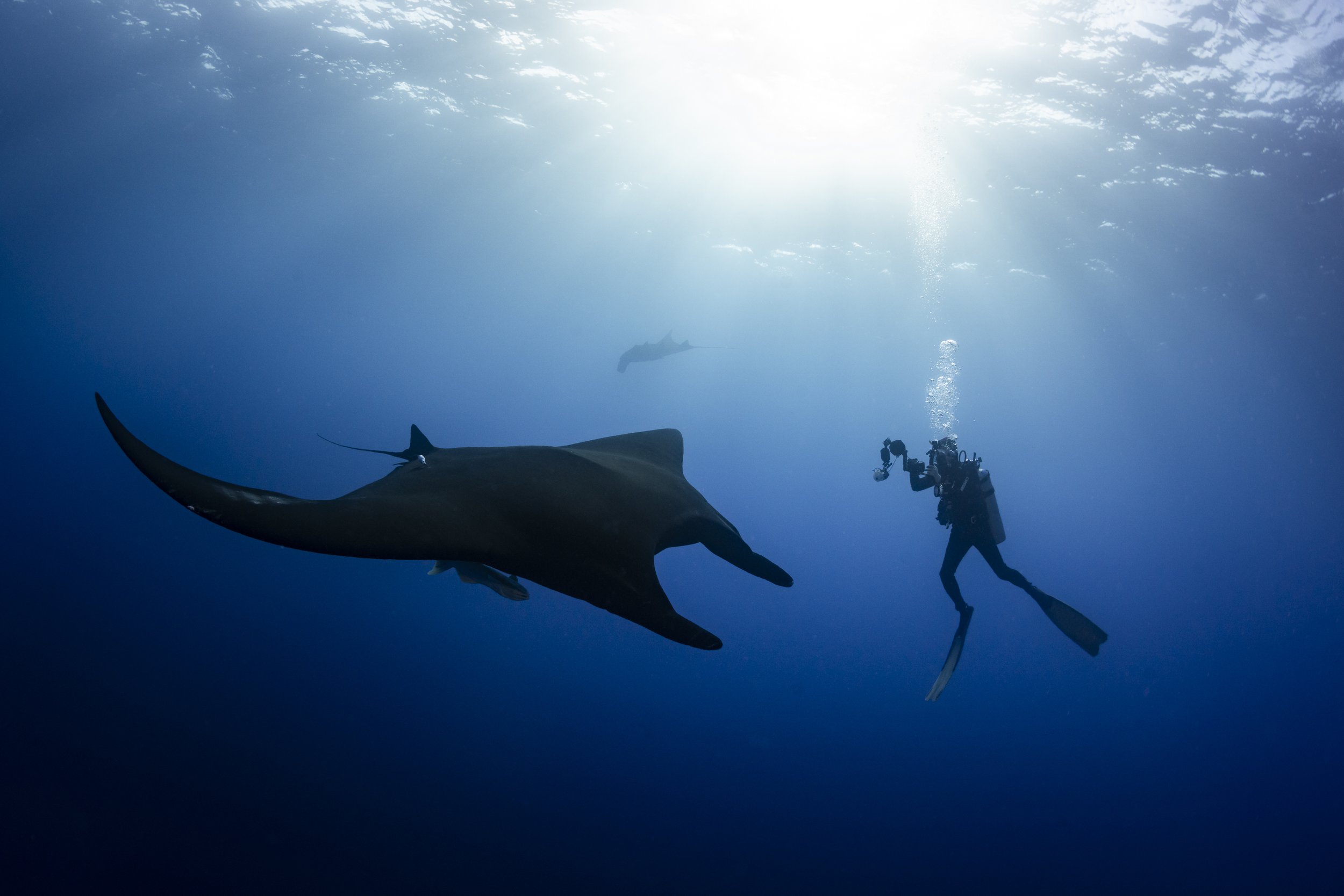
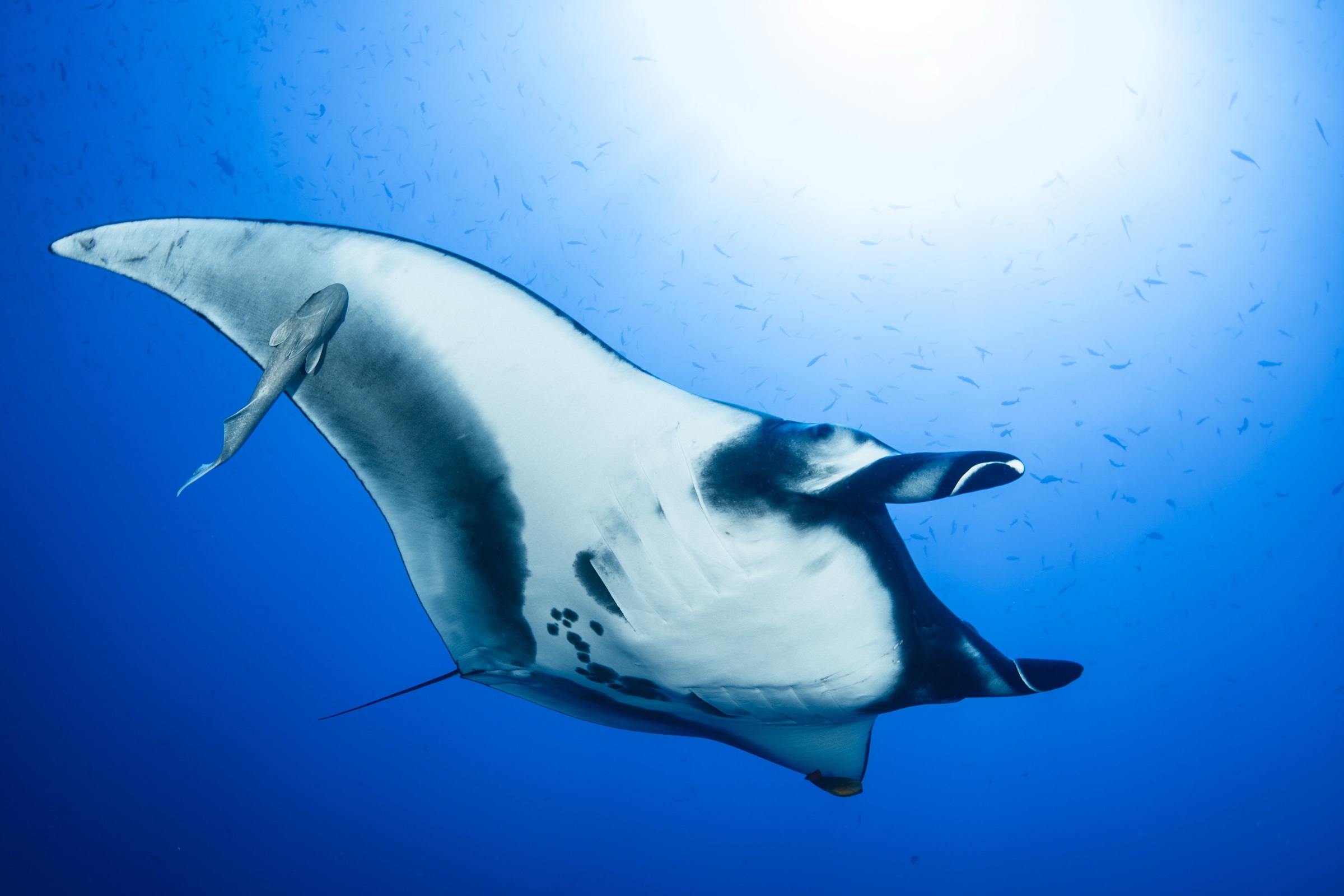
The Revillagigedo Archipelago, 400 km (250 miles) south of Mexico’s Baja California peninsula, is a place where divers reliably encounter oceanic manta rays (Mobula birostris) at close range. Dr. Madalena Cabral of Cuidando los Mares de México leads research on these rays, to which MMF contributed expeditions and photo-identification between 2024 and 2026.
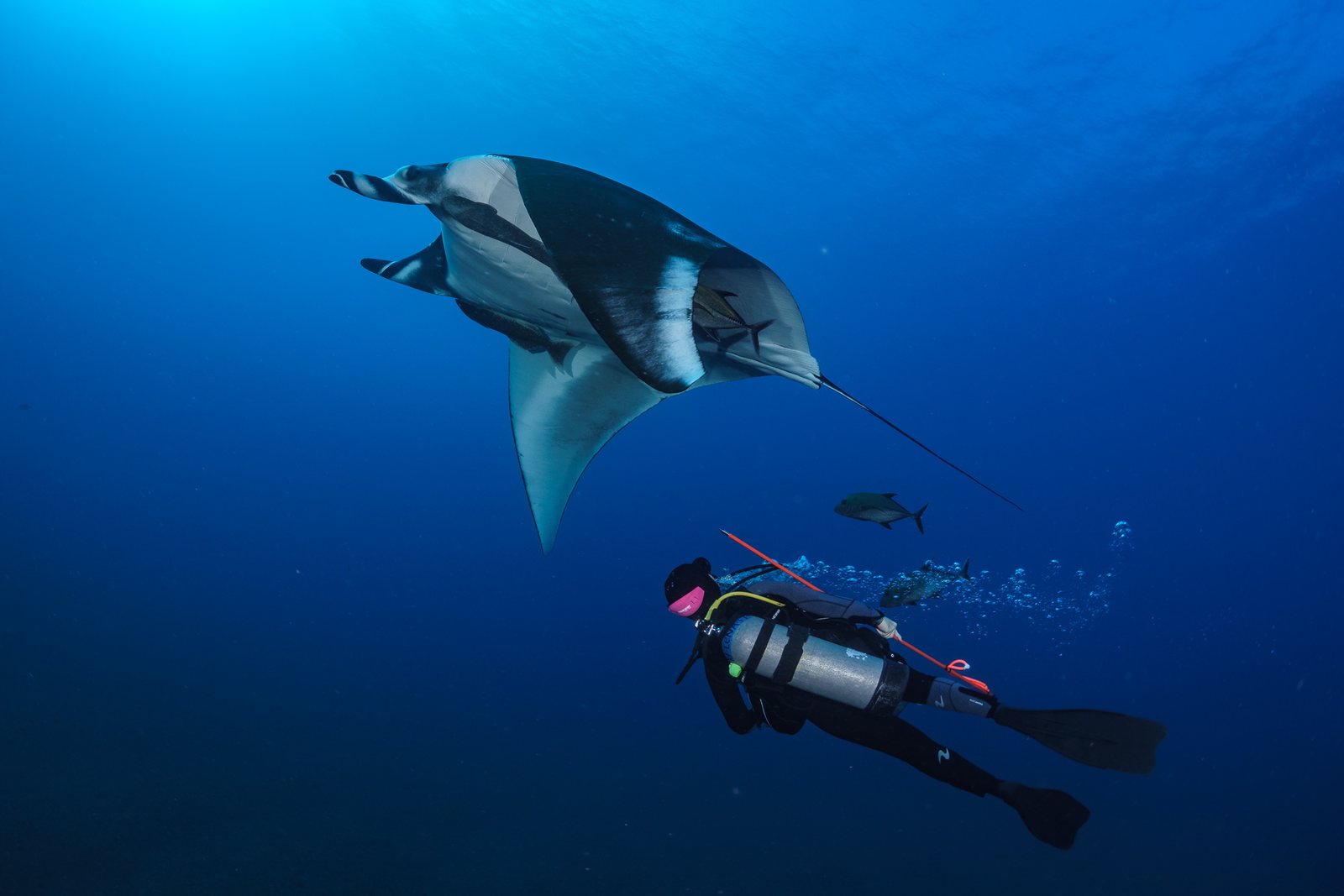
The archipelago’s four volcanic islands, Socorro, San Benedicto, Roca Partida, and Clarión, lie where the California Current meets the North Equatorial Current. In 2017 Mexico protected the surrounding ocean as Revillagigedo National Park, which is closed to all fishing and is the largest fully protected marine reserve in North America. Oceanic manta rays, listed as Endangered on the IUCN Red List, gather at the islands’ cleaning stations, where reef fish remove their parasites, and they often approach divers of their own accord. That behavior allows researchers to work beside the animals without restraining or chasing them.
MMF’s part in the project began with a collaboration established by our co-founder, Dr. Andrea Marshall. We organized two expeditions to the park, in January 2024 and June–July 2025, which Dr. Cabral joined to continue her research. In early 2026, MMF Senior Scientist Jessica Pate and Bryant Turffs joined a further expedition led by Dr. Cabral to photograph and identify individual rays, and Jessica is a co-author of the ultrasound study that followed. Further results from these expeditions are being prepared for publication.
Objectives
- Establish how many oceanic manta rays use the park, and how their numbers change between years.
- Track where the rays travel when they leave the protected area.
- Describe their reproduction: which females are pregnant, at what stage, and where they are likely to give birth.
- Provide the park’s managers with the information needed to protect the population.
What the project has done
- Identified 493 individual manta rays from photographs taken between 2015 and 2019, and used them to produce the first estimate of the population using the park.
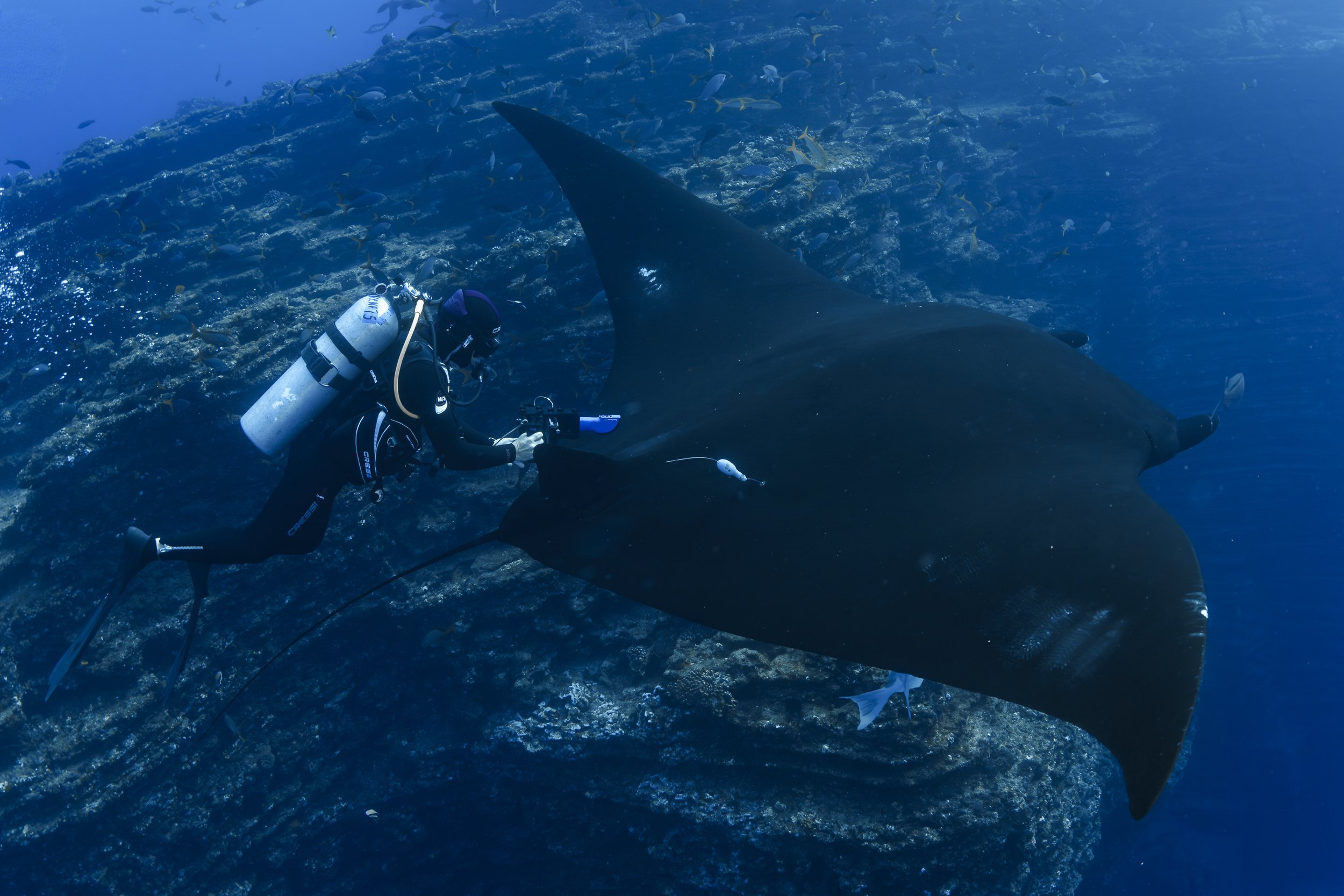
- Deployed satellite tags on manta rays to follow their movements beyond the park’s boundary.
- Measured rays with paired lasers and photographed the spot pattern on each ray’s underside during MMF’s 2025 expedition.
- Confirmed pregnancy in three free-swimming manta rays in 2026 with an underwater ultrasound that never touches the animal, the first time pregnancy has been confirmed in this way in wild oceanic manta rays.
What's next
- Further papers from the expeditions are in preparation, and we will add their results here as they are published.
Support our manta ray research
Your gift supports MMF's manta ray research, including the Florida Manta Project. You can also adopt a manta ray to support new research on manta rays.
The research
A protected gathering place
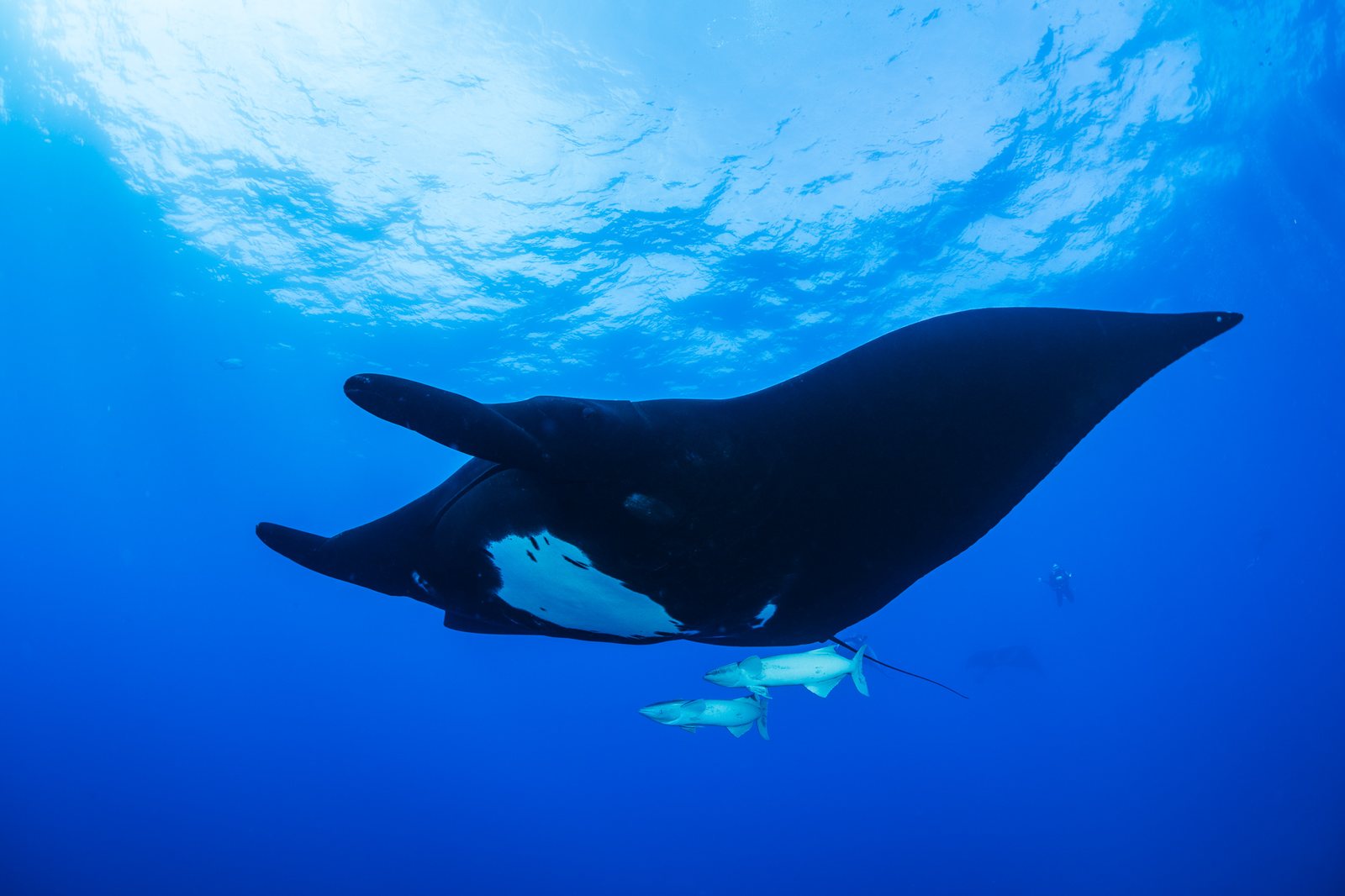
Each manta ray carries a unique pattern of spots on its underside, so a photograph is sufficient to recognize an individual. Using photographs contributed by researchers and visiting divers between 2015 and 2019, Dr. Cabral and her colleagues identified 493 individual rays at seven dive sites around San Benedicto, Socorro, and Roca Partida. Most were recorded in only one of those years, and the study estimated that about 1,170 rays used the park over the survey period. Among the rays whose sex could be determined, females outnumbered males by about 1.4 to 1. The study’s models also linked apparent survival, a measure that combines deaths with rays leaving the area, to El Niño conditions, and arrivals at the dive sites to the productivity of the surrounding ocean. Those results suggest that the way manta rays use the park changes with the climate.
Confirming pregnancy without touching the animal
How oceanic manta rays reproduce is one of the largest gaps in our knowledge of the species. A female carries a single pup for about a year, and in the water researchers have had to rely on a visible bulge that appears only late in pregnancy. In January and March 2026, Dr. Cabral scanned three free-swimming females with a contactless underwater ultrasound, holding the probe about 5 centimeters (2 inches) from the skin while each ray continued to swim normally. All three were pregnant. One, at a middle stage of pregnancy, showed no visible bulge, although the scan recorded her fetus opening and closing its mouth in a steady rhythm.
The study, published in the Journal of Fish Biology with MMF’s Jessica Pate among the co-authors, shows that surveys which count pregnant females by eye can miss some of them. That matters for conservation, because estimates of how quickly a population can recover depend on how often females breed. The authors propose scanning more rays across the seasons and pairing ultrasound checks with satellite tracking, to learn whether pregnant females remain inside the park and where they give birth. Read more in our news story on the study.
Expeditions to the islands
The islands are about 30 hours by boat from Cabo San Lucas, and research there depends on liveaboard dive vessels. MMF’s Dr. Simon Pierce organized expeditions in January 2024 and June–July 2025, both joined by Dr. Cabral. On the 2025 expedition she deployed satellite tags and scanned a manta ray with the underwater ultrasound, while the research team photographed rays for identification and measured them with paired lasers. In early 2026, Jessica Pate and Bryant Turffs joined a further expedition led by Dr. Cabral.
MMF Project Team
 Jessica Pate
 Dr. Simon Pierce
 Bryant Turffs
 Dr. Andrea Marshall
Collaborators and Partners

BryantTurffs.jpg) The Florida Manta Project
The Florida Manta Project Atlantic Mobula Rays
 Hawaii Oceanic Manta Project