
SAVING OCEAN GIANTS.
Whale shark
Rhincodon typus
EndangeredThe biggest fish in the ocean, and one of the least known: a spotted filter feeder that gathers at a handful of coastal sites, ranges across whole ocean basins, and has lost more than half its numbers in living memory.
Key facts
- Whale sharks are the largest fish in the ocean. The largest widely accepted length estimate is 18.8 meters (62 feet).
- They filter tiny prey — shrimp, fish eggs, krill, small fish — through a throat only about the size of a baseball.
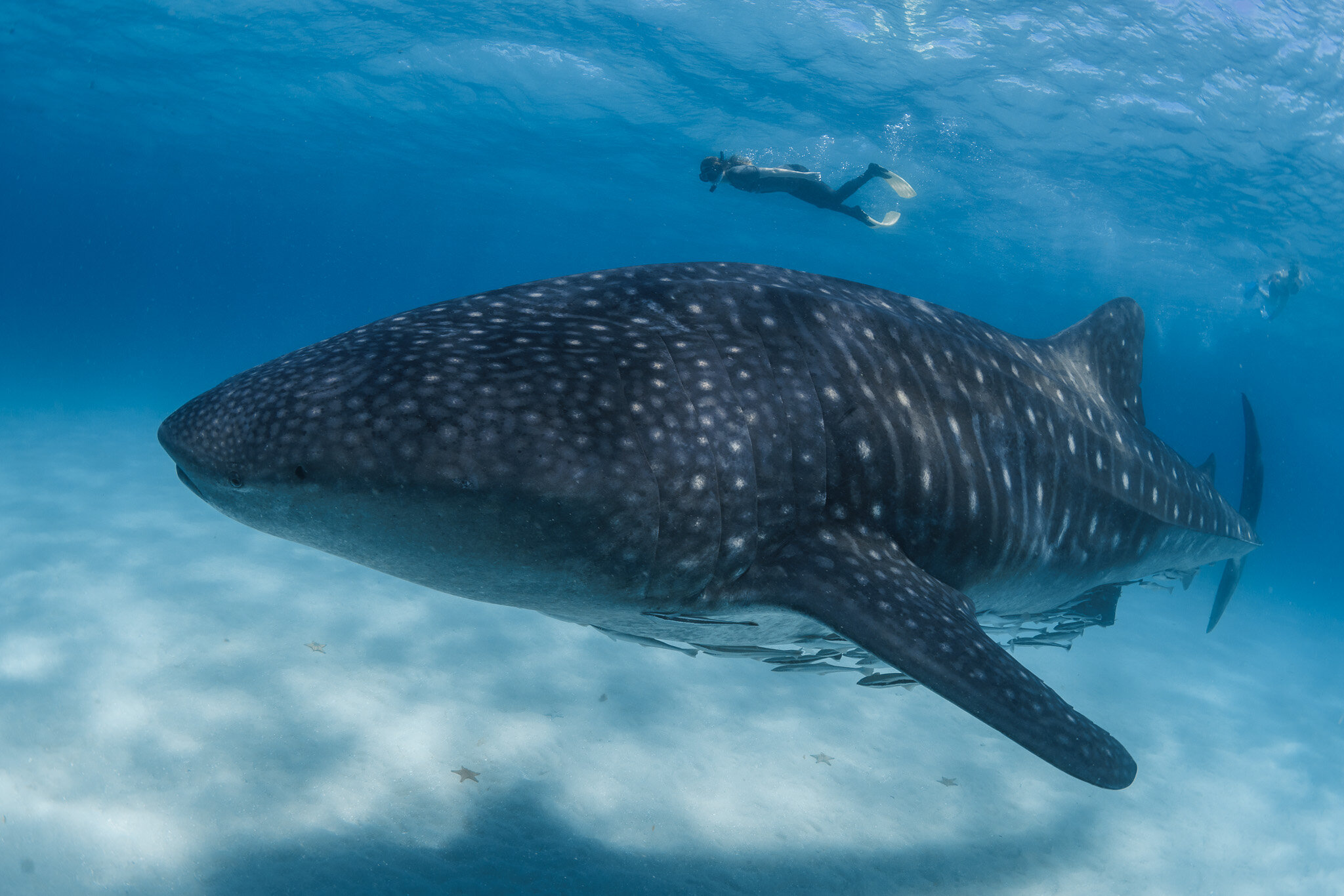
- Every whale shark has a unique pattern of spots. A clear photograph identifies that animal for life, which is how we count them.
- More than 50 coastal sites worldwide are now known to hold predictable gatherings, up from 20 in a 2017 global review. Most are dominated by young males 4 to 8 meters long.
- Off Darwin Island in the Galápagos, more than 95% of the sharks we identify are adult females of 10 to 14 meters — the reverse of every other known aggregation.
- They dive far deeper than once thought. One tag in the Coral Sea logged a dive of at least 1,978 meters (6,490 feet), the deepest yet recorded for a whale shark.
- Growth models put average adult size at about 8 to 9 meters for males and around 14.5 meters for females, though individuals vary. Males mature at roughly 25 years old.
- Only one pregnant whale shark has ever been examined by scientists. She carried about 300 pups, and all 29 that were genetically tested shared one father.
- Off Praia do Tofo in Mozambique, our 15-year survey recorded an 87% decline in sightings and an 89% fall in abundance.
- The IUCN Red List classifies the whale shark as Endangered. It is listed on CITES Appendix I and CMS Appendix I — the strongest protection either convention offers.
Meet the whale shark
The whale shark is the largest fish in the ocean, and a contender for the largest fish that has ever lived — recent size estimates for the extinct megalodon overlap with, and may exceed, the biggest whale sharks. Andrew Smith described the species in 1828 from a single animal harpooned in Table Bay, South Africa, and for the next century and a half it stayed close to a rumor: by the early 1980s, science had logged only a few hundred confirmed sightings. The largest widely accepted length estimate is 18.8 meters (62 feet), extrapolated from a shark landed in India. Read more in our guide to whale shark size.
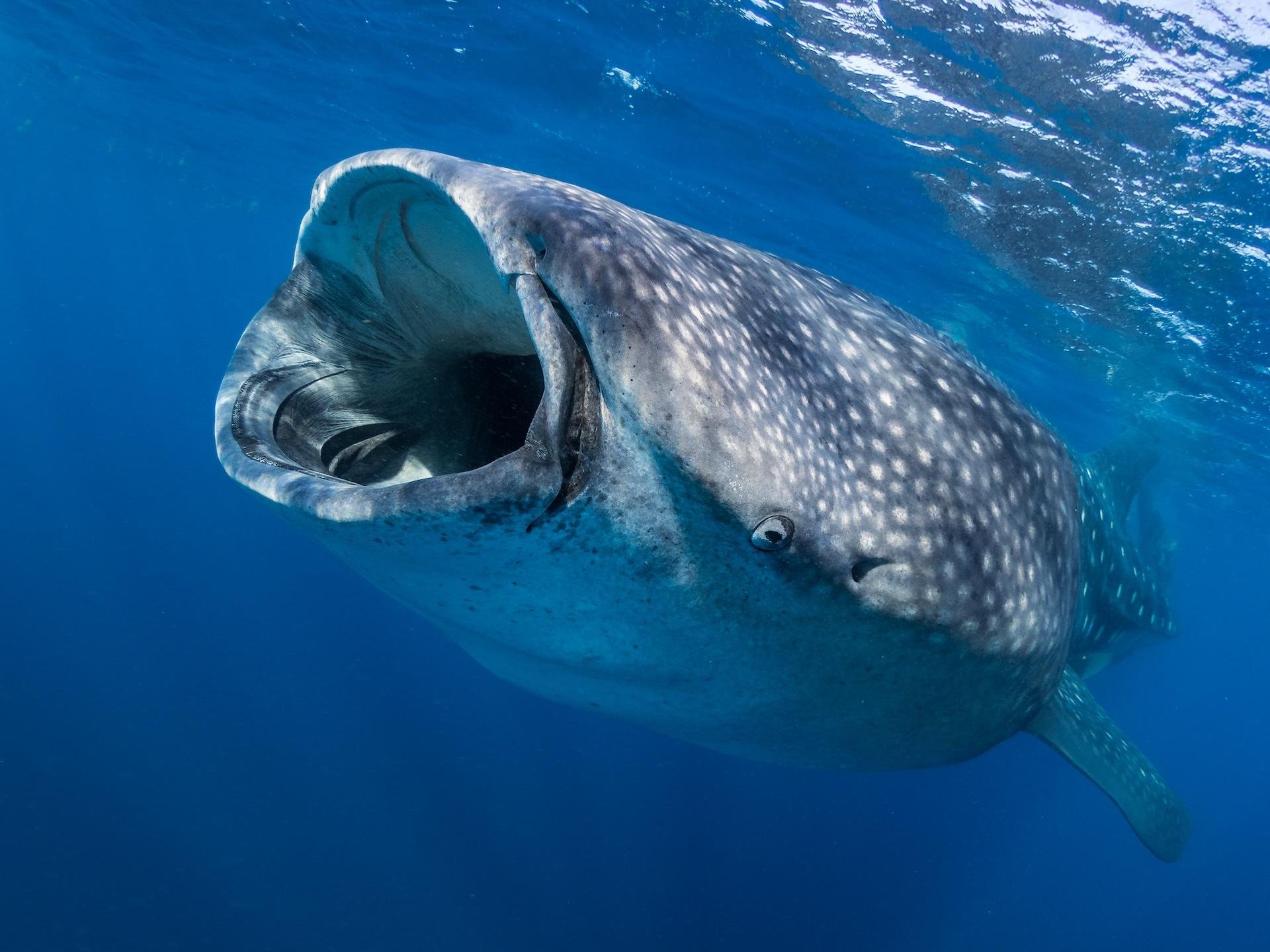
Nothing about the animal is built for hunting. Whale sharks are filter feeders with a throat about the width of a baseball, straining prey a few millimeters across from the water through spongy pads on their gills. Their teeth are tiny and play no part in feeding. Their skin runs up to 15 centimeters (6 inches) thick, the thickest of any animal, which is armor, insulation, and the reason almost nothing eats an adult.
Measuring one is harder than it sounds, and it matters, because size is how we judge whether a population holds adults. We introduced parallel-laser photogrammetry to the species in 2011 and later used it to measure 122 sharks in Mozambique and 46 in Tanzania. Stereo-video work at Ningaloo Reef showed why it was needed: visual estimates get worse as sharks get bigger, systematically hiding the largest animals.
Two other things set whale sharks apart. Their spot patterns are unique to the individual and stable for life, so a photograph works as well as a tag — the basis of everything else on this page. And their bulk keeps them warm: muscle temperature changes far more slowly than the water around them, which is what lets a tropical fish spend hours below 1,000 meters. More whale shark facts.
Where whale sharks live
Whale sharks live in all tropical and warm temperate oceans, mostly between about 30°N and 30°S. Almost everything known about them, though, comes from a short list of coastal places where they gather predictably to feed. The global photo-identification database, which we co-authored the analysis of, pulled together nearly 30,000 encounters from 54 countries between 1992 and 2014, identified more than 6,000 individual sharks, and saw the number of known gathering sites rise from 13 to 20. That study also showed the pattern that shapes the whole field: more than two-thirds of identified sharks are male, most are juveniles, and individuals show strong fidelity to their site with little movement between neighboring countries. That database, now hosted on Sharkbook.ai, holds more than 17,000 identified whale sharks today.
Our own program works at five of those sites. Southern Mozambique, where our research began in 2005, is a year-round feeding area on the Inhambane coast where we have identified more than 700 sharks. At Mafia Island in Tanzania we have identified 268 — the smallest catalog of any major site, and the most resident. Off Nosy Be in Madagascar the Madagascar Whale Shark Project has identified over 540, arriving from September to December. In Oman, fieldwork from Muscat sits alongside a citizen-science catalog of more than 200 sharks. And Darwin Island in the Galápagos, where we work with the Galapagos Whale Shark Project, is the exception that proves the rule: of the 736 sharks identified there, over 95% are adult females of 10 to 14 meters, the only place in the world where large females can reliably be found.
Elsewhere the picture fills in the same way, with local exceptions that matter. In the Arabian Gulf, 422 sharks were identified between 2011 and 2014, and the Al Shaheen field off Qatar became the first site described as dominated by mature males. In the Red Sea, an aggregation off Saudi Arabia is split evenly between the sexes. The largest gathering ever recorded was off Mexico’s Yucatán Peninsula in 2009: up to 420 sharks in a patch of ocean about 18 square kilometers. The Philippines holds the second-largest known population, with one site in Palawan alone yielding 117 individuals in a single season.
Aggregations and feeding
Whale sharks gather where prey is dense enough to make filtering worthwhile, which in warm, nutrient-poor water is rare. At Mafia Island we sampled the water beside feeding sharks and found plankton biomass roughly ten times higher than background — 25 against 2.6 milligrams per cubic meter — and dominated by a single 10-millimeter sergestid shrimp, Belzebub hanseni. Nearly three-quarters of the sharks we watched there were feeding, most of them actively at the surface. That prey is also the target of a growing local ring-net fishery, so the sharks and the boats want the same patch of water.
What happens at the surface is only part of the diet. Combining stomach contents from stranded sharks with fatty-acid profiles from living ones, we found evidence that Mozambican whale sharks also feed at night, and may feed at depth: the dominant prey were mysids that rise into the water column after dark, and the fat signatures were consistent with deep-water shrimp and lanternfish. The chemical evidence suggests deep feeding rather than demonstrating it — our feeding guide explains why those signals stay open to interpretation. Stable isotope work at Mafia later found sharks feeding largely within the local food web, with individual differences in strategy inside one small aggregation.
Feeding style varies with the food. In Qatar, sharks gather around offshore platforms to feed on mackerel tuna eggs, and off Mexico on the eggs of little tunny. At Ningaloo Reef they alternate between passive ram filtering and active surface feeding, including at night.
Mafia is unusual in another way. Acoustic tags on 51 sharks showed that when they stop appearing at the surface between March and September, they do not actually leave. They move deeper and slightly offshore, staying inside a core area of about 13 square kilometers. A core habitat that small and that predictable is good news for management: boat speed limits and net restrictions in a well-defined area could deliver real protection.
Movements and diving
Whale sharks are capable of ocean-basin crossings, but most of the time they don’t. Our satellite tags on 15 juveniles off Praia do Tofo tracked movements of 10 to 2,737 kilometers, with habitat modeling showing the sharks choosing cooler, shallower, more productive water than chance would predict — most stayed in Mozambican coastal waters. Photo-identification and stable isotopes together showed negligible connectivity between Mozambique, Tanzania, and Qatar and site fidelity within a few hundred kilometers, which is why we argue for regional management units rather than treating the Indian Ocean as one stock.
Adults travel further. Tags on large females at Darwin Island recorded movements of up to 2,747 kilometers, west into the open Pacific or east toward South America, several ending off northern Peru; off Madagascar, two of our tagged sharks covered 3,414 and 4,275 kilometers. Globally, genetics separates Atlantic from Indo-Pacific whale sharks clearly enough to show the two rarely mix, while sightings and tracks together support basin-scale connectivity over years rather than seasons.
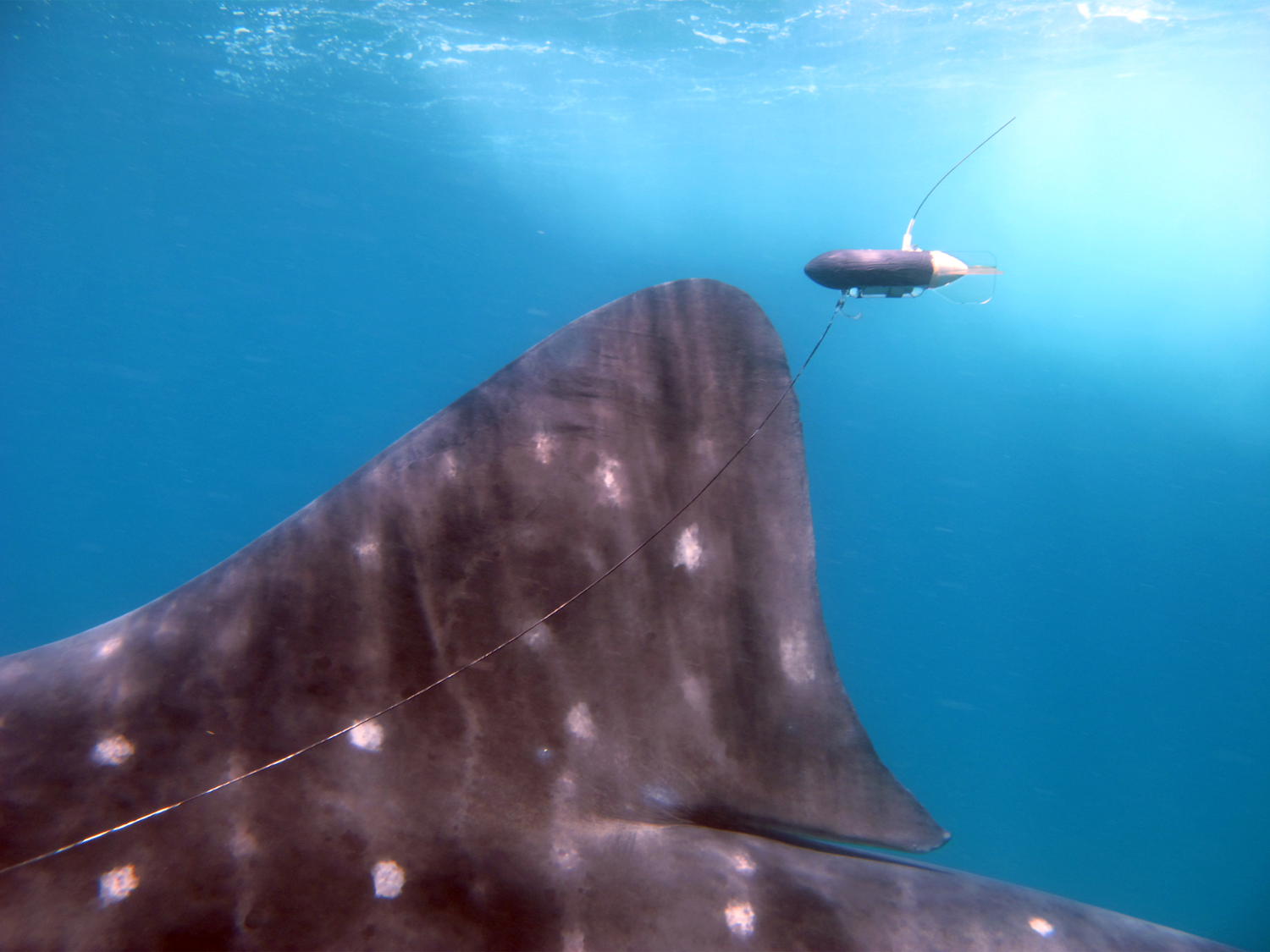
Their vertical range is even more striking. Pop-up tags in the Gulf of Mexico recorded sharks spending most oceanic time in the upper 500 meters, with a maximum dive of 1,928 meters, pausing on the way down at around 475 meters in what looks like foraging in the deep scattering layer. A shark tagged off Mozambique dived to 1,286 meters and tolerated water from 3.4 to 29.9°C while crossing the Mozambique Channel. In 2026 we and our collaborators fitted a deep-rated tag to a juvenile in the Coral Sea and recorded a dive of at least 1,978 meters, possibly as deep as 2,527 — the deepest yet recorded for a whale shark. Diving is rhythmic too, tracking day, night, and the lunar cycle of the reef spawning events the sharks turn up for.
Growth, reproduction and life history
Whale shark reproduction rests on a single animal. A 10.6-meter female caught off Taiwan in 1995, nicknamed “megamamma,” carried about 300 embryos at every stage from egg case to near-term pup — the largest litter recorded in any shark, and the finding that settled a long argument over whether whale sharks lay eggs. They don’t: the eggs hatch inside the mother and the pups are born free-swimming. Genetic work on 29 of those embryos showed they were all full siblings sired by one male, suggesting females can store sperm and fertilize a litter over an extended period. Nothing comparable has been examined since. See our guide to whale shark reproduction.
Maturity comes late and differs by sex. From our laser measurements in Mozambique, half of males are mature by about 9.2 meters; at Ningaloo the figure is closer to 8 meters, and maturity sizes tend to be larger in cooler water. Repeat measurements of 54 sharks over a decade at Ningaloo showed that males level off at 8 to 9 meters while females keep growing to around 14.5 — which is why coastal feeding sites fill up with young males while the largest animals are almost never seen. Ten years of measurements in the Maldives put male age at maturity at roughly 25 years and longevity at about 130; vertebral band counts from Taiwanese fisheries gave a lower longevity estimate of 80 years. A male at the Okinawa Churaumi Aquarium matured at 8.5 meters and over 25 years old.
Where females give birth is still unknown. Pregnant females have been reported in the Gulf of California, where 15 were identified at Gorda Banks alongside very small juveniles nearby. At Darwin Island we used a purpose-built underwater ultrasound and drew blood from free-swimming sharks — both firsts for the species — and found developing follicles in two females of 11 to 12 meters, but no embryos or egg cases. That cuts against the assumption that the swollen abdomens of large Galápagos females mean pregnancy, and leaves the question wide open.
How many are there, and how are they doing?
The whale shark is Endangered on the IUCN Red List. Dr. Simon Pierce led the current global assessment and, with Brad Norman, the 2016 assessment that first moved the species from Vulnerable to Endangered. Numbers have fallen by 50 to 79% over the past three generations, about 120 years, driven mainly by fisheries. Roughly three-quarters of the remaining population lives in the Indo-Pacific and a quarter in the Atlantic.
Mozambique is the clearest case. Our logbook analysis at Praia do Tofo recorded a 79% decline in standardized whale shark sightings between 2005 and 2011. Extending that to a 15-year series of 706 identified sharks, we documented an 87% decline in sightings and an 89% fall in abundance. Females declined faster than males, 92% against 81%, and sharks of 7 meters or more declined by 99%. It is among the steepest declines recorded at any major whale shark aggregation.
Mafia Island is the counterexample. Capture-mark-recapture models fitted to eight years of photo-identification there show a stable population with high survival — with a warning attached: only a change of about 30% would have been detectable over that period, and more transient aggregations may need 15 to 20 years of data before a trend can be called at all. That is the argument for long-term monitoring, and why we keep going back.
Elsewhere, mark-recapture models put 681 sharks through the waters off Nosy Be between 2015 and 2019 and 2,837 across the Arabian Gulf and Gulf of Oman. A global expert review covering more than 50 aggregation sites and over 13,000 identified sharks gives the best sense of scale. Those are catalogs built over many years, not counts of animals present at once: at Ningaloo Reef, the largest known aggregation site, about 2,500 individuals have been identified since the 1980s from more than 30,000 encounters. Genetics adds an independent signal: genetic diversity at Ningaloo fell across six consecutive years, consistent with historic harvesting elsewhere in the Indo-Pacific.
Current research
Our Global Whale Shark Program runs long-term monitoring at five sites — Mozambique, Tanzania, Madagascar, the Galápagos, and Oman — and feeds the results into global assessments. Photo-identification is the backbone: images from our surveys, dive operators, and visiting divers are matched by spot pattern and contributed to the global database now hosted on Sharkbook.ai, which was built on the same Wildbook platform we helped develop for the photographic identification of sharks.
Around that catalog we run laser photogrammetry and stereo-video for size and demography, satellite tags for large-scale movement and diving, acoustic arrays for fine-scale residency, tissue sampling for genetics and stable isotopes, and underwater ultrasound and blood hormones for reproduction. Dr. Chris Rohner leads the population modeling and tracking, Dr. Clare Prebble the biochemical ecology, and Stella Diamant the Madagascar Whale Shark Project.
The questions now are specific: whether the Tofo population can recover under national protection, whether a 12-season time series at Mafia will be long enough to detect it, what a 20-station acoustic array says about year-round use of Madagascar’s proposed Tandavandriva corridor, where the Galápagos females go to give birth, and why half the sharks we examine in Oman carry propeller scars.
Threats and protection
Fisheries did the historic damage. Targeted fisheries operated off Taiwan, India, and elsewhere through the 1980s and 1990s. India granted whale sharks its highest legal protection in 2001, yet 79 were still landed between 2001 and 2011 as bycatch, and a survey in China documented 186 sharks caught and traded. They are also landed irregularly in Indonesian artisanal fisheries and encircled in tuna purse-seine nets, where tagging shows they can survive release if handled well.
Ships are the threat that took longest to see. Combining satellite tracks with vessel traffic, an international study we contributed to found that 92% of whale sharks’ horizontal space use overlaps with persistent large-vessel traffic, that collision risk correlated with reported ship-strike deaths, and that depth records from several tags showed sharks sinking — probably dead — after passing through busy routes. That “cryptic” mortality may explain why populations keep falling despite international protection and low fishing pressure. A follow-up ranked priority sites for collision management and found most core habitats small enough for mitigation to cost industry very little. Wounds do heal — major injuries close quickly, at rates that vary with the type of wound — but the scarred sharks we can photograph are the ones that survived, so visible injuries cannot measure the real death toll: whale sharks are unlikely to survive propeller or impact wounds from large vessels. In the Maldives, injured sharks stayed longer in the tourism area, which is not a good sign for their condition.
Tourism is both a threat and the reason many countries protect the species. Our work at Tofo Beach showed that boat proximity predicts avoidance and shortens encounters, and produced Mozambique’s first code of conduct; work in the Philippines reached the same conclusions about vessel numbers and touching. Managed well, the value is real: US$1.5 million from one three-month season at Nosy Be, and roughly US$3.5 to 5.5 million at Mafia Island in 2025, where 46% of visitors told us they would not have come without the sharks.
Legal protection is now strong on paper. Whale sharks have been on Appendix II of the Convention on Migratory Species since 1999 and were uplisted to Appendix I in 2017, obliging range states to protect the species and its habitat; MMF led the technical proposal behind that uplisting. Trade was regulated under CITES Appendix II from 2003, and at the 20th Conference of the Parties in November 2025 whale sharks were uplisted to Appendix I — a full ban on commercial international trade — in force from 5 March 2026. Mozambique banned their capture under its 2020 marine fisheries regulations, in force from January 2021, after years of our research and advocacy, and Madagascar wrote a tourism code of conduct into law in December 2023. Enforcement is the part still to do, and the Mozambique numbers show what it costs when it is missing.
You can support this work by adopting a whale shark, or see the sharks yourself on one of our whale shark trips.
Where we study them
 Coral Sea Whale Shark Project
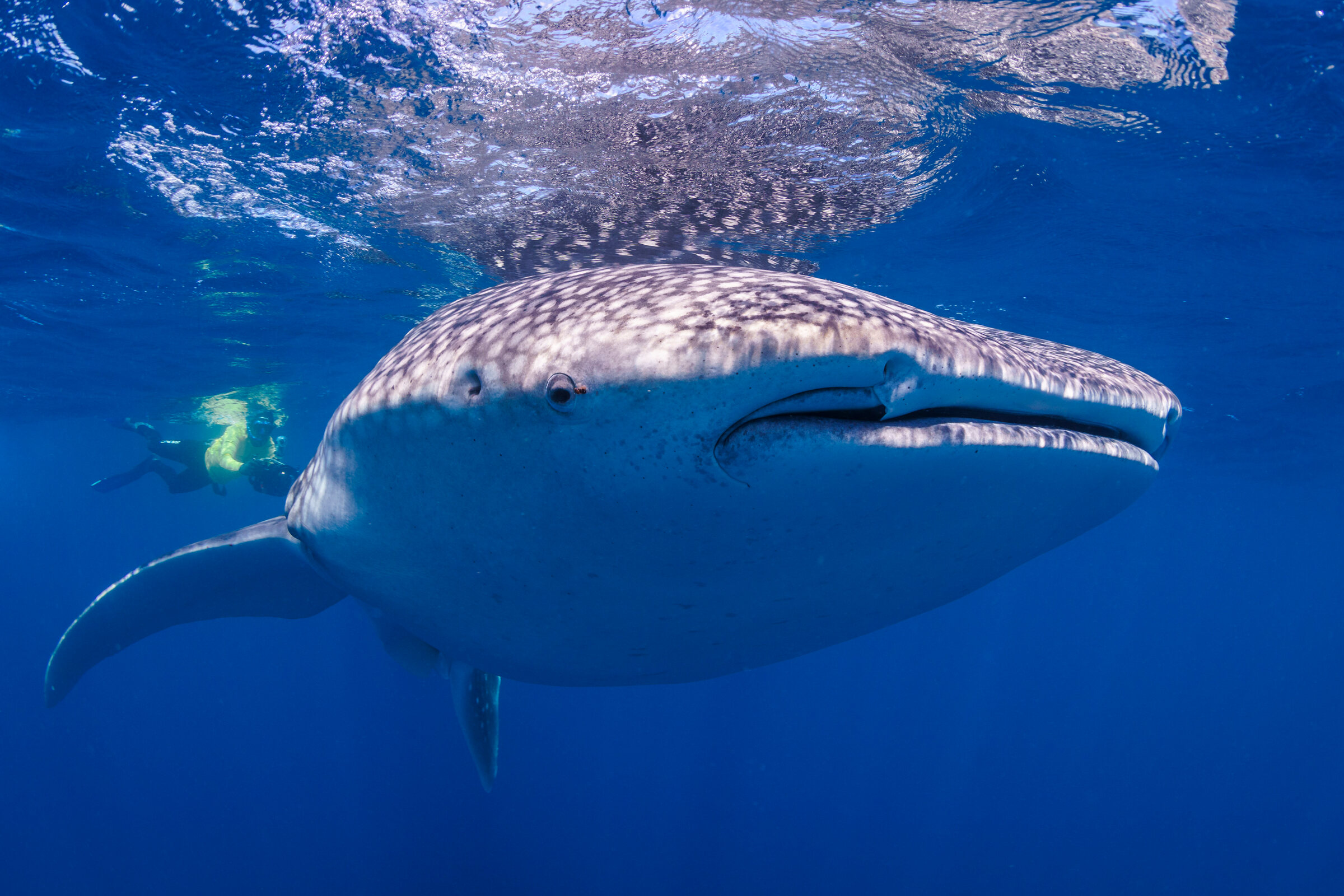
Discovery and study of the first known whale shark aggregation in the Coral Sea, at Wreck Bay on Australia's far northern Great Barrier Reef, with the Biopixel Oceans Foundation, which leads the project, and James Cook University.
 Galapagos Whale Shark Project
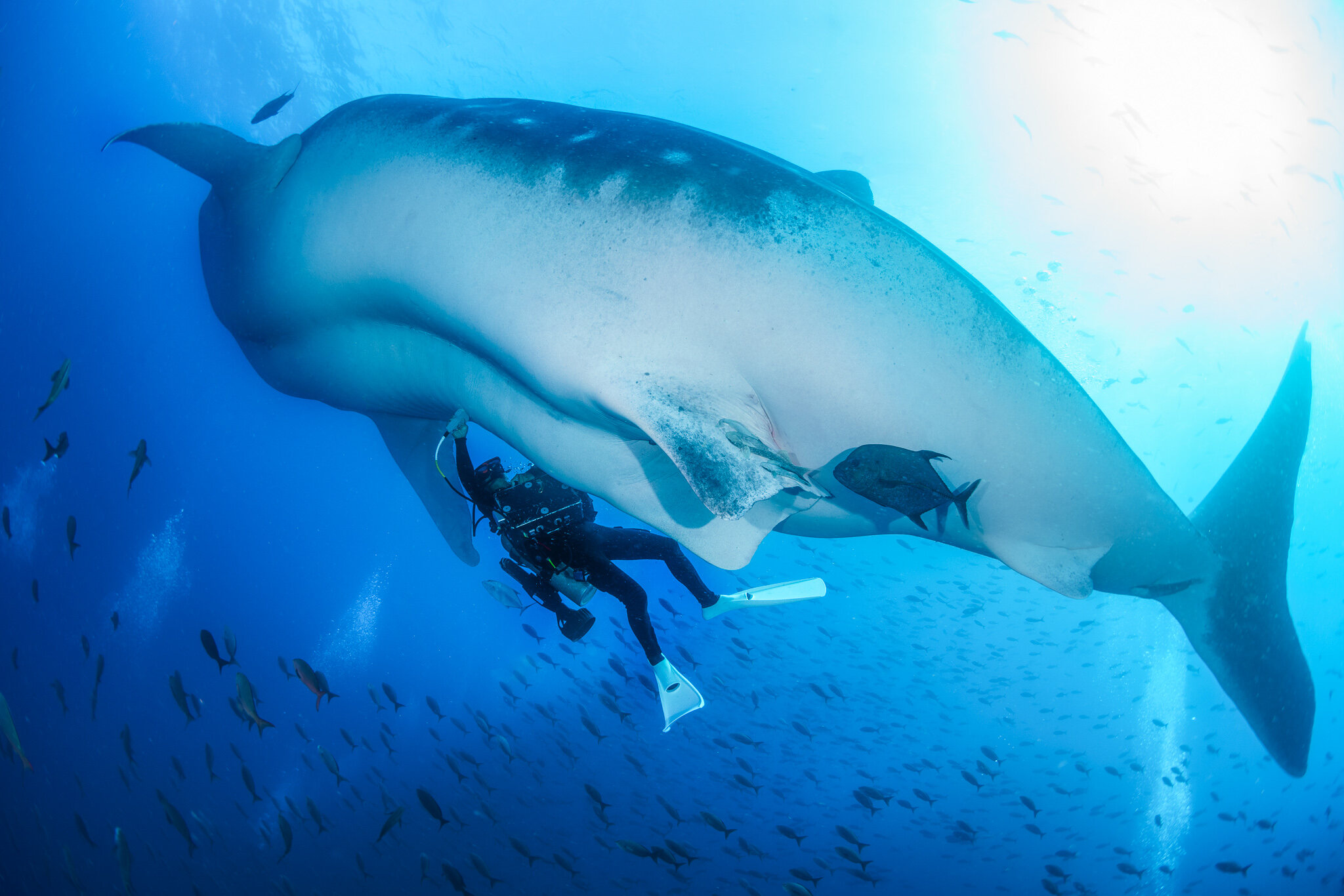
Studying the large adult female whale sharks that pass Darwin Island in the northern Galápagos, in collaboration with the Galapagos Whale Shark Project, which leads the research.
 Madagascar Whale Shark Project
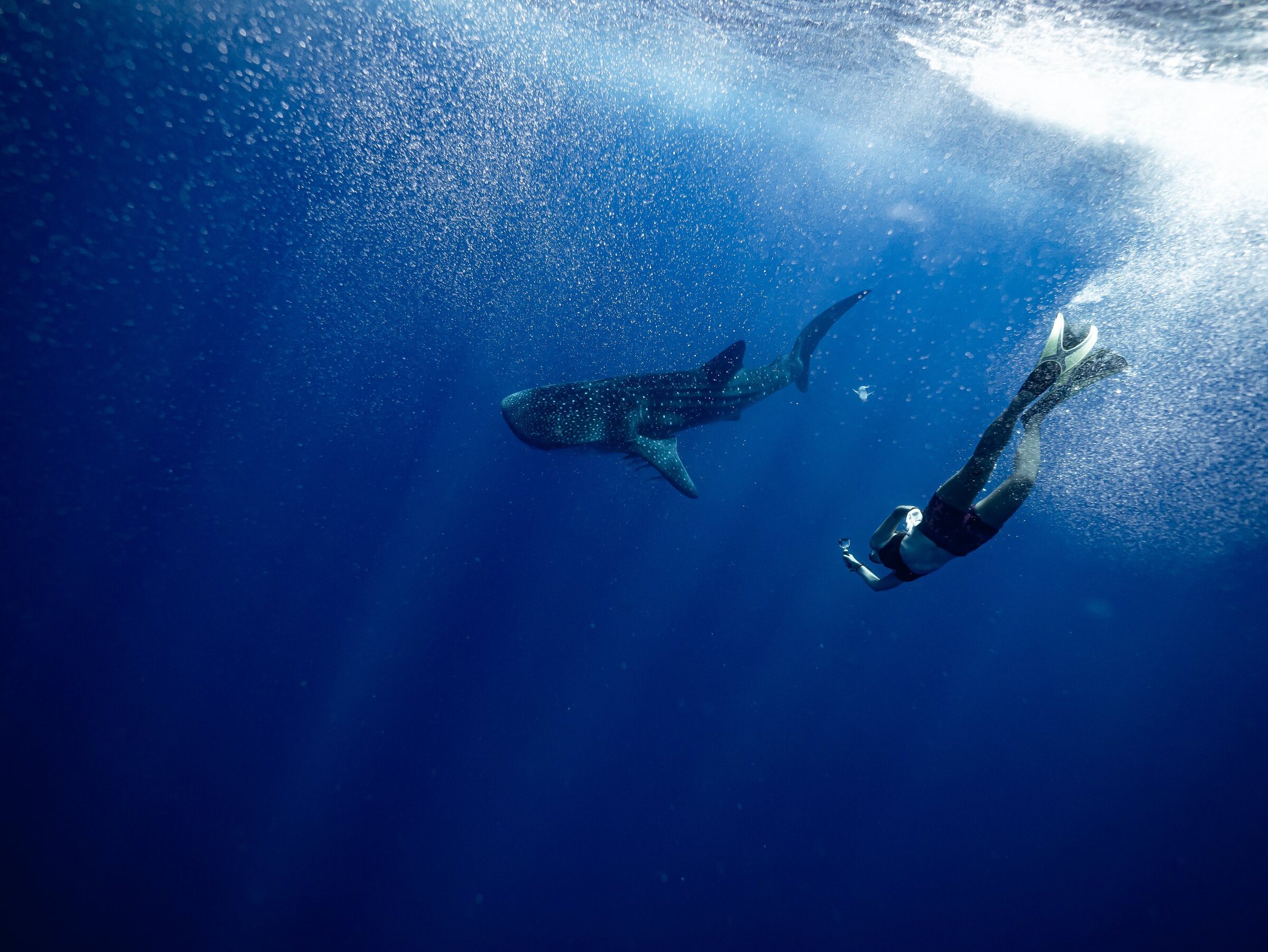
Research, education, and conservation for the young whale sharks that aggregate off Nosy Be, in northwestern Madagascar, led by the Madagascar Whale Shark Project with MMF as a partner; 546 sharks had been identified by the end of the 2025 season, and the whale shark tourism code of conduct is now part of Malagasy law.
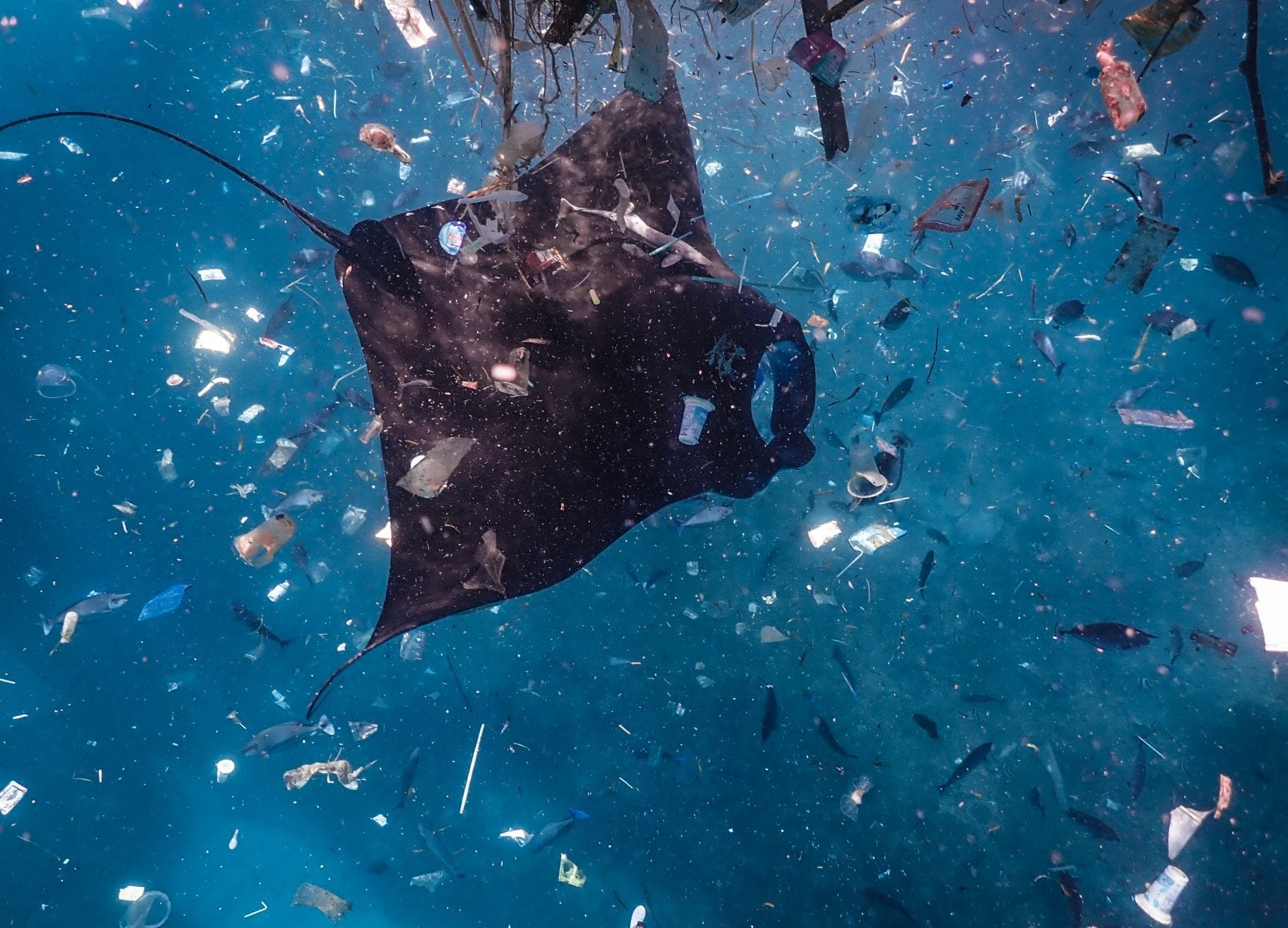 Microplastics & Megafauna
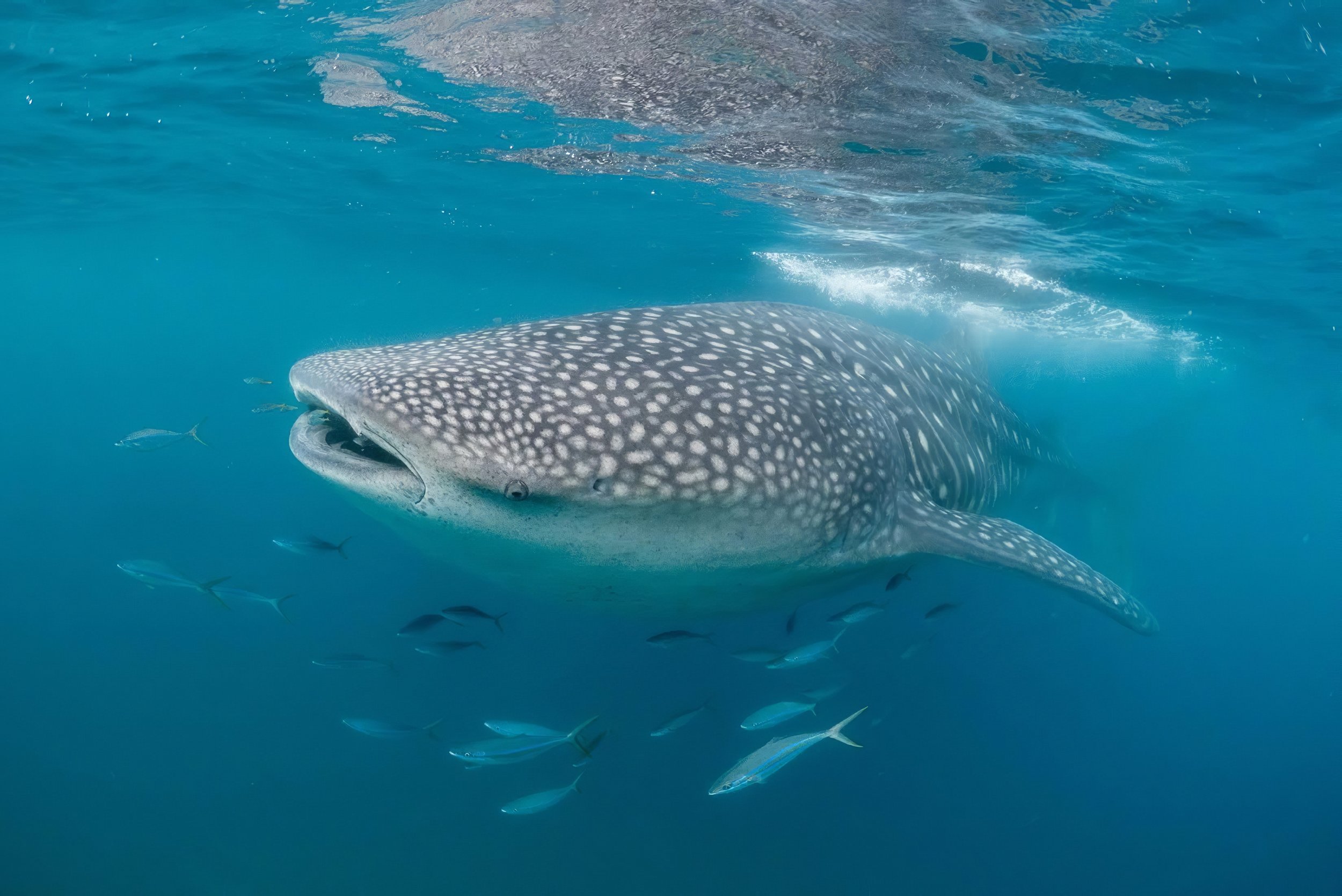 Mozambique Whale Shark Project
Long-term research on the whale sharks of southern Mozambique's Inhambane coast, identifying individuals, tracking their movements, measuring their decline, and translating that evidence into protection.
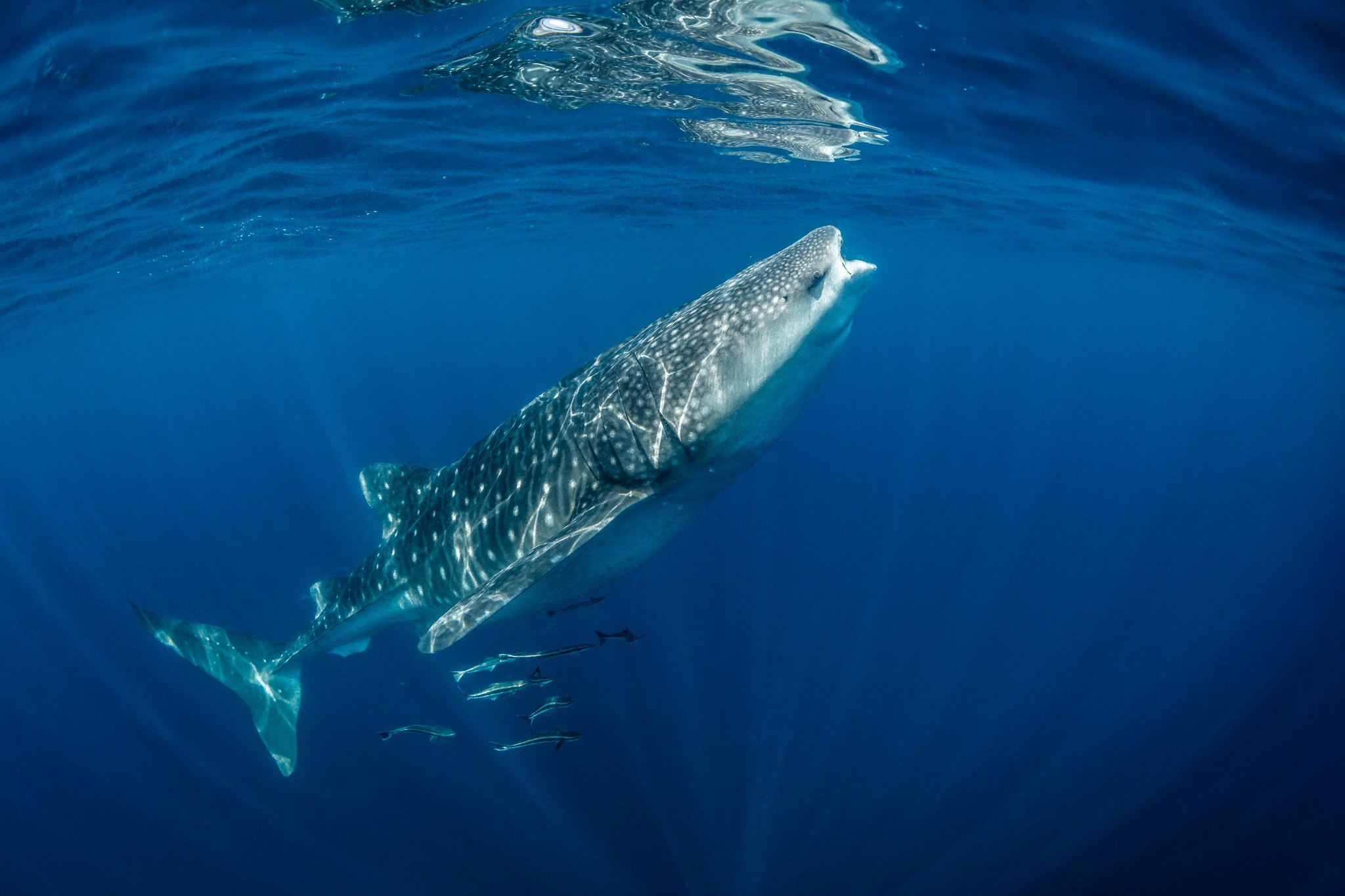 Oman Whale Shark Project
Mapping the Gulf of Oman's whale shark aggregation, documenting the vessel strikes and fishing gear that injure many of its sharks, and building the Omani partnerships that can protect them.
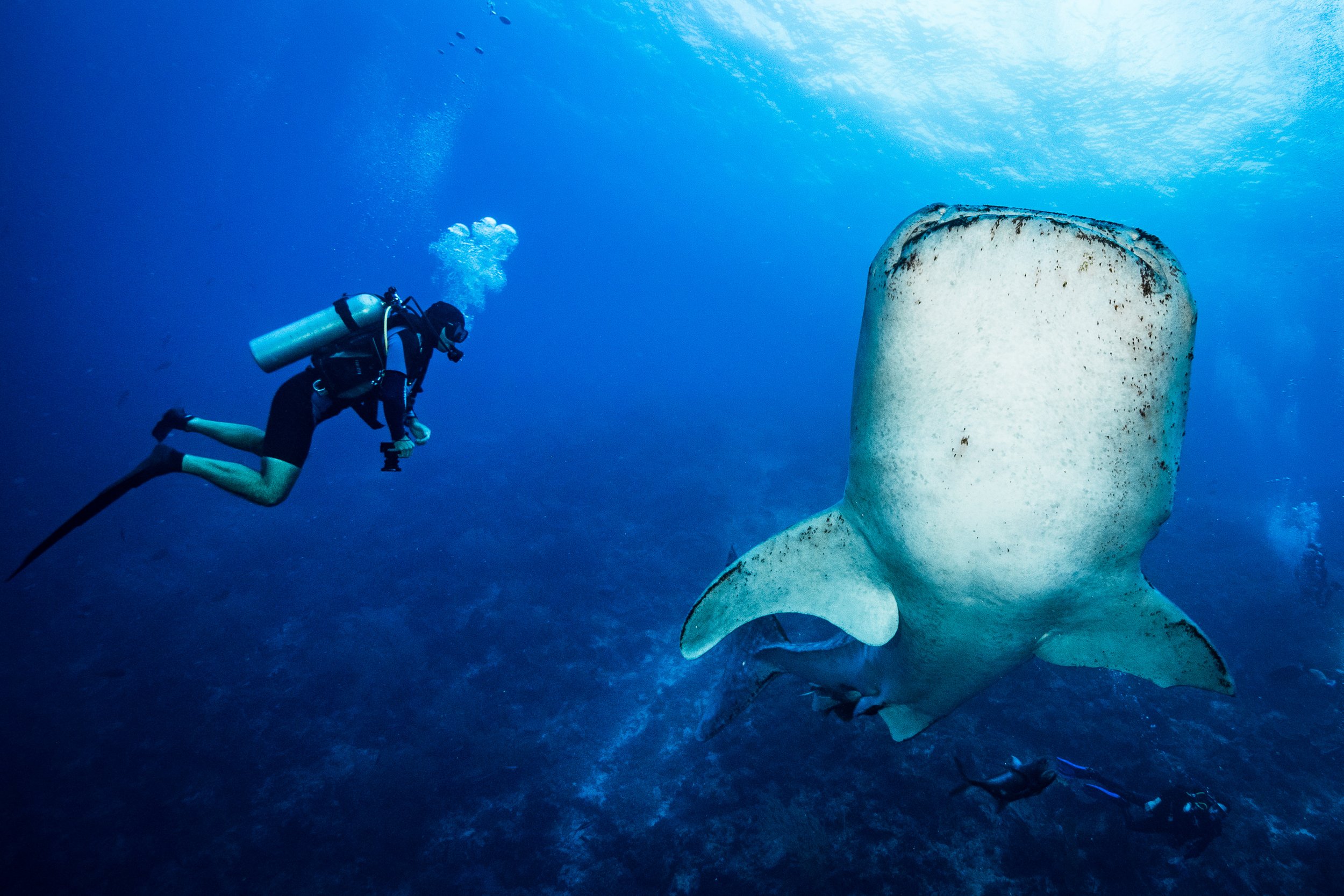 Philippines Whale Shark ProjectCompleted
A completed satellite-tracking study of juvenile whale sharks in the Sulu and Bohol Seas, Philippines, with LAMAVE, alongside related research on microplastic ingestion and residency at Oslob.
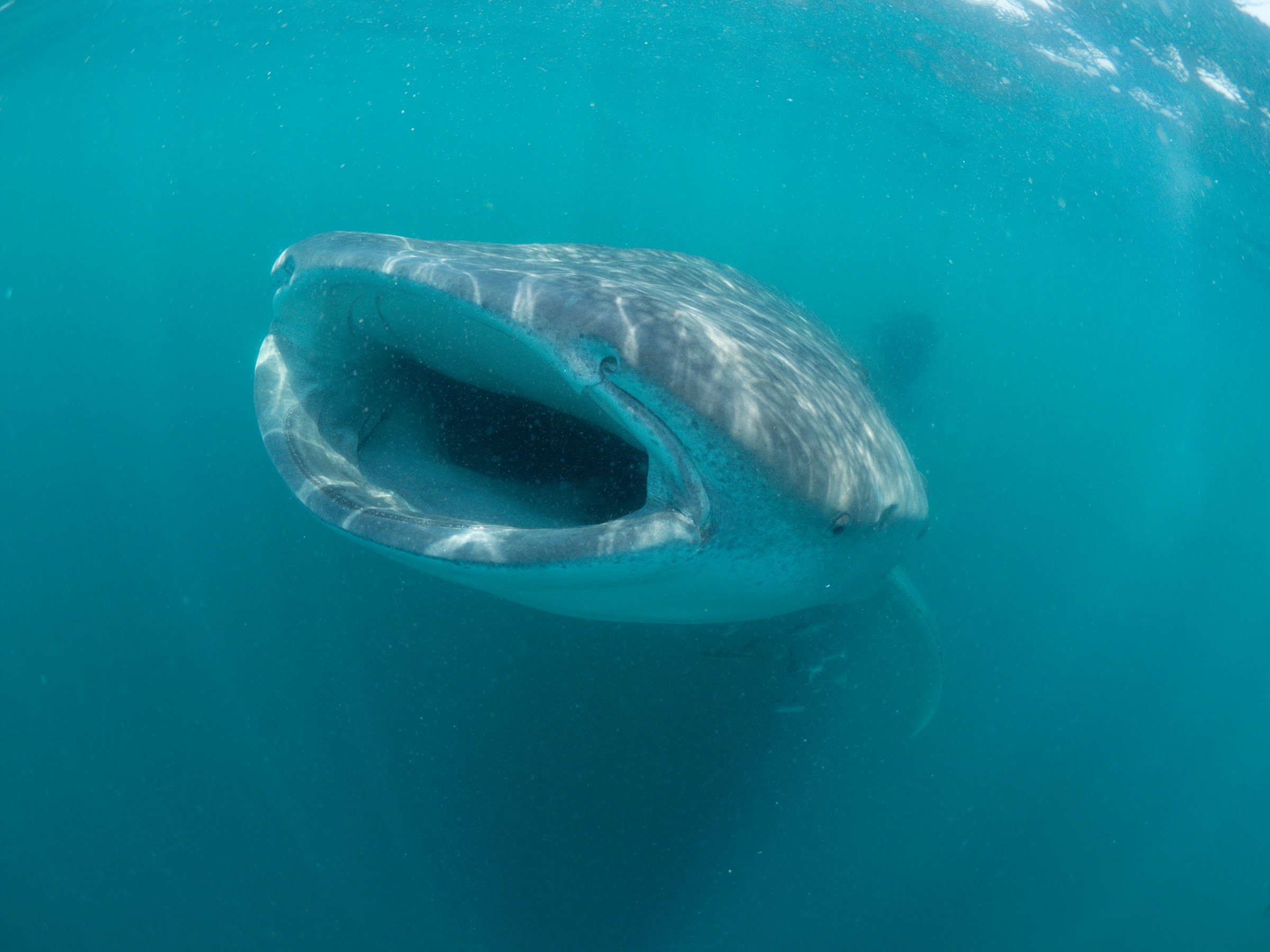 Qatar Whale Shark Project
Research on the whale sharks that aggregate every summer in Qatar's Al Shaheen oil field to feed on tuna eggs, documenting their identity, residency, and movements across the Arabian Gulf and beyond.
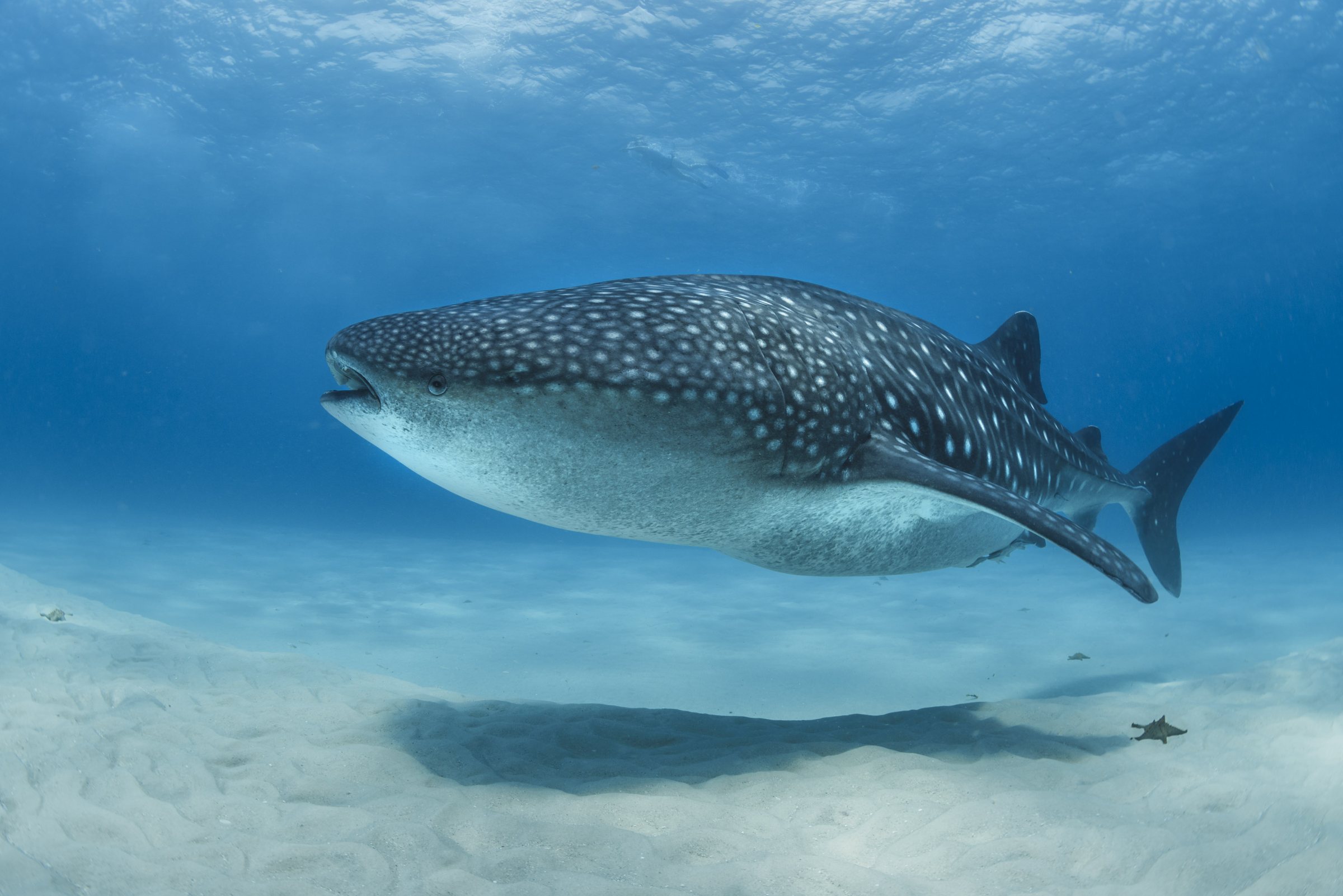 Tanzania Whale Shark Project
Long-term research on the small, highly resident population of whale sharks at Mafia Island, Tanzania: their movements, feeding, population trends, and the fishing and tourism pressures they face.
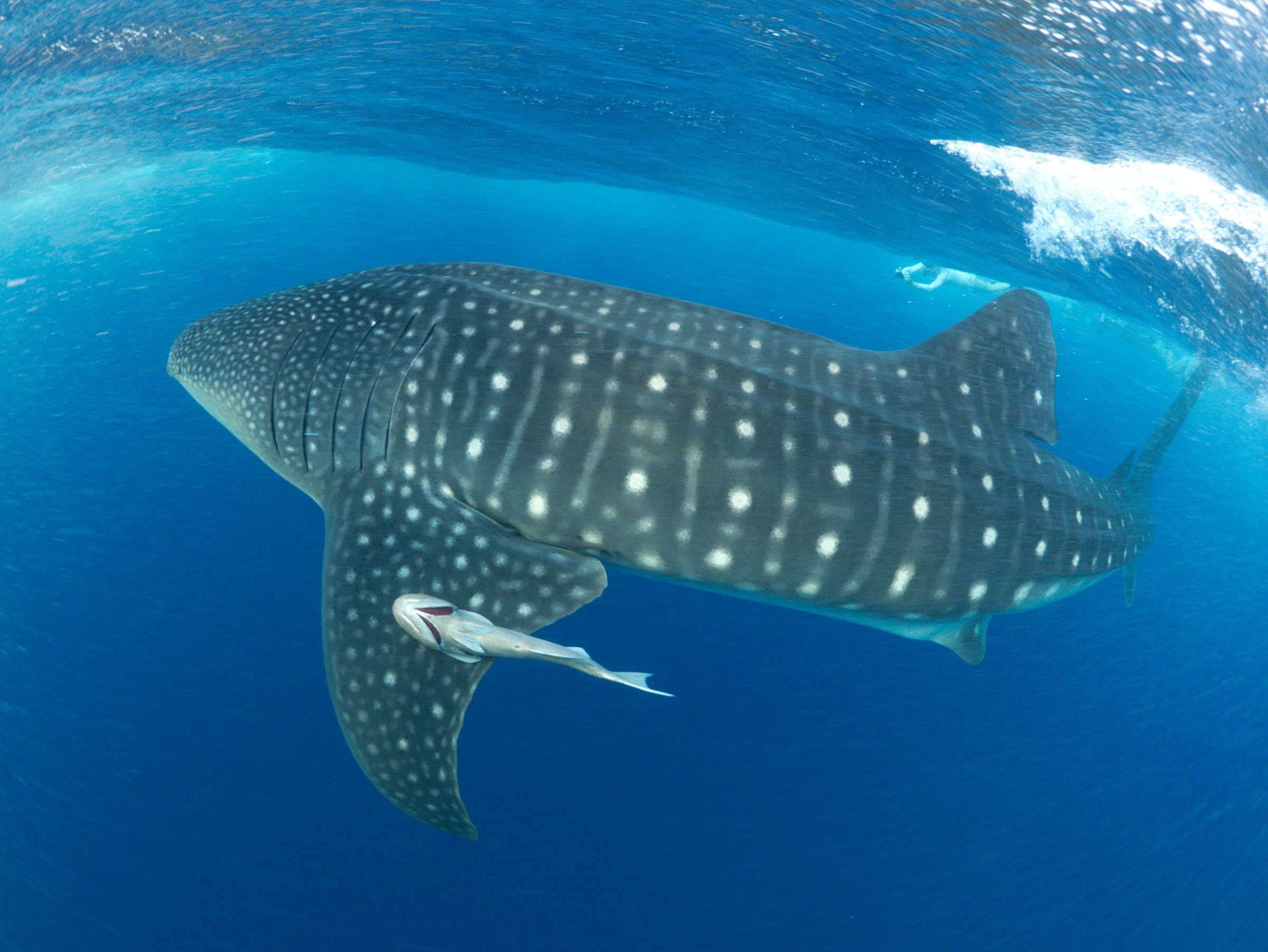 Utila Whale Shark ProjectCompleted
A completed study of the whale sharks that visit Utila in Honduras's Bay Islands, documenting their identity, residency, and connectivity with Belize, Mexico, and the United States.
Publications
2026
- Conservation status and life history of whale shark (Rhincodon typus) in the Indian Ocean
- Methods for tagging whale sharks: insights into performance and best practices with a focus on clamp attachments
- Whale sharks do it deeper: Extension of known depth range for Rhincodon typus from satellite telemetry data in the Coral Sea, Australia
2025
- A 15-year time series shows major declines in whale sharks in southern Mozambique
- The needle in the haystack: Uncovering the first whale shark (Rhincodon typus) aggregation in the Coral Sea
- Whale shark residency and small-scale movements around oil and gas platforms in Qatar
- Trophic and feeding ecology of whale sharks (Rhincodon typus) using bulk stable isotope analysis
- Rhincodon typus (whale shark)
In the news
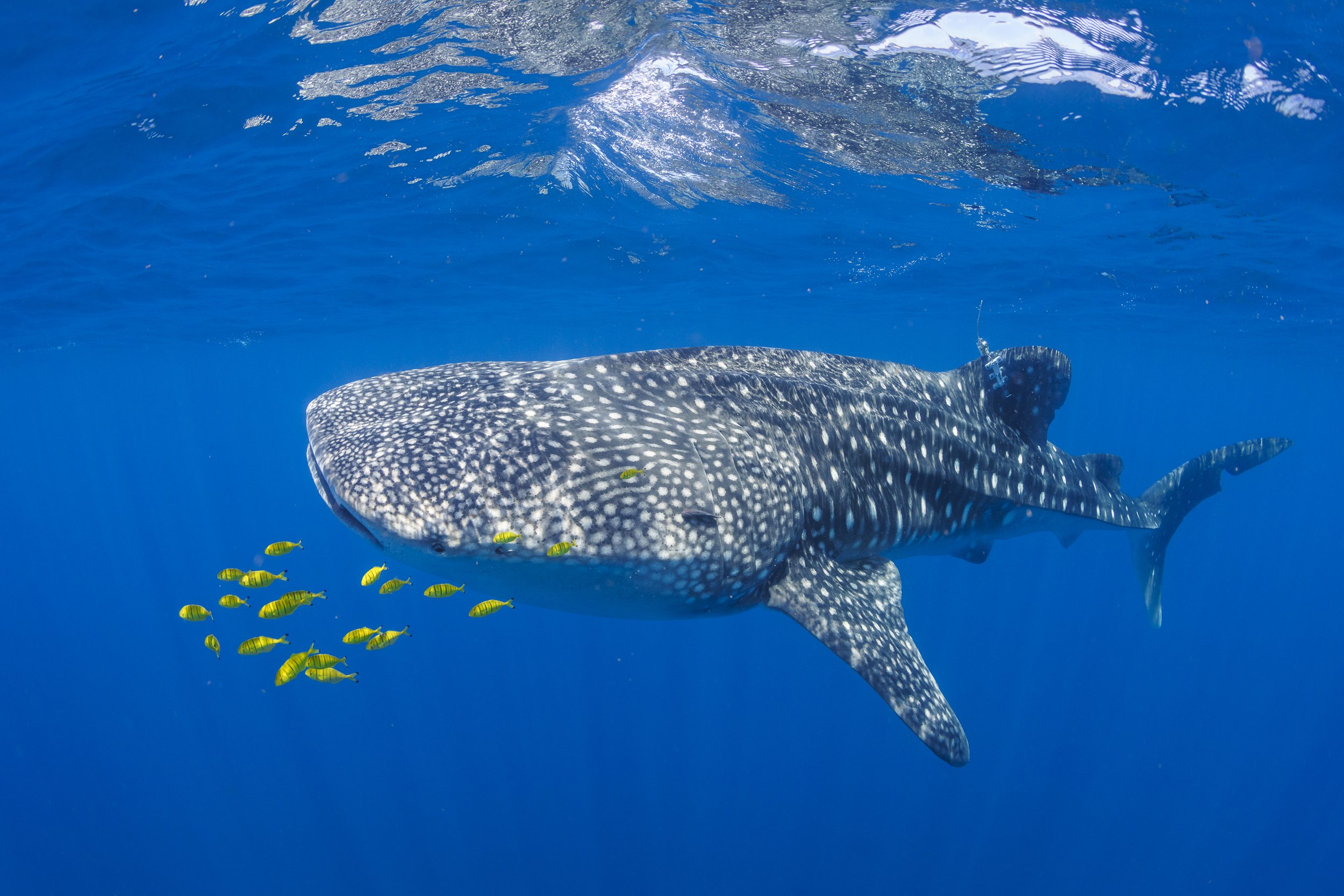
Mapping the Sharks That Cross Australia's Borders
September 8, 2026
.jpg)
Indian Ocean Tuna Fleets Urged to Release Whale Sharks
August 31, 2026
Better Clamps Mean Longer Whale Shark Tracks
May 5, 2026
How we study them
How you can help
With thanks to our supporters and partners



- Swiss Friends of Galapagos / Temperatio




- Deep Blue Resort, Utila